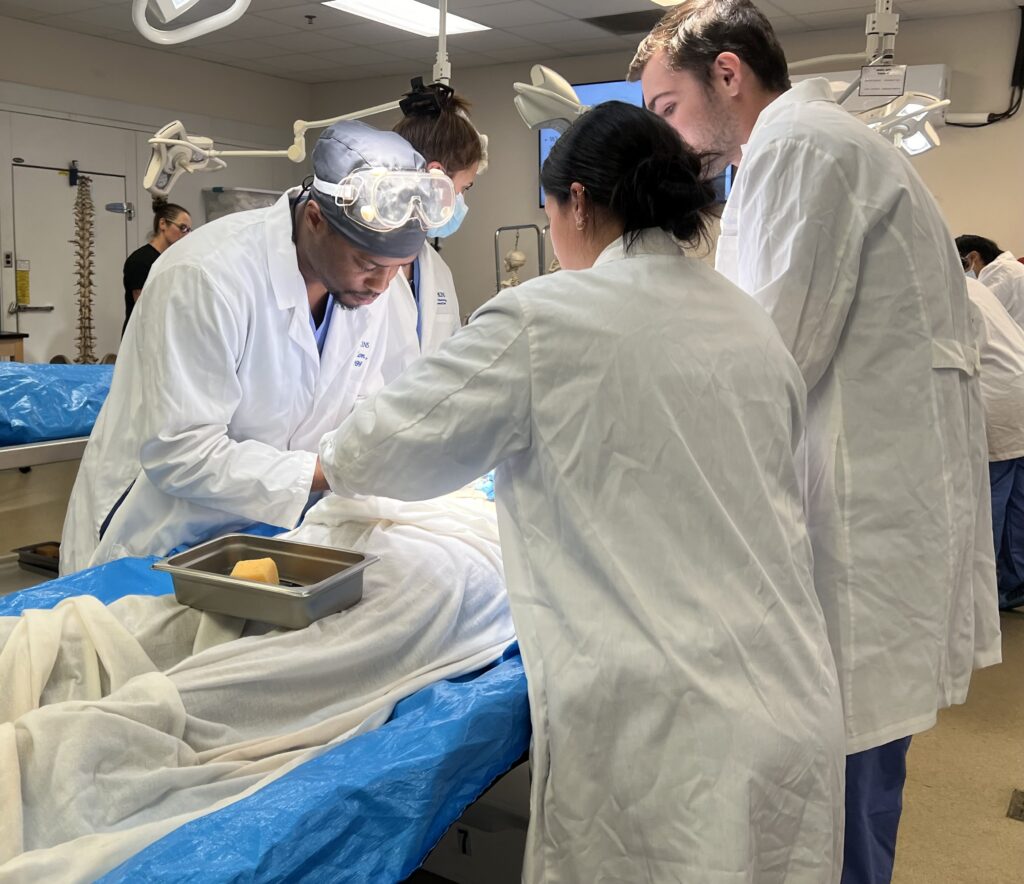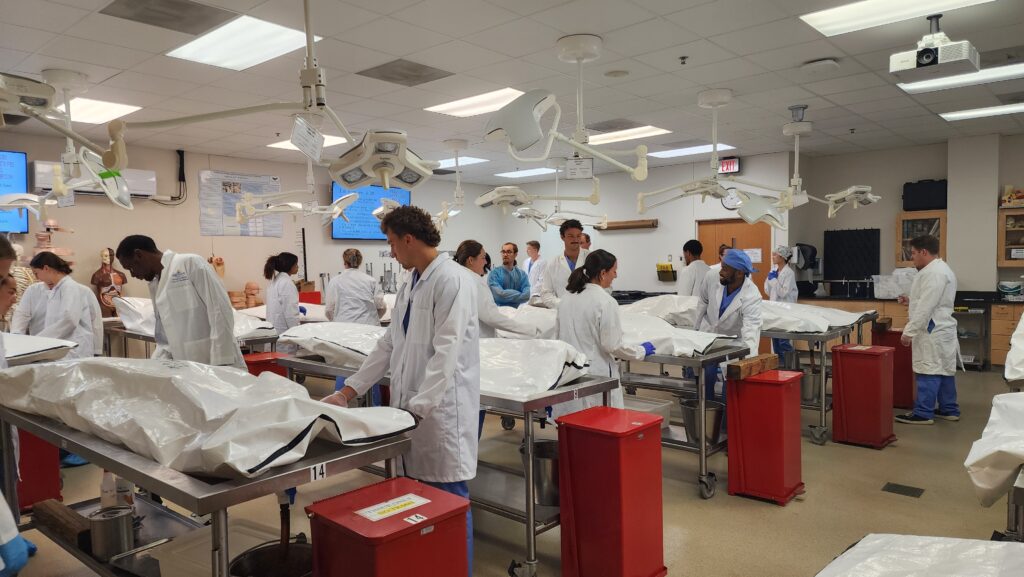
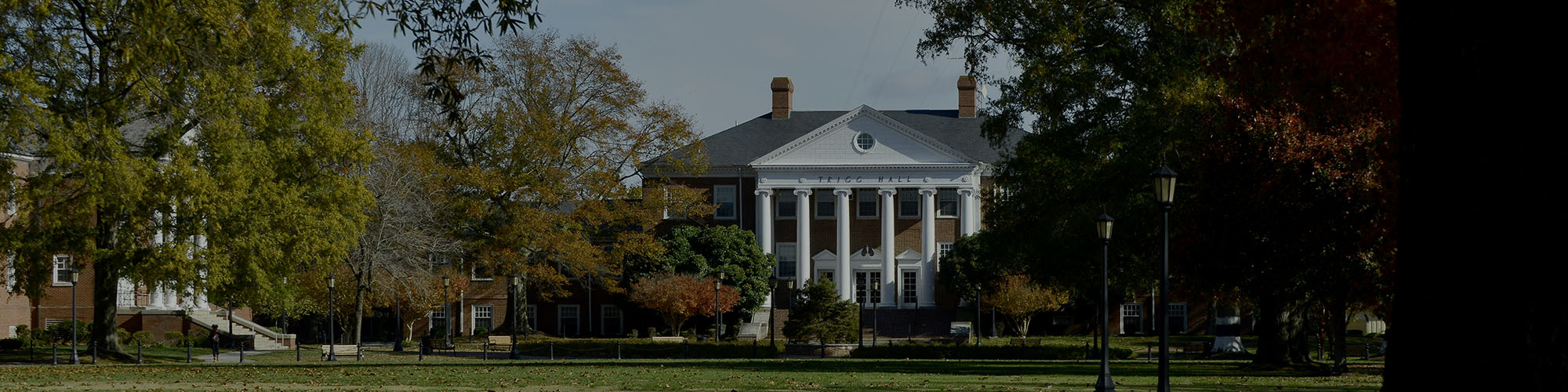
Located on the second floor of Hazel Hall, the Gross Anatomy Laboratory is led by Dr. Molly Selba and operated by the Department of Physical Therapy. The approximately 1,500-square-foot facility includes an adjacent temperature-controlled cadaver storage room for safe storage and preservation.
The laboratory is equipped with contemporary audiovisual and instructional technology, including high-resolution displays, multimedia projection capabilities, and integrated digital resources that support the visualization of anatomical structures through imaging, video, and web-based content. Flat-panel monitors positioned throughout the space facilitate both group instruction and small-group learning.
Each dissection station is outfitted with adjustable, high-intensity LED task lighting to optimize visibility during cadaveric study. The lab is fully stocked with dissection instruments, articulated skeletons, anatomical models, and radiographic viewing capabilities. A range of physical and digital teaching resources support student learning throughout the curriculum.
The laboratory serves as a core instructional space for Doctor of Physical Therapy (DPT) students across the curriculum. During the fall and winter semesters, first-year DPT students engage in comprehensive, region-based cadaveric dissection as part of Advanced Human Anatomy and Visceral Anatomy, including the back, neck, upper and lower extremities, thorax, abdomen, and pelvis. In the spring semester, students continue their cadaver-based learning in Neuroscience, focusing on the head, brain, and spinal cord. Collectively, this sequence provides a full-body dissection experience over three semesters, typically with four students assigned per donor.
In addition, third-year DPT students utilize the laboratory for advanced, clinically oriented dissections within the musculoskeletal course series. These experiences emphasize detailed exploration of joint structures of the spine, thoracic cage, and extremities, reinforcing anatomical knowledge in the context of clinical application.
Students are granted extended access to the laboratory during evenings and weekends to support independent study, collaborative learning, and continued dissection. All access is governed by established safety protocols and professional standards to ensure a respectful and secure learning environment.