
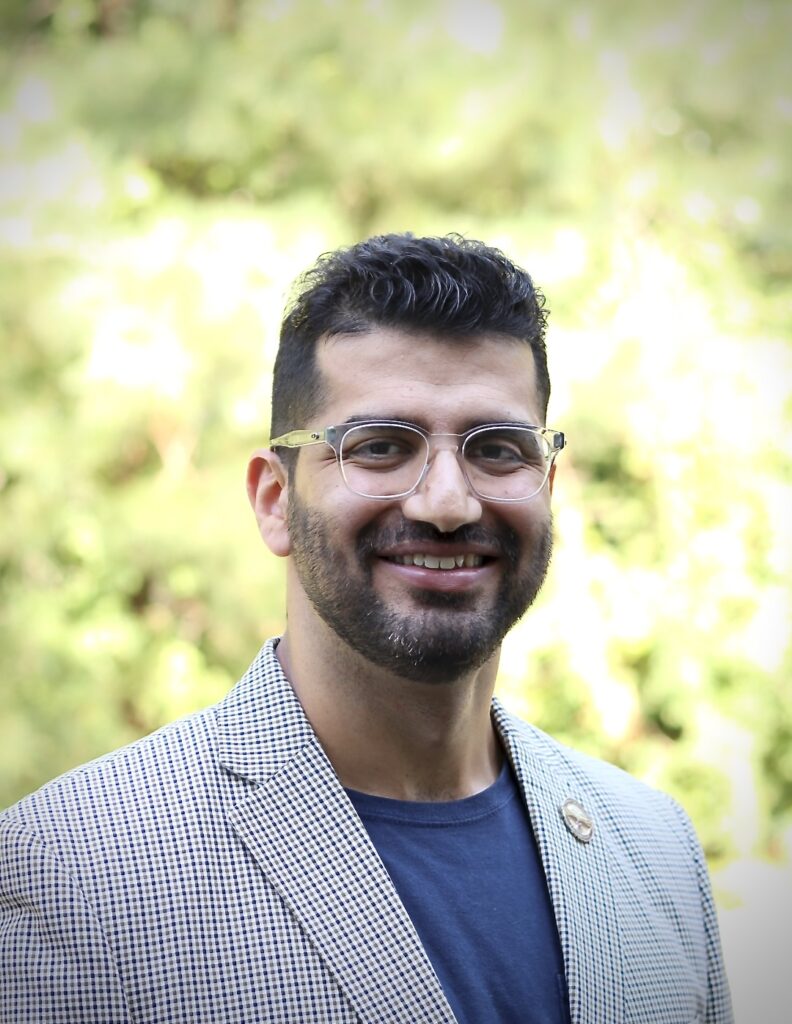
Dr. Masoud Moghaddam
Ph.D., ACSM EP-C & CPT, NSCA CPSS & CSCS, USATF-3
Associate Professor
Bio:
Dr. Masoud Moghaddam is an Associate Professor in the Department of Physical Therapy at the University of Maryland Eastern Shore. His expertise spans human physiology, exercise physiology, biomechanics, sports performance, and rehabilitation science, with a research program dedicated to translating exercise science into evidence-based strategies that improve human health and performance. His current work focuses on blood flow restriction training, knee osteoarthritis, neuromuscular function, wearable technologies, and innovative approaches to clinical rehabilitation and athletic performance.
Dr. Moghaddam earned his PhD in Health and Human Performance from Oklahoma State University. He is a Certified Performance and Sport Scientist (CPSS) and Certified Strength and Conditioning Specialist (CSCS) through the National Strength and Conditioning Association (NSCA), as well as a Certified Exercise Physiologist (ACSM-EP) and Certified Personal Trainer (ACSM-CPT) through the American College of Sports Medicine (ACSM). He also holds a Level III Throws Coach certification from USA Track & Field (USATF) and has coached NCAA track and field athletes at the collegiate level.
His teaching philosophy emphasizes active learning, critical thinking, and preparing future physical therapists to integrate scientific evidence into clinical decision-making. He is passionate about mentoring students in research and helping them develop into independent scholars and evidence-based clinicians. Through collaborations with healthcare organizations and collegiate athletics programs, Dr. Moghaddam seeks to bridge research, education, and clinical practice to improve patient outcomes and human performance.
Outside of academia, Dr. Moghaddam enjoys spending time with his family, exercising, reading, and exploring the culinary arts.
“The mediocre teacher tells. The good teacher explains. The superior teacher demonstrates. The great teacher inspires.” – William Arthur Ward
This quote continues to guide Dr. Moghaddam’s teaching philosophy and his commitment to inspiring lifelong learning, curiosity, and professional excellence.
Education:
-
Doctor of Philosophy, Health and Human Performance, Oklahoma State University, 2020
-
Master of Science, Exercise Science, Texas A&M University-Commerce, 2016
-
Bachelor of Science, Kinesiology, Imam Reza International University, 2014
Credentials and Certifications:
-
American College of Sports Medicine – Certified Exercise Physiologist (EP-C)
-
American College of Sports Medicine – Certified Personal Trainer (CPT)
-
National Strength and Conditioning Association – Certified Performance and Sport Scientist (CPSS)
-
National Strength and Conditioning Association – Certified Strength and Conditioning Specialist (CSCS)
-
USA Track and Field – Certified Level 3 Throws Coach
Scholarly Activity:
Book Chapters
- Moghaddam, M. (2019). ‘Bioenergetics’ Chap. 7 in Baghurst, T. (ed.) Coaching for Sports Performance. Routledge, pp. 240-264.
Peer-Reviewed Journal Articles
-
Moghaddam, M., Collins, J.P., Gardner, C.E., Rabel, M.C. (2026). Impact of Anatomical Placement on the Accuracy of Wearable Heart Rate Monitors During Rest and Various Exercise Intensities. Sensors. 26(1), 176.
-
Moghaddam, M., Rabel, M.C., Werner, T.J., Rolnick, N. (2025). Effects of Autoregulated and Non-Autoregulated Blood Flow Restriction on Vastus Medialis Oblique Responses During Low-Load Resistance Exercise. Frontiers in Sports and Active Living, 7, 1712606.
-
Klima, D., W., Moghaddam, M., Davey, A. (2025). Frailty Markers and Falls Among US Clergy. Journal of Religion and Health, 64(2), 1144-1158.
-
Rolnick, N., de Queiros, V. S., Moghaddam, M., Peikon, E., Taylor, S., Watson, S., Campbell, R., Zupnik, S., Werner, T. (2024) Cardiovascular, Perceptual, and Performance Responses to Single vs. Multi-Chambered Blood Flow Restriction Cuffs. Frontiers in Sports and Active Living, 6, 1469356.
-
Rolnick, N., De Queiros, V. S., Moghaddam, M., Marquette, L., Taylor, S., Walters, J., … Werner, T. (2024). Acute impact of autoregulation of applied blood flow restriction pressures on bilateral single-joint upper limb resistance exercise. Journal of Sports Sciences, 1–10.
-
Rolnick, N., Licameli, N., Moghaddam, M., Marquette, L., Walter, J., Fedorko, B., & Werner, T. (2024). Autoregulated and Non-Autoregulated Blood Flow Restriction on Acute Arterial Stiffness. International Journal of Sports Medicine, 45(01), 23-32.
-
Moghaddam, M., Cervantes, M., Cheshier, B., & Jacobson, B. H. (2023). Sprint Interval Training on Stationary Air Bike Elicits Cardiorespiratory Adaptations While Being Time-Efficient. The Journal of Strength & Conditioning Research, 37(9), 1795-1801.
-
Jacobson, B. H., Moghaddam, M., & Estrada, C. A. (2022). Mattress Coil Spring Fatigue and Weight-Bearing Support: Comparison of Weight-Bearing and Non–Weight-Bearing Springs. Journal of Manipulative and Physiological Therapeutics, 45(5), 323-328.
-
Boolani, A., Moghaddam, M., Fuller, D., Mondal, S., Sur, S., Martin, R., Kadry, A., Torad, A.A., Elwan, M.A. and Kakar, R.S., (2022). The Effects of Vision-Deprived Progressive Resistance Training on One-Repetition Maximum Bench Press Performance: An Exploratory Study. Vision, 6(3), p.47.
-
Ghaffari, M., Sadeghiyan, S., Faramarzi, M., Moghaddam, M., Baghurst, T., (2022). The effect of aerobic exercise on metabolic parameters of patients with non-alcoholic fatty liver disease: systematic review and meta-analysis. The Journal of Sports Medicine and Physical Fitness, 63(1), 178-187.
-
Cheshier, B., Jacobson, B.H., Estrada, C.A., Moghaddam, M., Stewart, C., (2022). Effects of a Respiratory Resistance Mask on Forced expiratory volume at 1s (FEV1), forced vital capacity (FVC) and the ratio of FEV1/FVC Lung Function Following High Intensity Training. International Journal of Physical Education, Fitness and Sports, 11(2), 28-34.
-
Moghaddam, M., Estrada, C. A., Muddle, T. W., Magrini, M. A., Jenkins, N. D., & Jacobson, B. H. (2021). Similar Anaerobic and Aerobic Adaptations After 2 High-Intensity Interval Training Configurations: 10: 5 s vs. 20: 10 s Work-to-Rest Ratio. The Journal of Strength & Conditioning Research, 35(6), 1685-1692.
-
Moghaddam, M., Estrada, C.A., Baghurst, T., Jacobson, B.H. (2020). Muscular Morphological Adaptations of Two Whole-Body High Intensity Interval Training Configurations. J Sports Med Phys Fitness, 60(7), 985-991.
-
Bayliff, G. E., Jacobson, B. H., Moghaddam, M., & Estrada, C. (2019). Global Positioning System Monitoring of Selected Physical Demands of NCAA Division I Football Players During Games. The Journal of Strength & Conditioning Research, 33(5), 1185-1191.
-
Jacobson, B. H., Sellers, J., Monaghan, T., Schnaiter-Brasche, J., Loy, K., Estrada, C., & Moghaddam, M. (2019). Comparison of a static, independent balance protocol and the National Institute on Aging balance protocol on stability and risk of falling in the elderly. Activities, Adaptation & Aging, 43(1), 37-50.
-
Jacobson, B. H., Monaghan, T., Sellers, J., Estrada, C., & Moghaddam, M. (2019). Effect of avian immunoglobulin on post-exercise muscle damage and muscular soreness. Journal of Human Sport and Exercise.
-
Jacobson, B.H., Monahan, T., Sellers, J., Estrada, C.A., Moghaddam, M. (2017). Effect of Oral Chicken Immunoglobulin (IgY) Ingestion on Serum Creatine Kinase, C-reactive Protein and Perceived Delayed Onset Muscular Soreness Following Induced Muscle Soreness. Kinesiology & Exercise Sciences, Abstract.
Primary Courses:
- PHYT 600 – Advanced Human Physiology
- PHYT 604 – Analysis of Human Movement
- PHYT 612 – Clinical Medicine I – Pathophysiology
- PHYT 681 – Research Methods
- PHYT 789 – Research Project
