ASSOCIATE DIRECTOR FOR RECRUITMENT & LEVERAGED PROGRAMS
Research Assistant Professor
University of Maryland Eastern Shore
Phone: (410) 621-3004 | Email: lvdasilva@umes.edu| Fax (410) 651-7739
Education
Louisiana State University, Baton Rouge, LA (2005)
Ph.D. Food Science/ Microbiology
Louisiana State University, Baton Rouge, LA (2002)
M.S. Food Science/ QC&QA
Tashkent State University, Tashkent, Uzbekistan
M..S Biology/Biochemistry
Research Interests
- Growth and survival of Vibrio parahaemolyticus
- Vibrio vulnificus in Chesapeake Bay and Gulf Coast Oysters
Selected Publications
Johnson T, Richards GP, Jacobs J, Townsend H, Almuhaideb E, Rosales D, Chigbu P, DaSilva L, Parveen S. Prevalence and pathogenic potential of Shewanella species in oysters and seawater collected from the Chesapeake Bay and Maryland Coastal Bays. Front Microbiol. 2025; 16:1502443. doi: 10.3389/fmicb.2025.1502443.
Elbashir SM, Adnan AM, Bowers J, DePaola A, Jahncke M, Punchihewage-Don AJ, Da Silva LV, Hashem F, Parveen S. Antimicrobial Resistance, Virulence Properties and Genetic Diversity of Salmonella Typhimurium Recovered from Domestic and Imported Seafood. Pathogens. 2023 Jun 30;12(7). doi: 10.3390/pathogens12070897.
da Silva LV, Ossai S, Chigbu P, Parveen S. Antimicrobial and Genetic Profiles of Vibrio vulnificus and Vibrio parahaemolyticus Isolated From the Maryland Coastal Bays, United States. Front Microbiol. 2021; 12:676249. doi: 10.3389/fmicb.2021.676249.
Elmahdi S, Parveen S, Ossai S, DaSilva LV, Jahncke M, Bowers J, Jacobs J. Vibrio parahaemolyticus and Vibrio vulnificus Recovered from Oysters during an Oyster Relay Study. Appl Environ Microbiol. 2018 Feb 1;84(3). doi: 10.1128/AEM.01790-17.
Elmahdi S, DaSilva LV, Parveen S. Antibiotic resistance of Vibrio parahaemolyticus and Vibrio vulnificus in various countries: A review. Food Microbiol. 2016 Aug; 57:128-34. doi: 10.1016/j.fm.2016.02.008.
Parveen S, DaSilva L, DePaola A, Bowers J, White C, Munasinghe KA, Brohawn K, Mudoh M, Tamplin M. Development and validation of a predictive model for the growth of Vibrio parahaemolyticus in post-harvest shellstock oysters. Int J Food Microbiol. 2013 Jan 15;161(1):1-6. doi: 10.1016/j.ijfoodmicro.2012.11.010.
DaSilva L, Parveen S, DePaola A, Bowers J, Brohawn K, Tamplin ML. Development and validation of a predictive model for the growth of Vibrio vulnificus in postharvest shellstock oysters. Appl Environ Microbiol. 2012 Mar;78(6):1675-81. doi: 10.1128/AEM.07304-11.
Parveen S, Hettiarachchi K, Bowers J, Jones J, Tamplin M, McKay R, Beatty W, Brohawn K, DaSilva L, DePaola A. Corrigendum to “ Seasonal distribution of total and pathogenic Vibrio parahaemolyticus in Chesapeake Bay oysters and waters” [Int. J. of Food Microbiol. 128 (2008) 354& x2013;361]. International Journal of Food Microbiology. 2009 March; 130(1):75-. doi: 10.1016/j.ijfoodmicro.2008.11.018.
Parveen S, Hettiarachchi KA, Bowers JC, Jones JL, Tamplin ML, McKay R, Beatty W, Brohawn K, Dasilva LV, Depaola A. Seasonal distribution of total and pathogenic Vibrio parahaemolyticus in Chesapeake Bay oysters and waters. Int J Food Microbiol. 2008 Dec 10;128(2):354-61. doi: 10.1016/j.ijfoodmicro.2008.09.019.
da Silva LV, Prinyawiwatkul W, King JM, No HK, Bankston JD Jr, Ge B. Effect of preservatives on microbial safety and quality of smoked blue catfish (Ictalurus furcatus) steaks during room-temperature storage. Food Microbiol. 2008 Dec;25(8):958-63. doi: 10.1016/j.fm.2008.07.001.
Biosketch
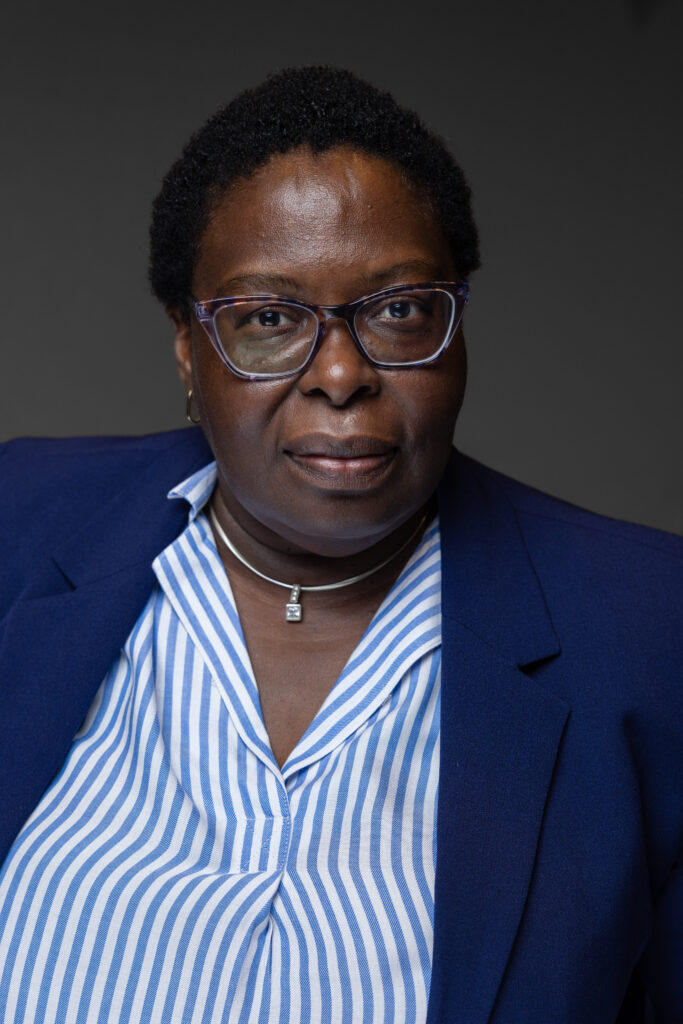
Dr. Ligia DaSilva holds a Ph.D. in Food Science/Food Microbiology, an M.S. in Food Science/ QC/QA, and an M.S. in Biochemistry. Dr. DaSilva’s research integrates food safety and environmental microbiology to address critical issues in coastal ecosystem health, water quality and public health.
Her research interests include the application of artificial intelligence and machine learning to predict harmful algal blooms (HABs), pathogenic bacteria (including Vibrio spp.), and the spread of antimicrobial and heavy metal resistance genes in the Chesapeake and Maryland Coastal Bays. She also investigates microbial community dynamics through advanced ‘omics approaches and develops integrated strategies for water quality management, food safety and ecosystem resilience.
Dr. DaSilva is committed to interdisciplinary education and workforce development and leads initiatives in student recruitment. She has taught courses, such as Principles of Biology, Chemistry II, and Food Toxicology. She has served as a mentor for the Research Experiences for Undergraduates (REU) program, a coordinator for the NSF CREST Center for Integrated Study of Coastal Ecosystem Processes, INFISH, and the MS-CC programs at UMES, supporting the training and advancement of the next generation of scientists in marine and environmental sciences.
NOAA Living Marine Resources Cooperative Science Center
University of Maryland Eastern Shore (Lead Institution)
(410) 651-7870
Award numbers: FY 2021 Award #NA21SEC4810005
Funding Agency: NOAA Educational Partnership Program (EPP/MSI)
