


Summer internships are a longtime rite of passage for college students, especially those looking to cut their teeth in the world of scientific research. While college student internships were scarce across the nation, students who signed up to spend the summer at University of Maryland Eastern Shore (UMES) got a leg up on their education.
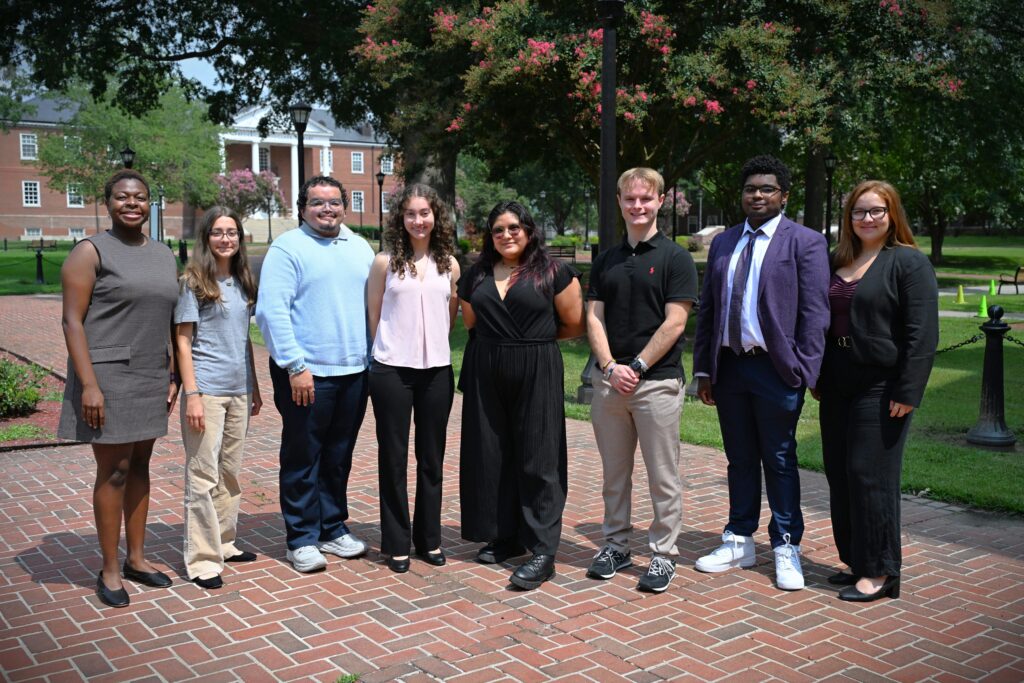
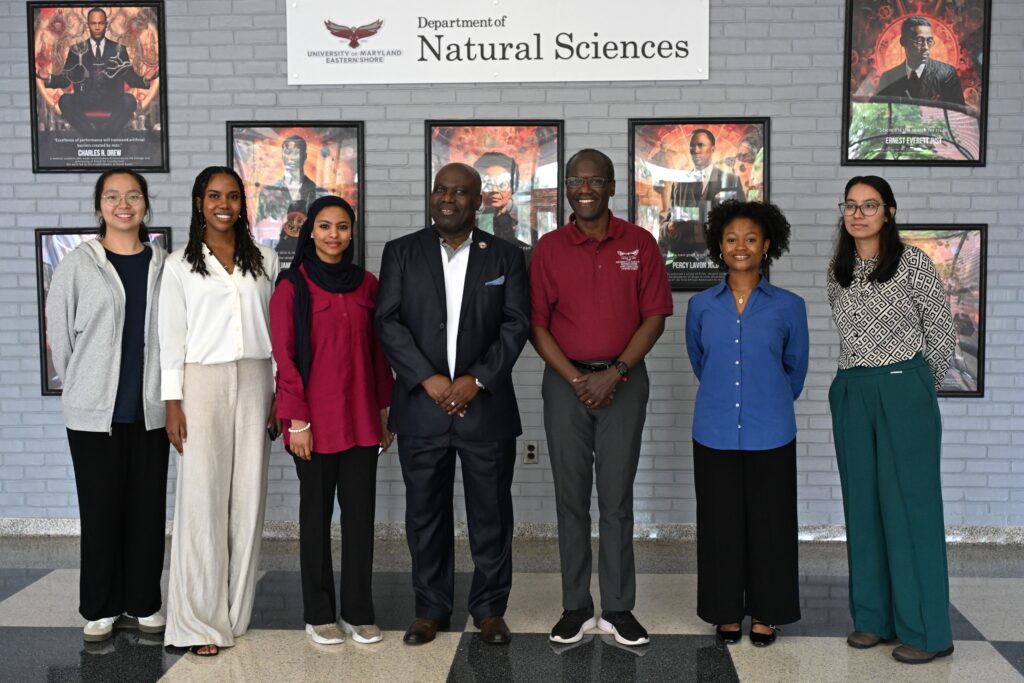
Eight interns in the Research Experience for Undergraduates in Marine and Estuarine Sciences (REU) program and six interns in the U.S. Department of Agriculture (USDA) NextGen program presented the results of their summer research at a symposium on Aug. 7. Oral presentations and poster topics ranged from using eDNA to detect endangered marine species, to how salinization breaks down loblolly pine trees to create a ghost forest.
“There is no shortage of issues and challenges for us to address, and there is no shortage of areas where we really don’t know what to do,” said Dr. Moses Kairo, Dean of the UMES School of Agricultural and Natural Sciences. “We’re looking to you to come up with solutions to the vexing issues we face as a humanity.”
This was the first year the USDA NextGen program funded summer internships. The National Science Foundation (NSF) discontinued the Louis Stokes Alliances for Minority Participation (LSAMP) program, which previously funded summer science internships for UMES undergraduates. UMES chair of the Department of Agriculture, Food, and Resource Sciences Dr. Stephan Tubene, who also serves as director of the USDA NextGen project at UMES, attended the symposium and commended students for giving “outstanding” presentations.
UMES associate dean for Research, Development and Graduate Education Dr. Paulinus Chigbu, director of the NOAA Living Marine Resources Cooperative Science Center (LMRCSC), which supported the REU program with the NSF, noted it was the 16th year the LMRCSC funded summer interns from across the country.
“Hopefully, we will be able to renew the program and continue to offer opportunities to students,” he said.
REU Internship Projects
Title: Body Condition and Diet Profiles of Anchoa mitchilli in the Chesapeake and Maryland Coastal Bays
Author: Gabrielle Beacham, University of Kentucky
Faculty Mentor: Paulinus Chigbu
Graduate Student Mentor: Ashley Silver
Abstract:
The Anchoa mitchilli is an essential organism in the Chesapeake Bay (CB) and Maryland Coastal Bays (MCBs). It functions as a forage species, a major trophic link between producers and commercial fish. However, the bay anchovy (BA) population in these regions is declining. This project’s goal is to assess body condition and compare diet profiles of BA in these regions. Samples (n=80) were collected in the summer of 2025 in the Manokin River (MR) of the CB and from the North Bays (NB) and South Bays (SB) of the MCBs. The Fulton’s K (K=100*W/L3) value determined the body condition. The fatty acid methyl ester (FAME) method followed by gas chromatography mass spectrometry determined fatty acid concentrations (μg/g) for the following biomarkers: diatoms (20:5n-3), dinoflagellates (22:6n-3), bacteria (Ʃ15+Ʃ17), seagrass (18:2n-6 + 18:3n-3), and brown algae (18:1n-9). Fulton K values revealed the body conditions of BA in the MCBs were significantly lower than those in the MR(p<0.001). Diets of the fish varied by region as well, with the following biomarkers having different concentrations in the MR than the MCBs: diatoms(p<0.001), dinoflagellates (p=0.009), and bacteria(p<0.001). The MR has a higher diatom and bacteria concentration compared to the MCBs, and the MR dinoflagellates concentration is higher than the SB.
Title: Comparison of One-Step Methyl Ester and Microwave Assisted Fatty Acid Extraction using Synodus foetens
Author: Angel Colon Zapata, Delaware State University
Faculty Mentor: Paulinus Chigbu
Graduate Student Mentor: Kayland Huckaby
Abstract:
Fatty acid (FA) composition plays a vital role in ecological, nutritional, and physiological assessments of marine organisms. Reliable FA profiling is especially critical off the coast of New Orleans fisheries research, where biomarker-based studies can elucidate food web dynamics and environmental pressures. Two methods for FA extraction, One-Step Methyl Ester (OSME) and Microwave-Assisted Extraction (MAE), differ in their susceptibility to degradation, cost, and workflow complexity. This study seeks to compare the efficacy of both methods using inshore lizardfish (Synodus foetens) sampled off the coast of New Orleans as the model species. Gas chromatography mass spectroscopy analysis of both methods across replicated trials showed that the OSME method extracted more fatty acids and higher concentration yields compared to MAE. However, the MAE method successfully identified three fatty acids (eicosanoic acid, heptadecanoic acid, and methyl stearate) that were not detected in the OSME method. This suggests that OSME was more efficient for quantifying most fatty acid groups, MAE provides complementary value by detecting specific minor or thermally sensitive compounds.
Title: Developing an assay to detect Atlantic Sturgeon eDNA using a tNGS approach
Author: Malachi Cox, Southern Arkansas University Main Campus
Faculty Mentor: Justine Whitaker
Abstract:
Atlantic Sturgeon (Acipenseroxyrinchus) are endangered across eastern North America (Plough et al. 2021). Environmental DNA (eDNA) studies enable valuable research of various species without the need of invasive methods. Detection of various species’ DNA can be challenging in many ways. This study aims to develop a new assay to better detect Atlantic Sturgeon eDNA by using a targeted next generation sequencing approach. This goal can be reached by testing if one gene is more successful at amplifying the targeted DNA than the other by developing specific primers. One assay was successfully developed with primers that targeted the COI gene. Obtaining successful DNA amplification from Atlantic Sturgeon required troubleshooting with annealing temperatures and DNA inhibition. This data will help further the understanding of eDNA studies. It will also broaden the understanding of the conservation status and help fill knowledge gaps about the Atlantic Sturgeon along the East Coast.
Title: Energy Density and Fatty Acid Analysis of Northwest Atlantic Forage Fish
Author: Lauren Hamilton, Salisbury University
Faculty Mentors: Ali Ishaque, Chelsea Richardson
Graduate Student Mentor: Tebyan Ahmed
Abstract:
Understanding the trophic dynamics of forage fish is essential for assessing ecosystem health and the transfer of energy through marine food webs. This study evaluated the diet profiles and energy densities of five key forage fish species from the northwest Atlantic: Alewife (Alosa pseudoharengus), Atlantic Herring (Clupea harengus), Atlantic Mackerel (Scomber scombrus), Butterfish (Perprilus triacanthus), and Silver Hake (Merluccius bilinearis) using fatty acid biomarkers and proximate composition analyses. Results revealed variations in dietary sources (p=0.001), but the primary fatty acids consisted of brown algae, diatoms, and dinoflagellates. Energy density varied between species: alewife had the highest energy density with 24.56kJ/g dry weight, much of that coming from its lipid energy, and Atlantic mackerel had the lowest with 22.84kJ/g dry weight. EPA concentrations followed expected patterns and were lower in samples from stations with higher ocean surface temperatures, but DHA concentrations tended to be higher in samples from stations with higher surface temperatures. The trend in DHA concentrations could be due to sample size or a localized pattern.
Title: Lignin content in salt-exposed Loblolly Pines (Pinus taeda) as an explanation of reduced wood density using the Acetyl Bromide Method
Author: Lily Myers, California State University Monterey Bay
Faculty Mentor: Stephanie Stotts
Graduate Student Mentors: Daylah McCullough, Brock Payne
Abstract:
Coastal forests in the Mid-Atlantic region experience episodic salinization and hydrologic alterations, leading to inland marsh migration and ghost forests. Despite the widespread occurrence of tree mortality due to salinization, the processes associated with tree decline and death are not yet well understood. Research has shown that salt exposure produces reduced wood density in loblolly pine (P. taeda), but the cause of this altered wood property has not yet been identified. Reduced lignin production, a compound that provides protection and rigidity, has been proposed as a mechanism that could explain wood density discrepancies. Therefore, the goal of this study was to compare lignin content from trees in the high forest (minimal salt exposure) and low forest (high salt exposure) at 3 locations on the Delmarva Peninsula. A modified Acetyl Bromide Method was utilized to determine wood lignin content. The results of this study indicate that many of the published methods for lignin measurement are ineffective for loblolly pine, a highly resinous species. Initial results suggest no differences in lignin concentration between high and low forests, but results will be updated after methodological troubleshooting.
Title: Population Genetics of the Atlantic Horseshoe Crab (Limulus polyphemus)
Author: Braxton Peace, Stony Brook University
Faculty Mentor: Dannise Ruiz Ramos
Abstract:
The Atlantic Horseshoe crab, Limulus polyphemus, is a vital part of both economic and ecological processes, they are found throughout the east coast of North America. It is currently unknown how genetically distinct these crabs are when compared to crabs found throughout the Maryland Coastal Bays. In order to determine the genetic diversity within the Maryland Coastal Bays, we analyzed the CO1 gene of crabs from various sites within and outside the Coastal Bays and compared them to published sequences from Mexico. After analyzing the sequences, we found 91polymorphisms and 79 variable sites within the Maryland Coastal Bays; we also found a total of 11 segregating sites between the Mexican and Maryland crabs. The genetic information obtained from this study is intended to improve the population management of the Atlantic Horseshoe crab.
Title: Vibrio Spp. Associated with Macroalgae in Maryland Coastal Bays
Author: Meliza Puescas Montoya, University of Maryland Eastern Shore
Faculty Mentor: Ligia DaSilva
Graduate Student Mentor: Joy Enahoro
Abstract:
The global increase in pathogenic Vibrio significantly harms humans and aquatic animals. This study aims to investigate potential correlations between the growth of Vibrio in various macroalgae species collected from the Maryland Coastal Bays. Seven different species of macroalgae were collected from two sites in the Sinepuxent Bay in June and July 2025. The samples were plated in Vibrio CHROMagar media. The presumptive V. vulnificus, V. cholerae, V. parahaemolyticus, and V. alginolyticus isolates were counted, and the PCR method was used for confirmation. Total Vibrio counts are higher in July compared to June. All species of green macroalgae display higher levels of Vibrio, averaging 5 log CFU/g, along with the macroinvertebrates associated with these green macroalgae. V. alginolyticus was identified as the most abundant species of Vibrio found across all sample types, followed by V. vulnificus and V. cholerae. V. parahaemolyticus was the least prevalent. Moreover, Vibrio was more abundant in green macroalgae and associated macroinvertebrates than in other environments.
Title: Effects of Aquaculture Practices on Vibrio parahaemolyticus in Chesapeake Bay Oysters
Author: Leila Silva, Wellesley College
Faculty Mentor: Salina Parveen
Graduate Student Mentor: Allissa Riley
Abstract:
Oyster aquaculture generates economic revenue, supports marine ecosystem health, and provides employment opportunities for coastal communities. However, this industry’s growth is threatened by the rising public health risks associated with the bacterium Vibrio parahaemolyticus, which can cause infection after the consumption of raw or undercooked oysters. The two main suspended oyster aquaculture methods are bottom cages and floating cages. This research aimed to determine if V. parahaemolyticus levels differ between these aquaculture practices. Oyster samples, water samples, and water quality measurements were collected from both practices at three different sites in May and June of 2024 and 2025. MPN-qPCR was used to determine total (tlh+) and pathogenic (tdh+ and trh+) V. parahaemolyticus levels. Mean total and pathogenic V. p levels were found to be higher for floating caged oysters than for bottom caged oysters. This may be due to the higher sun exposure and water movement experienced by floating caged oysters. Paired t-tests were performed to compare water quality measurements and V. p levels between the two aquaculture practices, and no significant results were found. This information can be used to help inform best practices for the aquaculture industry and to protect consumer health.
USDA NextGen Internship Projects
Title: Localizing histone gene clusters throughout the cell cycle
Authors: Aseel Awad, Seungmae Seo
Abstract:
Histones are essential proteins for the structural formation and packaging of DNA. They are expressed during s-phase of the cell cycle to support the DNA synthesis. Studies have reported that breast cancer cells have increased expression of histones along with increased cell cycle. Investigation of the histone gene regulation mechanism throughout the cell cycle can reveal the possibility of manipulating the division rate of cancerous cells. Histone genes exist in clusters and they are co-regulated in nuclear structure named histone locus body (HLB). Localizing HLBs along with other transcription factors or markers can shed light on how histone genes are regulation. In this study, we used aphidicolin to synchronize the cell cycle of retinal pigment epithelial (RPE) cells. Using different dosage and time points, the cell cycle synchronization was optimized. Using this optimized protocol, we used immunofluorescent technique to stain the cells with NPAT, a protein marker for HLB, and cell cycle markers. Our data show that HLBs can be clearly visualized in synchronized RPE cells.
Title: Synthesis of the Enaminone Intermediate JRA38 for Use To Develop Antiseizure Agents
Authors: Jade Reid, Taiwo Oluyemo, Patrice Jackson-Ayotunde
Abstract:
Epilepsy is the most common chronic neurological condition. A typical symptom of this disorder is uncontrolled seizures caused by temporary abnormal neuronal activity. This condition affects 70 million people globally, and around 30% of patients have drug-resistant epilepsy (DRE). While there are anti-seizure medications that exist, some types of seizures are not controlled by these therapies. Our research group is focused on synthesizing enaminone derivatives as potential anti-seizure compounds against drug-resistant epilepsy. The synthesis was accomplished through a series of reactions: Michael addition and Claisen condensation of tert-butyl acetoacetate and ethyl crotonate, acidification of sodium enolate 4-carbo-tert-butoxy-5-methylcyclohexane-1,3-dione, ester hydrolysis and decarboxylation of 4-carbo-tert-butoxy-5-methylcyclohexane-1,3-dione, and the amination of 5-methylcyclohexane-1,3-dione. We hope that the synthesized 5-methyl enaminone intermediate can contribute to further in vitro and in vivo studies and optimization of future compounds.
Title: Isolation and Characterization of Soil-Derived Bacillus Species Exhibiting Antifungal Activity Against Food Spoilage Fungi in Maryland
Authors: Nandini Walia, Mozhgan Sepehri, Behnam Khatabi
Abstract:
The growing environmental and health concerns associated with synthetic chemical fungicides have accelerated interest in microbial biocontrol agents for the management of fungal pathogens in food systems. Soil-derived bacteria, particularly members of the genus Bacillus, are renowned for producing a wide range of antimicrobial metabolites that inhibit spoilage fungi. This study aimed to isolate, characterize, and evaluate the antifungal potential of Bacillus species obtained from diverse soil samples collected throughout Maryland. Fungal contamination remains a significant challenge impacting food quality and safety during post-harvest handling and storage, while chemical fungicides present risks of toxicity and environmental persistence. In vitro assays revealed that several Bacillus isolates exhibited potent inhibitory effects against major food spoilage fungi, including Botrytis cinerea (gray mold) and Colletotrichum spp. (anthracnose). Molecular identification through 16S rRNA gene sequencing confirmed the taxonomic identity and genetic diversity of the most efficacious isolates. Future research will focus on in vivo assessments to validate the biocontrol efficacy of these strains under practical food storage conditions. These findings highlight the potential of Bacillus spp. as sustainable and effective biological agents to mitigate fungal spoilage, offering an eco-friendly alternative to conventional chemical fungicides in food preservation.
Title: Characterizing Insulin Receptor Expression in a Zebrafish Model of Type II Diabetes
Authors: Norhan Mohamed, Lin Guan, Tracy Bell
Abstract:
Type II diabetes mellitus is a condition characterized by chronically elevated blood sugar levels and is frequently associated with complications such as hypertension. In diabetes, high blood pressure occurs due to changes in kidney function, particularly in how the kidneys manage sodium. Insulin may play a role in this process. The zebrafish (Danio rerio) is an effective vertebrate model for studying metabolic and renal processes because of its conserved insulin signaling pathways and similarities to human physiology. In this study, we utilized a glucose immersion model to expose zebrafish to elevated glucose levels for 14 days and assessed renal insulin signaling. We evaluated the expression of the insulin receptor gene using whole mount in situ hybridization, while the insulin receptor protein and downstream signaling molecules were analyzed through dot blot assays of kidney tissue. Although we did not observe hyperglycemia during these exposure conditions, our approach allowed for the detection of components of insulin signaling. This research establishes a foundation for exploring how insulin may regulate renal sodium transporters, such as NHE3, which has implications for understanding diabetic kidney pathophysiology.
