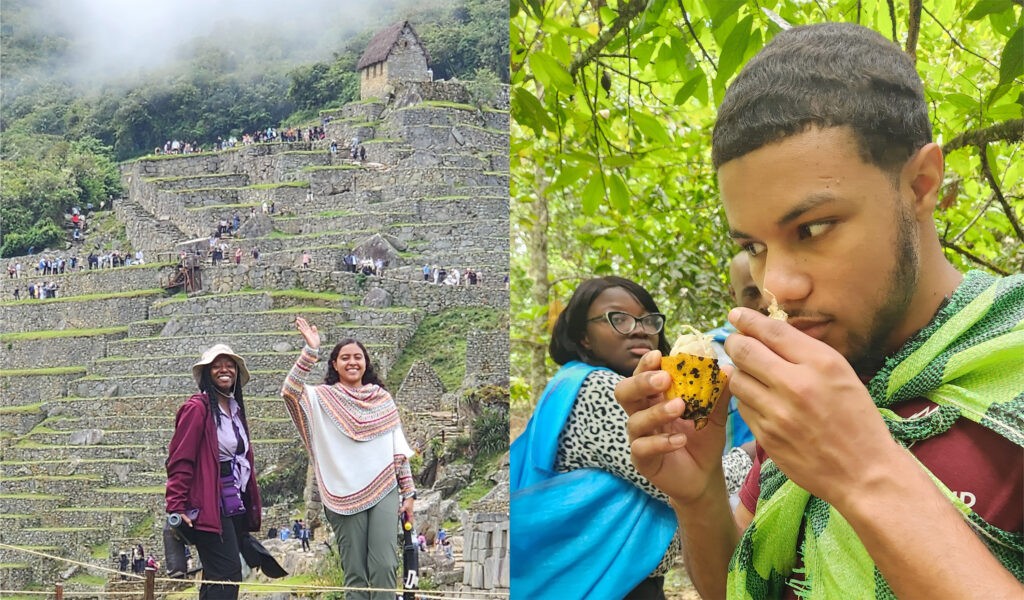
An experiential learning trip to Peru over the winter break provided global perspectives on agriculture for a trio of students in UMES’ Department of Agriculture, Food and Resource Sciences. The program was sponsored by the U.S. Department of Agriculture’s NextGen initiative and included three partnering HBCUs: Kentucky State, Lincoln and Florida A&M universities.
Shanaya Hines and Miredys Melendez, seniors majoring in agriculture with a pre-vet concentration; and Jeremiah Bright, a junior agribusiness management major and UMES 1890s Land-Grant Scholar, represented UMES.
Melding history & science
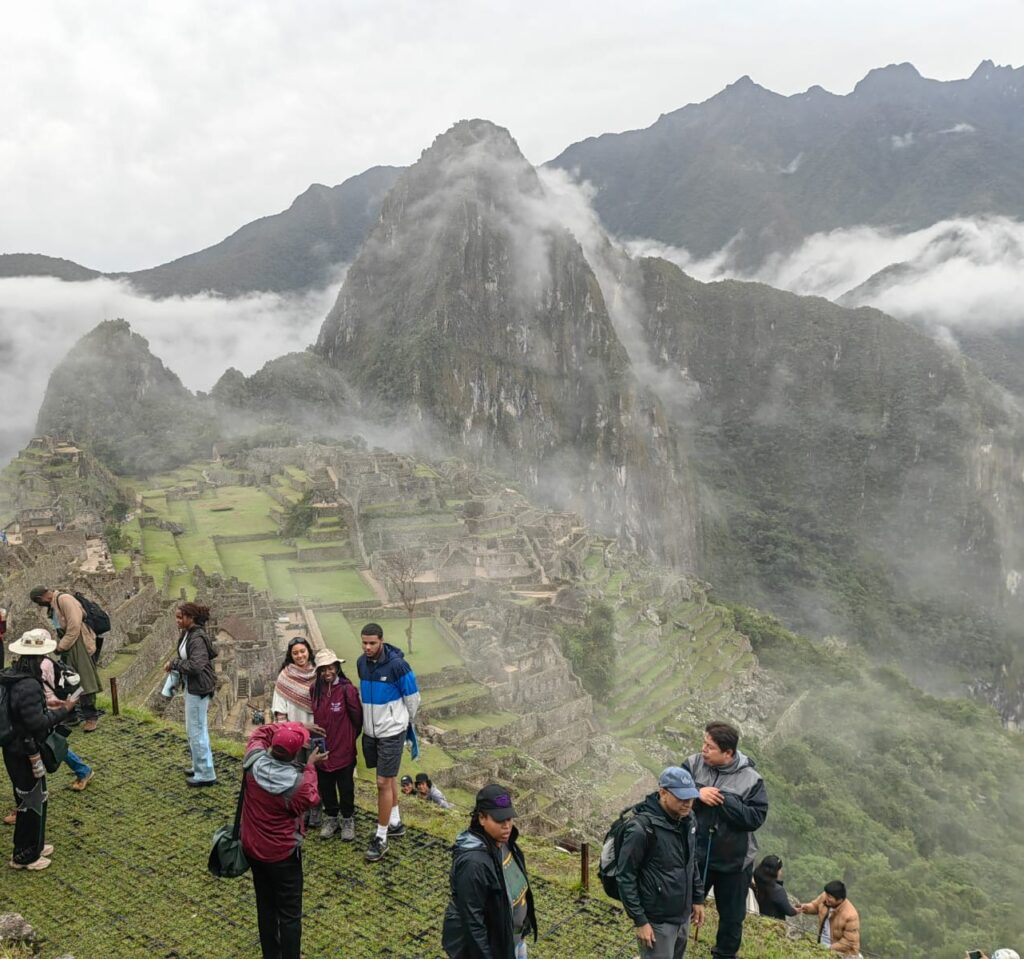
The group learned the history of the Incan empire and its systems of aqueducts and water canals during travels from Cusco to Ollantaytambo. Arriving by train to Aquas Calientes, the town at the base of Machu Picchu (pictured at right), they learned about its agricultural terraces which allowed corn, potatoes, quinoa, beans, coca and squash to be grown high in the Andes mountains.
“The high-altitude environment was intense, but the guided tour allowed me to understand Incan architecture, terraces and the sacred space in a way no book or video ever could,” Melendez said.
A 37-acre family-owned farm at 4,000 elevation in Manurua, El Mangal, served as an example of how today’s Peruvian farmers are preserving traditional farming practices. The group learned about growing cacoa, coffee, coca, medicinal plants and fruit trees. It was the most immersive and hands-on part of the trip, Melendez said.
“We learned about medicinal herbs … I was able to touch, smell and taste some of the plants and fruit which made the learning experience more tangible. The guides explained how these plants have been used for generations, highlighting the connection between tradition, science and community health practices,” Melendez said.
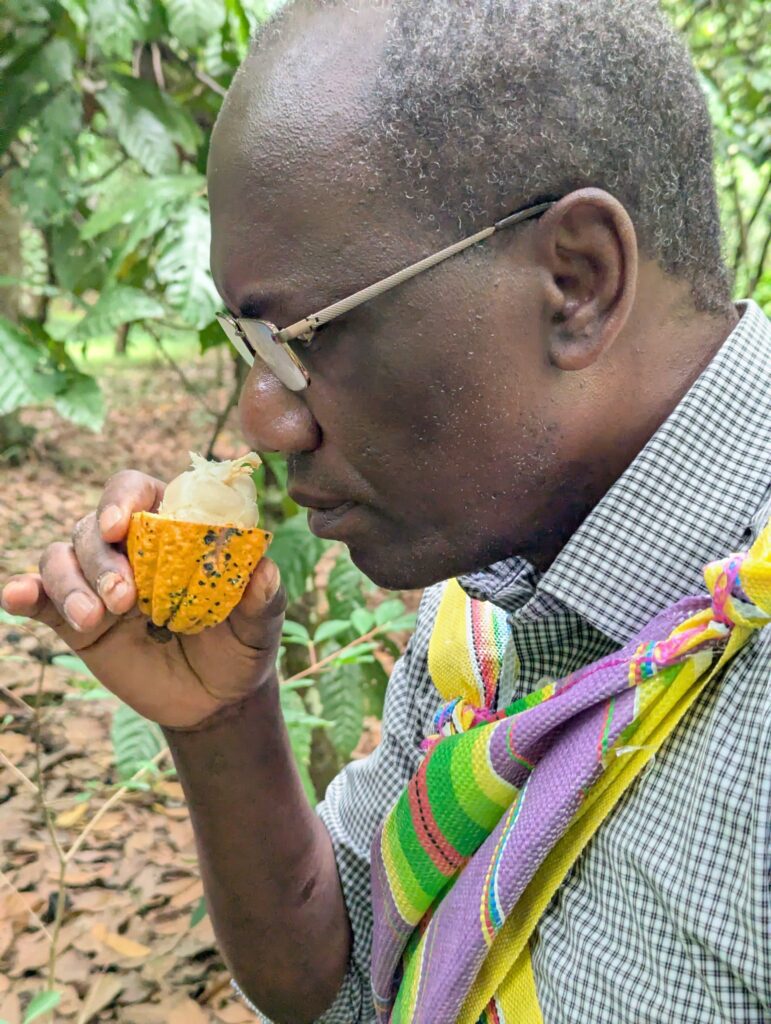
Hines was impressed that the 70- to 80-year-old fruit trees were still thriving, along with the 100-year-old cacao trees. She and the group planted cacao trees on the farm during their stay as an exercise in agricultural practice and environmental stewardship. Cocao comes in many “shapes, sizes, colors, smells and tastes,” she learned through sensory activities.
“Everything is organic. They control pests with plants like chilis, garlic and onions,” she said.
Students learned about the medicinal uses of guayaba, mango and other citrus fruits, along with lemongrass and the quinine plant, which is credited with providing a cure for malaria and saving the Peruvian population.
Economics & profitability
A visit to a coffee plantation provided insight into the production process, types of blends and certification, along with what constitutes organic.
“I saw how altitude, climate and soil affect the flavor of the beans. I also learned about pest control, pruning and earth-friendly practices used to maintain healthy crops,” Melendez said.
Beyond the technical aspects, she said, she learned how crops support local economies and people, “showing the real-world importance of agriculture.”
“The owner talked about the risks involved in the market, with prices fluctuating and farmers often having contracts with fixed prices. Small farmers work within cooperatives that handle exportation, taxes and fees and work to improve quality and process,” Hines said.
“Visiting the farms and seeing how beans are collected, processed and prepared for export made the connection between production decisions and business outcomes very clear. It was eye-opening to see how a family running only a few hectares can meet international demand and earn recognition for their quality. This experience directly relates to my agribusiness major, showing that agriculture is not just about growing crops, it’s about strategy, efficiency and understanding markets to achieve long-term success,” Bright said.
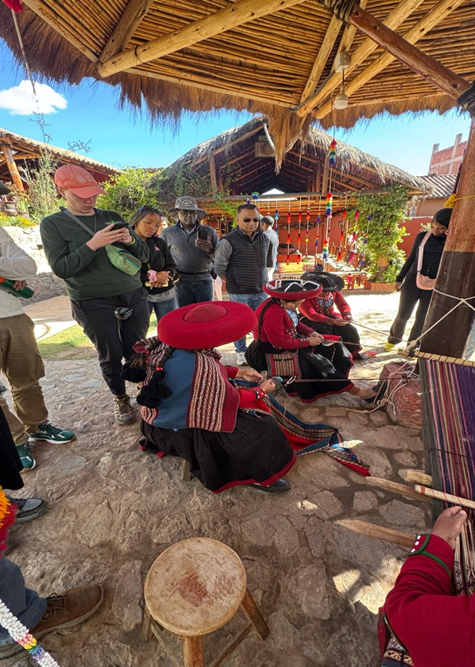
An excursion to Chincheros educated the travelers on textiles from alpaca, llamas and sheep and the use of plants and fruits for natural dyes. Examples of circular agricultural terraces were seen in Moray. They also visited a 500 BC salt spring in Maras, where salt is harvested through evaporation in the area’s terraces and pools by cooperative family units.
“The Maras salt terraces demonstrated ancient Incan ingenuity in mining and irrigation, while the Moray agricultural terraces showed their experimentation with microclimates to grow different crops,” Melendez said.
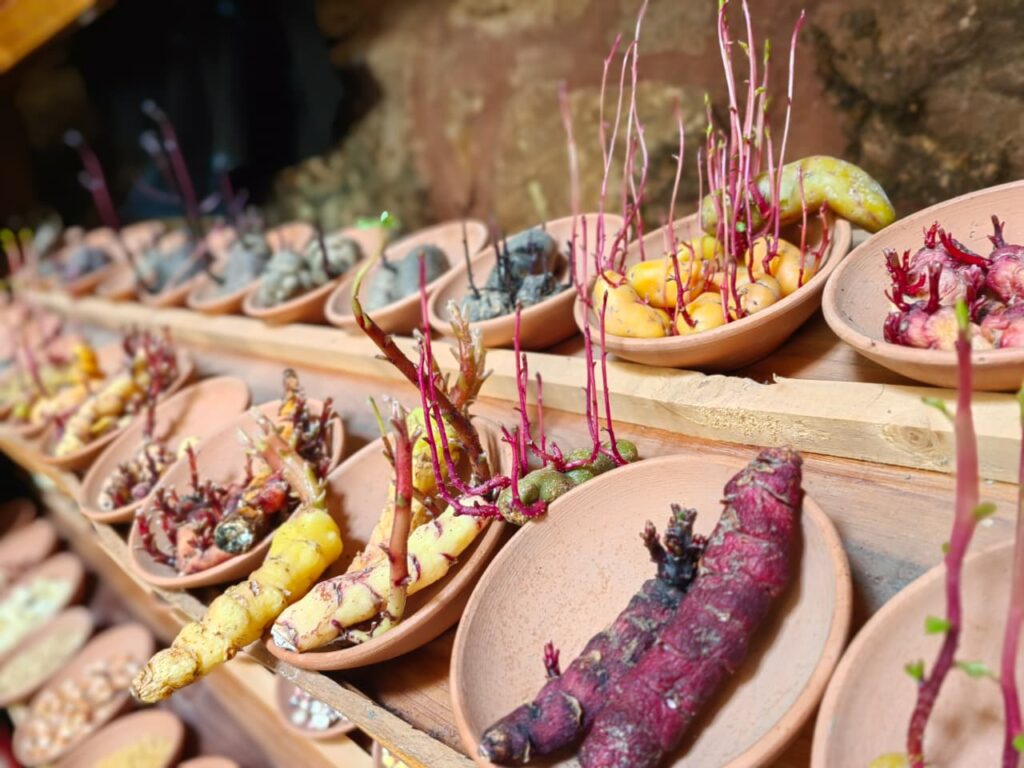
An interesting agricultural stop on the tour was a community-led conservation project, Potato Park. Some 9,200 inhabitants live and farm in six distinct communities located on three levels that wind along and up the mountain. Farmers grow potatoes and corn in small, family-owned plots. About 1,400 potato cultivars were examined as an example of how the knowledge of indigenous people support food security and weather durability.
“Potato Park has a seed bank to preserve native potato varieties and works to protect these crops from transgenic modification and patenting by foreign companies. They prioritized preserving the natural way of growing potatoes,” Hines said.
Science boosts food systems
The tour concluded at the Universidad Nacional Agraria La Molina in Lima, with visits to dedicated museums on campus that focused on soils, minerals and entomology. Work in highlighted laboratories focused on soil chemistry, mapping and agricultural geospatial analysis.
“From soil testing to plant analysis, I could see how scientific methods support agriculture and improve food systems,” Melendez said.
After 11 days, the time to return stateside and begin the spring semester had arrived.
“The experiential learning trip to Peru provided exposed us to the country’s agricultural systems, cultural practices and weather-related challenges. Seeing these farms firsthand reinforced what I’ve learned in the classroom – that agriculture is more than growing crops. It’s about building sustainable businesses, adapting to challenging conditions and connecting quality local production to global markets,” Bright said.
The experience, he said, has inspired him to “think critically about how I can apply these lessons in my future career.”
“During this trip to Peru, I saw firsthand the benefits of student participation in an international experiential trip. It was hard not to see the interconnectedness of U.S. agriculture with the global food value chains. I will use those observations to enrich my teaching, student mentoring and research activities,” said Dr. Caleb Nindo (right), director of UMES’ Food and Agricultural Sciences Ph.D. program, who accompanied the students.
Gail Stephens, agricultural communications and media associate, University of Maryland Eastern Shore, School of Agricultural and Natural Sciences, UMES Extension, gcstephens@umes.edu., 410-621-3850.
Photos submitted
