
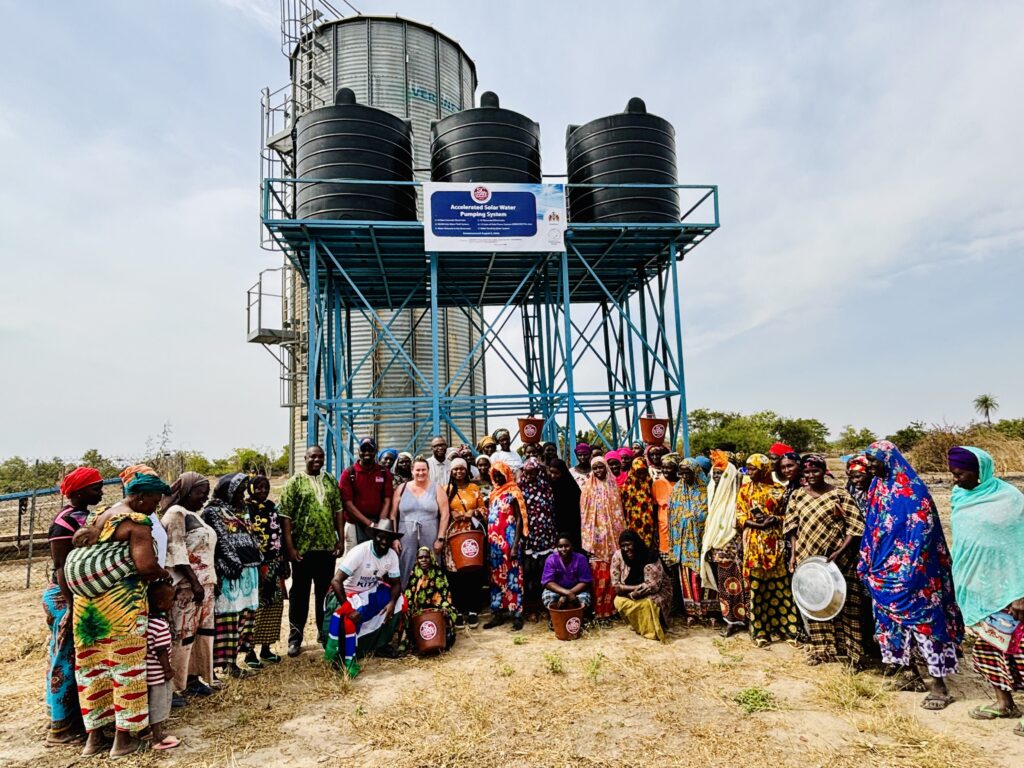
U.S. Embassy Deputy Chief of Mission Rebecca Taylor and South Carolina State’s Dr. Lamin Drammeh join the Illiassa Women Garden Kafo to celebrate opportunities in sustainable farming.
South Carolina State University, in partnership with the Government of The Gambia through the National Agricultural Research Institute (NARI), and with strategic support from the U.S. Embassy in Banjul, has actively worked with local women gardeners to develop sustainable vegetable production systems and a rural cooperative business and marketing strategy.
This initiative, supported by the 1890 Universities Center of Excellence for Global Food Security and Defense, aims to strengthen food security and promote economic empowerment by positioning women as reliable suppliers for institutional markets — most notably the Farafenni army barracks and the weekly Saturday “Lumo.”
On Dec. 16, 2024, a joint on-farm observation visit was led by Dr. Lamin Drammeh, associate vice president for public service and agriculture at South Carolina State University and principal investigator of the project “Cultivating Productivity and Resilience to Mitigate Food Insecurity in West Africa – The Gambia.”
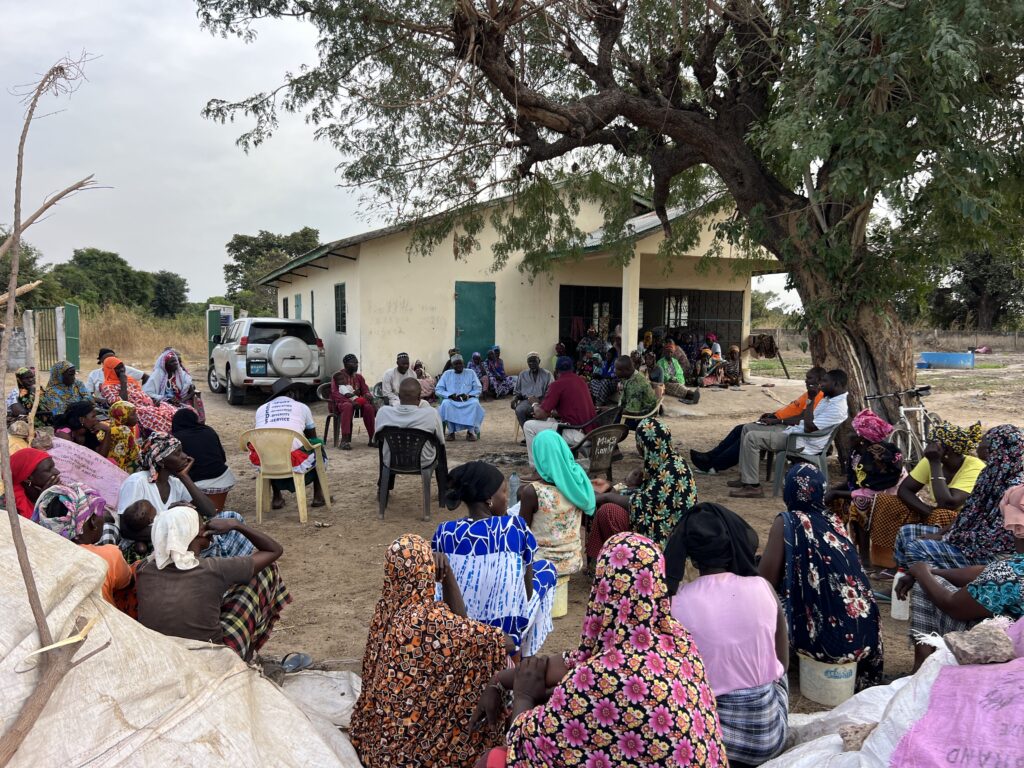
This provided Rebecca Taylor, deputy mission chief at the U.S. Embassy in The Gambia, an opportunity for hands-on engagement, assessment and dialogue with approximately 80 members of the Illiassa Women Garden Kafo and 10 community leaders, including the chief of Illiassa Village.
During the visit, the women gardeners shared their experiences, challenges and aspirations.
Joining Taylor were several key partners and stakeholders, including Dr. Ismaila Mbenga, head of the Integrated Pest Management Directorate at NARI; Dr. Lamin Dibba, director of research at NARI; Besenty Gomez, a women’s empowerment and sustainable agriculturist; and Abdoulie Jammeh, a program management consultant.
Isatou Dibba, secretary general of the Illiassa Women Garden Kafo, welcomed the delegation and facilitated the daylong event, which included a tour of the garden. The visit provided an opportunity for targeted technical advice and meaningful community dialogue.
A central theme throughout the discussions was the need to strengthen partnerships and enhance market access. The team emphasized that coordinated branding and community driven marketing strategies could improve visibility, competitiveness and profitability for the gardeners. Practical solutions were also discussed to address day-to-day agricultural challenges.
A key recommendation focused on water management: the team advised filling reservoirs during peak sunlight hours to ensure a more consistent water supply for irrigation, which is particularly vital during the dry season when water scarcity limits productivity.
Local leadership played an active role in the discussions. The village Alkalo (chief) expressed enthusiastic support for the project, highlighting the value of unity, organization and mutual support among the women. The village Imam raised an important concern regarding the women’s vulnerability to exploitation by middlemen and underscored the need for a structured, fair marketing framework to ensure reasonable prices and longterm sustainability.
Another promising opportunity discussed was the potential formation of a vegetable cooperative and the construction of a cold storage facility. Such infrastructure would allow the women to preserve perishable crops longer, reduce post-harvest losses and access more distant markets — factors critical to the success of small-scale producers.
The collaboration between South Carolina State University researchers and extension specialists, the Government of The Gambia through NARI and the University of The Gambia Undergraduate Internship Scheme represents more than agricultural assistance; it is a model of community-driven empowerment.
By placing women at the center of rural economic development and blending expert knowledge with local insight, the initiative is laying the foundation for a more long-term, well-rounded agricultural economy in The Gambia.
As the project moves forward, continued community engagement, technical guidance and infrastructure
development will be essential. The strong commitment shown by stakeholders thus far signals a promising future — one in which women are not only cultivators of the land but leaders shaping sustainable rural livelihoods.
