
By Dr. Jennifer Timmons
Highly Pathogenic Avian Influenza (HPAI) continues to threaten poultry flocks in the United States and worldwide. Poultry growers understand implementing biosecurity practices on their farm is the best way to protect their flock from HPAI.
No grower wants to think they will have an HPAI outbreak on their farm. However, if an outbreak occurs, advanced planning and preparation can help reduce anxiety and stress and increase the speed of response in dealing with the outbreak. Learning about biosecurity audit requirements and taking advantage of voluntary biosecurity assessment programs offered by the United States Department of Agriculture (USDA) will help strengthen a farm’s biosecurity program.
This guide summarizes USDA’s biosecurity assessment programs as it relates to requirements, indemnity, and cost-share funding.
Biosecurity Compliance Audit Program (BCAP)
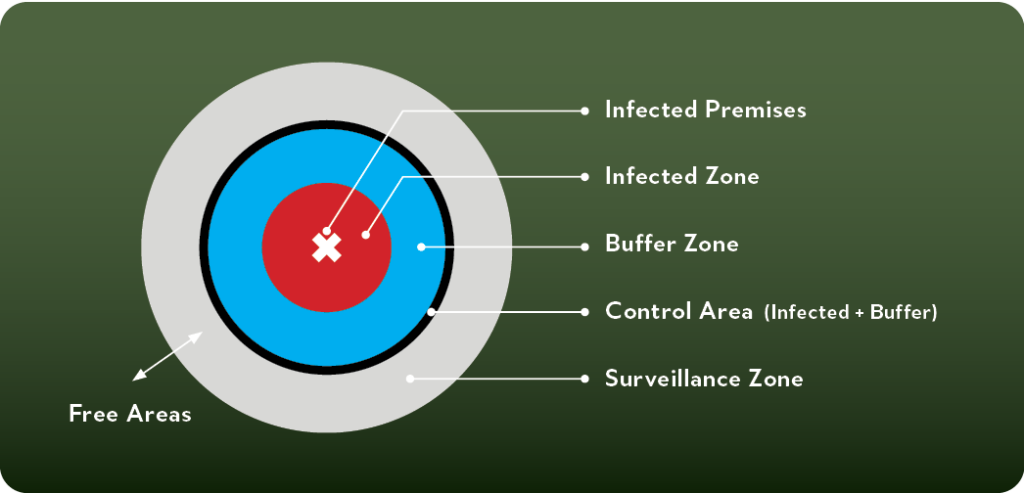
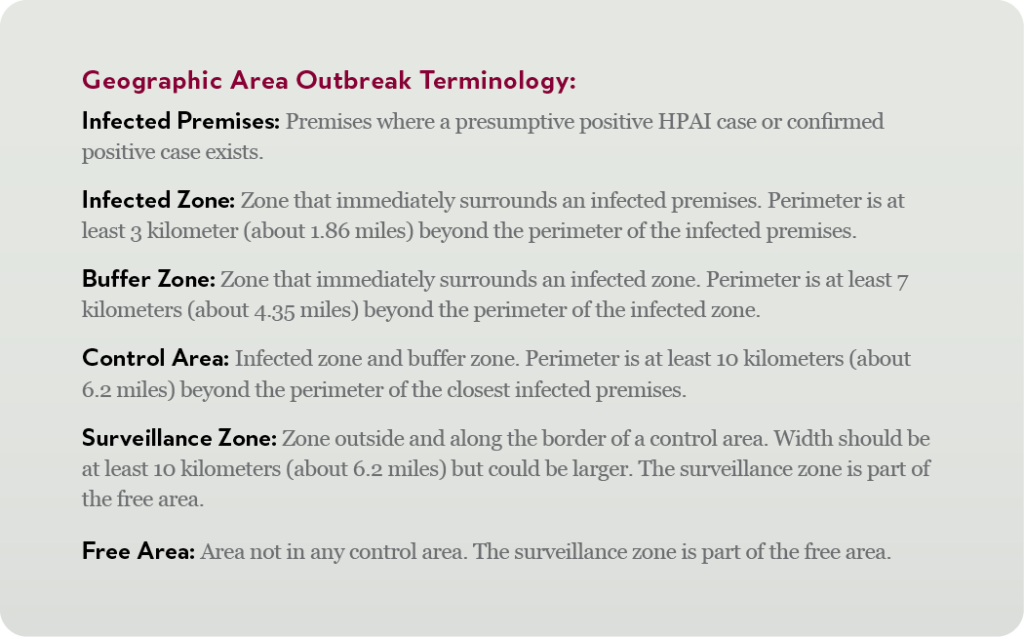
Description: BCAP is a mandatory audit required by USDA for any commercial poultry farm that wants to place another flock after an HPAI infection or place another flock inside a Control Area (the 10 kilometer area around an infected premises). The infected farm must pass the BCAP audit in order to be eligible for indemnity and farms within the Control Area must pass the BCAP audit to receive indemnity for new birds (if they become infected) placed after a previous infection.
Audit process: There are three main sections to the USDA’s Biosecurity Audit Tool. A copy of the audit tool can be obtained from the USDA’s
Animal and Plant Health Inspection Service website. All items of the audit must pass to receive indemnity payment (USDA APHIS, 2025).
These sections include:
- Complex/Company Biosecurity Documentation
- Farm-specific Biosecurity Documentation
- Visual Verification of Farm-specific Biosecurity (can be conducted remotely for control area placements and on-site for infected premises)
A BCAP audit is valid for six months. Infected farms will need a BCAP audit every six months until the state is declared free of HPAI in poultry. Non-infected farms inside the Control Area do not need to complete another audit.
Biosecurity Incentive-Focused Assessment (BIFA)
Description: BIFA is a voluntary assessment that is available to commercial poultry farms not affected by HPAI. The assessment uses the same audit tool as BCAP and has potential for USDA cost share funding. When a farm completes a BIFA, it may count as a control area BCAP if the premises ends up in a control area within six months after successful completion of the BIFA.
Assessment process: The farm will be assessed using the BCAP Biosecurity Audit Tool. Any deficiencies found during the assessment must be corrected before compliance is awarded and cost-share funds are distributed.
Cost-share Funding: Commercial poultry farms with more than 500 birds are eligible to receive cost-share funds. USDA covers up to 75% of the cost to repair the highest-risk biosecurity issues identified by the assessment. The grower is responsible for the remaining 25%. The maximum reimbursement is $2,500-$25,000 depending on the size of the flock and type of bird being raised. Cost-share funds are distributed after the biosecurity measures are completed and verified.
Wildlife Biosecurity Assessment (WBA)
Description: WBA is a voluntary on-farm assessment conducted by USDA Wildlife Services. This assessment is an additional biosecurity tool available to poultry growers to support and strengthen their farm biosecurity program. WBA is separate from BCAP requirements and indemnity. This assessment identifies how wildlife could spread HPAI to a flock.
WBA is not a one-time service; rather it involves a series of regular farm visits by Wildlife Services staff over several months. Wildlife Services staff will provide recommendations for facility repairs and options for managing wildlife on the farm to help reduce the risk of HPAI.
Assessment process: There are three components to the WBA. These include:
- Wildlife surveys to determine wildlife activity and their habitats around the farm.
- Wildlife Hazard Identification surveys to identify physical gaps (such as holes and foundation breaches) and environmental attractants (such as spilled feed and standing water).
- Direct control of wildlife to reduce wildlife presence on the farm. These control measures can be either through non-lethal or lethal options, if needed.
Currently there is no fee for poultry growers to have a WBA of their operation. Wildlife Services staff will follow up approximately every three months to monitor if recommended strategies were implemented on the farm. USDA may pause visits if no progress is made toward implementing recommended strategies.
Requesting an Audit or Assessment
Mandatory BCAP audits are initiated through USDA’s Emergency Management and Response System (EMRS) permitting gateway. Voluntary assessments (BIFA and WBA) can be requested via email at poultry.biosecurity@usda.gov or by calling 844-820-2234. Be prepared to provide the following key information when you call or email:
- Premises name
- Premises ID
- Premises 911 street address
- Premises city, state and ZIP code
- Premises coordinates (decimal degree format)
- Production type
- Requestor’s name, phone number, and email address
The successful completion of a voluntary BIFA identifies and addresses weaknesses in a farm’s biosecurity program before an HPAI outbreak. It also ensures your farm is compliant and eligible for cost-share funding to implement biosecurity improvements. A WBA is an additional tool to strengthen a farm’s biosecurity program by surveying and addressing wildlife risks that could introduce HPAI to your flock. Utilizing these two programs together provides poultry growers with valuable tools to prevent an HPAI outbreak.
References
Contributor, Harkless, R. (2025, October 1) Biosecurity Compliance Audit Program (BCAP). 60th National Meeting on Poultry Health, Processing, and Live Production, Ocean City, MD.
Minnesota Turkey Growers Association. (n.d.). Understanding USDA Biosecurity Audits and Assessments: What’s Required, What’s Different, and How Cost Share Funding Works. Minnesota Turkey. https://www.minnesotaturkey.com/news/usda-biosecurity-audits-assessments
USDA Animal and Plant Health Inspection Service. (2025, March 20). Helping Producers Prevent Highly Pathogenic Avian Influenza in Commercial Poultry Flocks [Video]. YouTube. https://www.youtube.com/watch?v=-HfmFheRH2g&t=1s
USDA Animal and Plant Health Inspection Service.(2025, April). Highly Pathogenic Avian Influenza (HPAI) Biosecurity Assessments: Frequently Asked Questions. APHIS USDA. faq-hpai-biosecurity-assessments.pdf
USDA Animal and Plant Health Inspection Service. (2025, January 14). HPAI Response Surveillance Sampling of Commercial Premises in a Control Area and Surveillance Zone. APHIS USDA. https://www.aphis.usda.gov/sites/default/files/hpai-surveillance-commercial-premises.pdf
USDA Animal and Plant Health Inspection Service. (2025, December 8). HPAI Response Biosecurity Compliance Audit Program (BCAP) Biosecurity Audit Tool. APHIS USDA. https://www.aphis.usda.gov/sites/default/files/biosecurityaudit.pdf
Contact
Dr. Jennifer Timmons is an associate professor of poultry science at the University of Maryland Eastern Shore and UMES Extension. For more information, contact her at jtimmons1@umes.edu
This work was supported in part by the U.S. Department of Agriculture, National Institute of Food and Agriculture Extension grant
NI241444XXXXG017, in partnership with the Maryland Legislature.
