
Alternative Crop Program
The Alternative Crop Program at the University of Maryland Eastern Shore Extension helps farmers cultivate non-native crops, which opens a new revenue stream and satisfies expanding demands for a variety of vegetables and cuisines.
The program is designed to equip farmers with skills to capitalize on available resources by incorporating alternative crops into existing cropping systems that can mitigate risks associated with extreme weather variability, improve soil health, and better cope with market fluctuations and threat of pests and diseases. Alternative production systems that improve efficiency, strengthen farm longevity and increase profitability is also a program highlight.
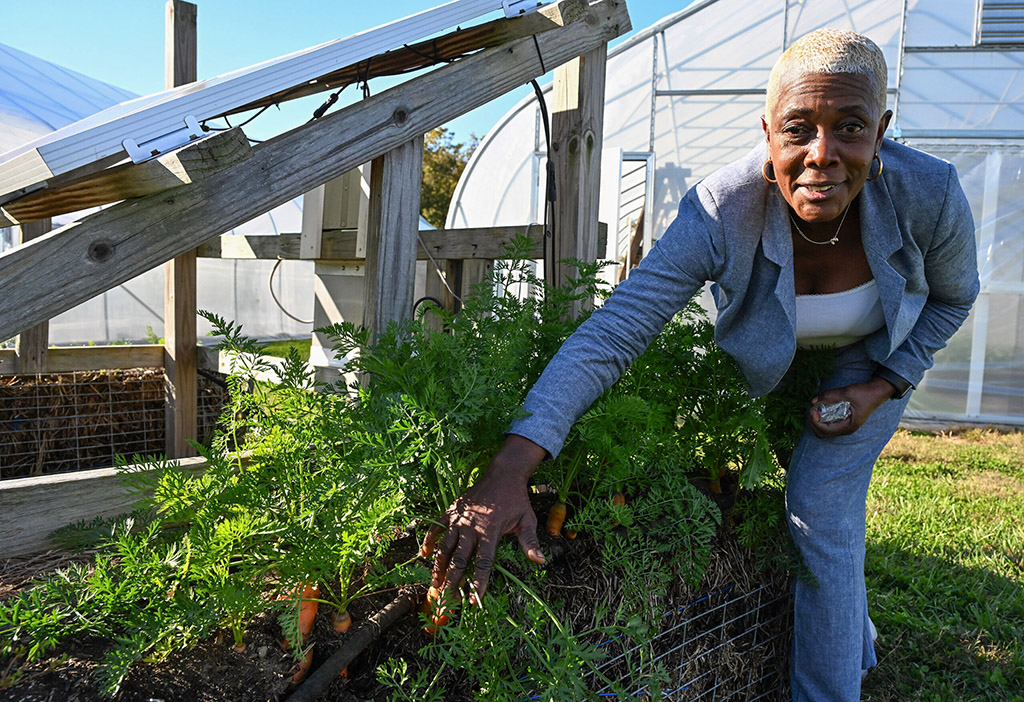
Our alternative crop specialist, Dr. Nadine Burton, works with small- and mid-scale farmers, as well as beginning farmers and local growers, offering her expertise, hands-on support, technical assistance, and training on what to grow, how to grow it and how to get their crops successfully to market for enhanced profitability.
UMES Extension holds regular workshops and learning opportunities about growing and selling alternative crops for niche markets and creating value-added products.
The program, part of the UMES Extension Small Farm Program and based at the UMES Research, Extension and Teaching Farm, showcases test crops that can be grown in Maryland and the Mid-Atlantic region. Featured are specialty crops such as hibiscus, turmeric, amaranth, ginger, hops and aronia, as well as traditional vegetables such as tomatoes, beets, carrots, onions, shallots, potatoes and Swiss chard. Extending the growing season, protected agriculture methods are incorporated such as high and low tunnels, and shade systems.
Regenerative approaches (cover cropping, composting, reduced tillage, crop rotation and integrated soil health management) and alternative growing methods (container gardening, raised-bed systems, vertical production and small-space agriculture) are also taught.
How We Can Help
- Research-backed information on alternative crops to consider growing. Farmers work alongside researchers on alternative crop production and share their experiences with other farmers.
- One-on-one training on alternative crop production. Farmers are provided with personalized technical support throughout the production process.
- New market opportunities linking growers with buyers. New crop production requires marketing strategies. One way to develop new markets is through education and introduction of the crop to the public.
- Value-added opportunities and product development. Growers and food processors learn about the value-added potential of alternative crops, creating new economic opportunities.
What Growers Say

Here’s what farmers who have worked with UMES Extension to add alternative crops to their businesses have to say:
John Roduik, owner of Poppa Said Maybe Farm in Somerset County, Maryland, and program participant, said he cultivated 80-100 pounds of jute, callaloo and scotch bonnet each week. He observed local wildlife didn’t eat the crops because they did not recognize them — an added benefit.
Kimberly Raikes, CEO of Edible Farms Consultants Connect in Baltimore, said since growing scotch bonnet, African eggplant and hibiscus, she’s been asked to participate in different pop-up events and municipal markets.
Eugene Yarboro, owner Harvest2Health Organic Farming in Easton and Upper Marlboro, Maryland. He said since he began growing alternative crops, including African eggplant, he strategically established relationships with restaurants creating African dishes in the Washington Metropolitan area. Those businesses are now part of his client base.
In the News
Growing Farmer Profits: 3 Ways UMES Extension Teaches Value Addition to Family Farms
UMES Extension honors area farmers
Alternative Crop Program helps farmers turn profit, provide ‘taste of home’
Contact Us
Dr. Nadine Burton
Alternative Crop Specialist
Phone: 410-651-7354
Email: nmburton@umes.edu
Crystal J. Sankar
Program Management Specialist
Phone: 410-651-7351
Email: cjsankar@umes.edu
