
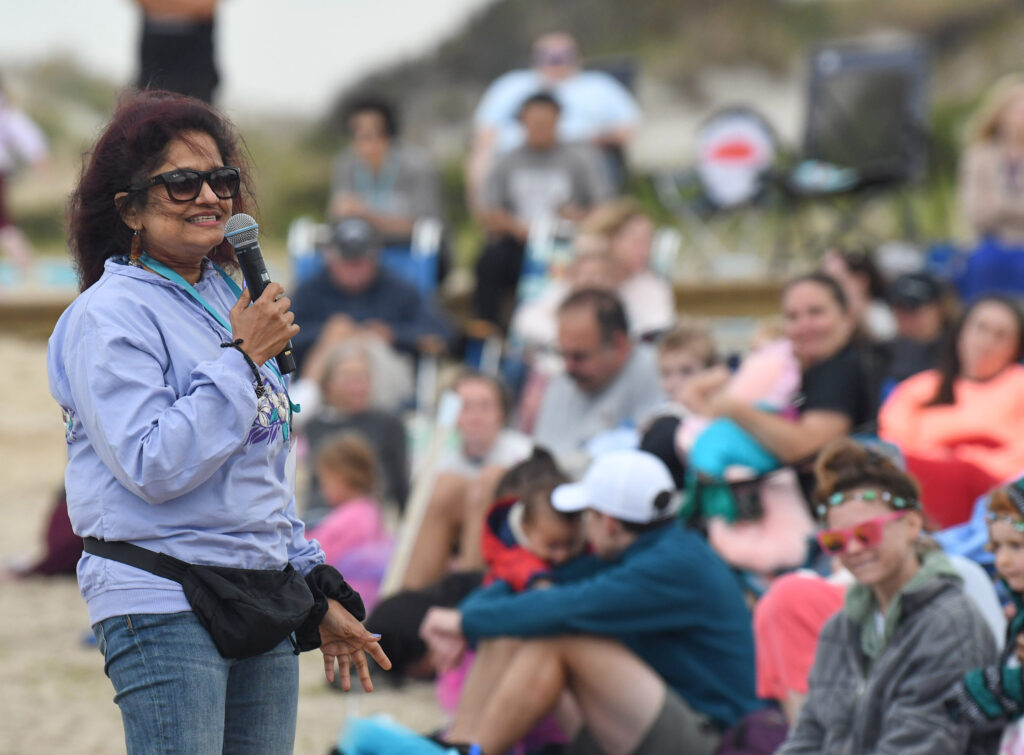
UMES researcher Madhumi Mitra (at left) shared her expertise in seaweed at a special eco talk Sept. 20 during the Ballet on the Beach Dance Festival. The third annual event, held at Assateague State Park, featured free professional dance performances interspersed with informational presentations on the history of the island and its wild ponies, and the science of the coastal bays. Attendance surpassed 1,000 people of all ages.
The professor of biological and environmental sciences also collaborated with the choreographer for the debut performance of “Seaweed Symphony,” providing guidance on seaweeds:
The ocean is never still. Currents carry life itself moving nutrients, drifting plankton and guiding the dance of seaweeds.
In the Atlantic Ocean, seaweeds like kelp forests and rockweeds sway in the Gulf Stream, tall and strong. In the shallow bays of the Delmarva Peninsula, delicate green sea lettuce, red Gracilaria, and brown Sargassum and Fucus take hold forming shelter for crabs, oysters and young fish. Wherever currents flow, seaweeds anchor and rise, creating a forest beneath the waves.
Seaweeds grow in succession. First, the fragile pioneers (green seaweed) clinging to bare rocks, surviving the pounding tides. Then, the more resilient species (red seaweed) appear, weaving layer upon layer until robust forests (brown seaweed) rise. All are connected, intertwined in the rhythm of currents.
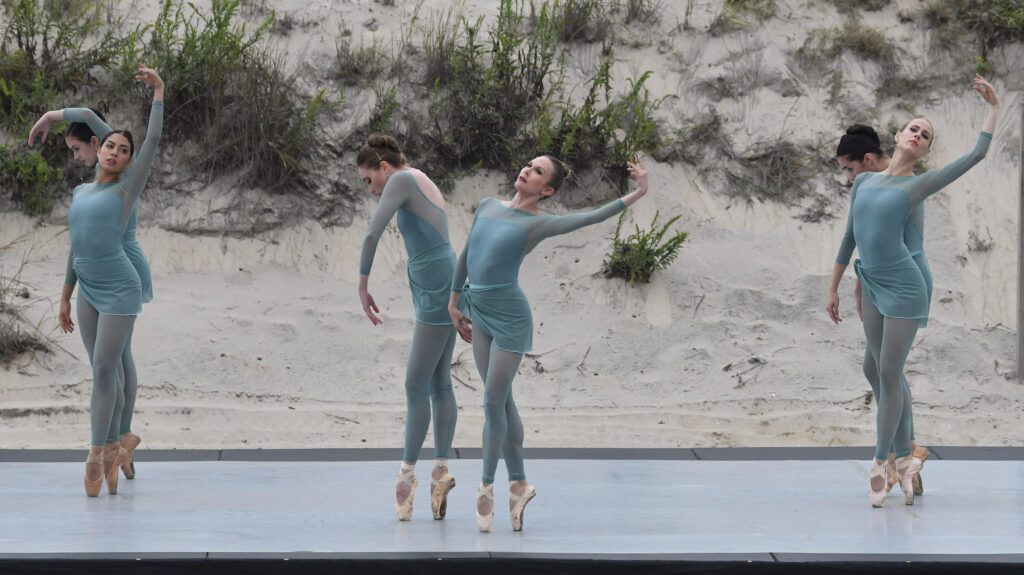
Humans disrupt the balance. Changes in temperatures warm the water. Pollution chokes the bays. Seaweeds, once abundant, can become scarce. At the same time, run-off from bays can cause some forms to proliferate impacting other forms of aquatic species. The currents still flow, but they no longer carry forests and end up carrying fragments.
Yet hope remains. When we protect the oceans and care for the bays, seaweeds return. Carried by the currents, spores settle, grow and weave again into forests. In harmony with the tides, the sea breathes, and so do we.
Currents and seaweeds are partners in the ocean’s great ballet. They remind us that life is always in motion, fragile yet resilient. May we protect their dance so the ocean’s harmony endures.
Photos by Todd Dudek, UMES Ag Communications, tdudek@umes.edu
