
Food safety remains a global concern with millions of people falling ill and thousands dying each year due to the consumption of contaminated food.
Understanding microbiological hazards associated with food and their environments is critical. Equally important is the detection and identification of food- and waterborne pathogens within food systems to prevent and control related illnesses.
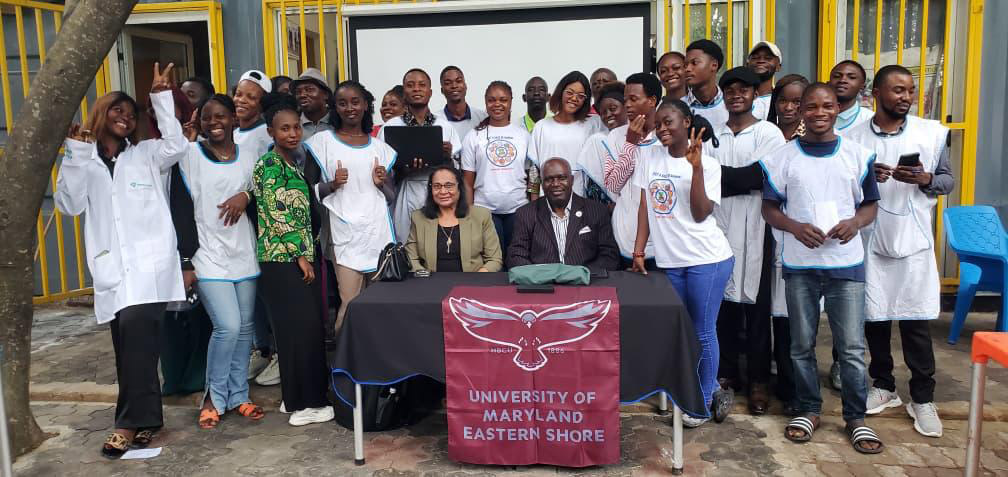
To address these challenges, Dr. Salina Parveen, a professor in the Department of Agriculture, Food and Resource Sciences and acting associate vice president for research at the University of Maryland Eastern Shore (UMES), conducted an intensive two-day training program in the Democratic Republic of the Congo (DRC). The program brought together more than 42 participants, including students, faculty, scientists and farmers.
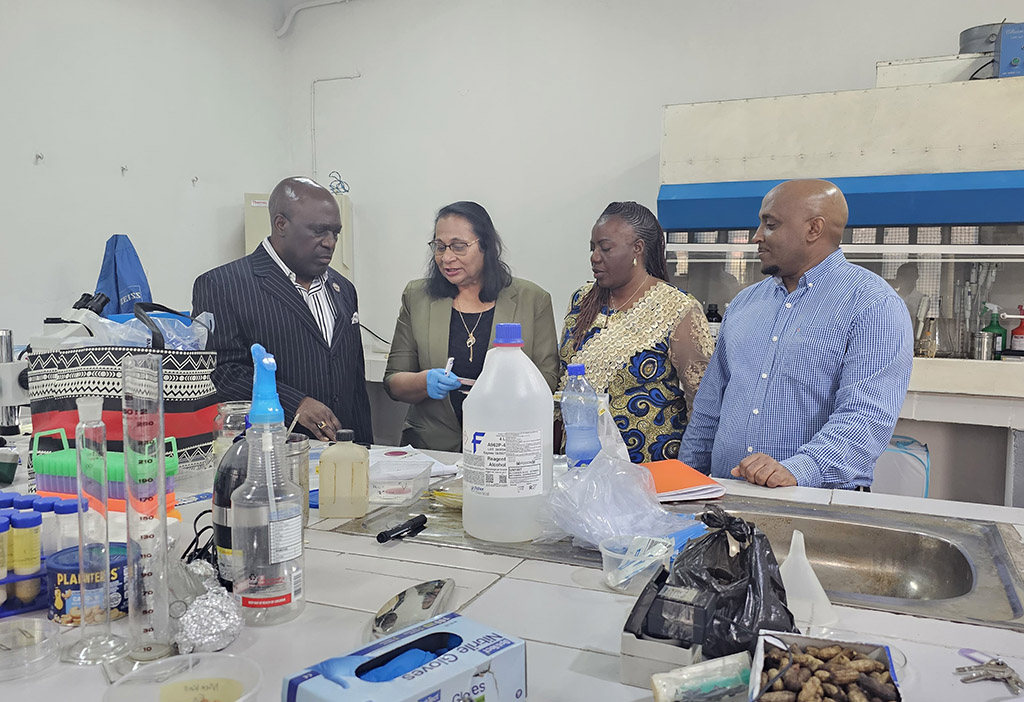
The training featured both lectures and hands-on laboratory sessions focusing on the ecology, persistence, sources, detection, characterization and control of foodborne pathogens in food systems.
Parveen also addressed current and emerging threats to crops, including biological, chemical, environmental and extreme weather-driven risks. Additional topics included agricultural practices and systemic risks, post-harvest and supply chain vulnerabilities, and emerging and future food safety concerns.
She emphasized effective mitigation requires integrated farm-to-fork approaches, strengthened surveillance systems, and science-based policies.
Participants received training in both traditional and molecular methods for pathogen detection across various food systems.
During practical sessions, Parveen worked with students, faculty and scientists to detect foodborne pathogens and indicator bacteria in ready-to-eat foods and potable water.
In collaboration with Professor Lyna Mukwa of Plant Clinic International (PCi) in Kinshasa, Parveen is also supporting the establishment of a Biosafety Level 2 (BSL-2) laboratory at PCi. This facility will enable the detection and enumeration of foodborne pathogens using both conventional and molecular approaches.
Additionally, Parveen and Dr. Stephan Tubene, professor and chair of the Department of Agriculture, Food and Resource Sciences at UMES, visited local farms and the University of Kinshasa to train farmers and students on comprehensive food safety practices.
Their training covered Good Agricultural Practices; soil, water and manure management; safe use of fertilizers and pesticides; worker hygiene; on-farm sanitation; pre-harvest contamination risks and consumer food safety.
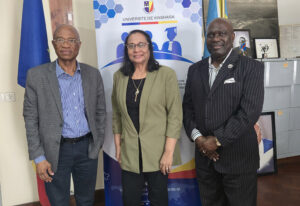
To conclude the training, Parveen and Tubene had a working meeting with Professor Jean-Marie Kayembe Ntumba, president of the University of Kinshasa, in his office. UMES and UNIKIN have signed a Memorandum of Understanding, which engages both institutions in teaching, research and outreach activities.
