
As heat waves intensify and extreme storms become more frequent, farmers around the world are facing a pressing challenge: how to protect livestock as the weather itself continues to change.
Led by Dr. Ryszard Puchala at Langston University, in collaboration with Tuskegee University, this project is conducted under Phase 4 of the 1890 Center of Excellence for Global Security and Defense (CEGFSD).
The project’s overall goal is to mitigate the effects of stress in Caribbean animal production, offering practical, science-based solutions that benefit farmers, improve animal welfare and strengthen food security across the Caribbean region and bey ond.
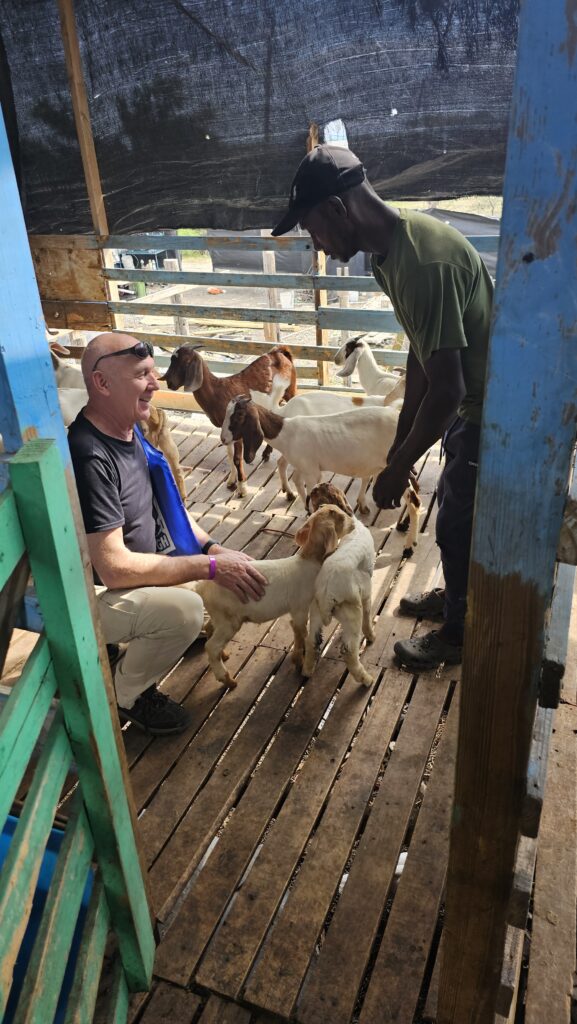
The project, carried out in collaboration with several Jamaican agricultural partners, focuses on reducing heat stress in livestock, a growing problem directly affecting animal health, farm productivity and the strength of local food systems. A finding of the project could benefit the U.S. production system.
When shade disappears, heat stress rises post hurricane
The urgency of this work became clearer following deadly Hurricane Melissa, a Category 5 storm that struck Jamaica in 2025. Melissa is the strongest recorded hurricane to make landfall in Jamaica, according to NOAA. In addition to widespread damage to buildings and infrastructure, the hurricane caused extensive loss of trees.
Leaf stripping and the destruction of tree canopies eliminated much of the natural shade that grazing animals depend on to stay cool. With shade suddenly gone, goats were exposed to intense direct sunlight and a much higher heat load. For many farmers, the loss of natural shade proved to be one of the most serious and unexpected consequences of the storm.
Simple, affordable solutions
Rather than relying on costly infrastructure, the research team partnered directly with farmers to develop and test practical, affordable solutions that can be implemented in almost any setting. These innovations included heat-resilient shelters built from readily available commercial wood pallets, solar-powered fans to enhance airflow, and portable tools for rapid assessment of body temperature and respiration rates.
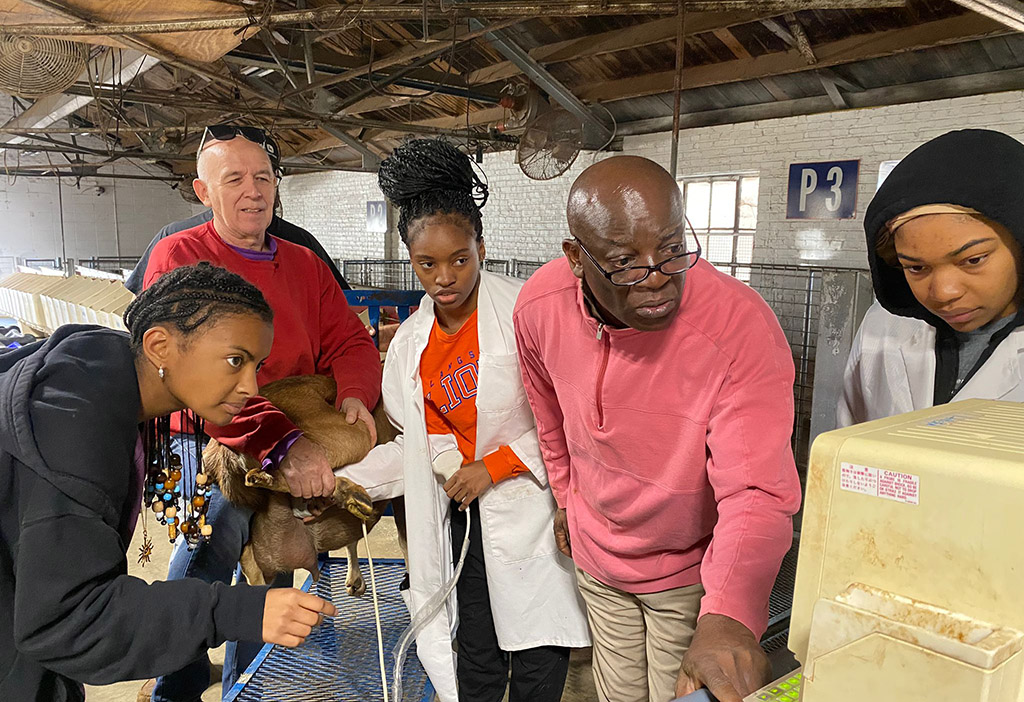
The approach also incorporated noninvasive thermal imaging to detect heat stress without handling animals, along with low-cost ultrasound technology for efficient pregnancy monitoring.
Training and demonstrations were a vital part of the project. In addition to farmers and extension personnel, students from the Caribbean and United States participated in research on natural remedies to combat heat stress and gained hands-on experience to help prepare them to become the next generation of agricultural professionals.
By combining classroom learning with on-farm demonstrations, participants developed skills they could use immediately.
Comparing heat stress in Jamaica and Southern United States
Although conditions in the southern United States are generally less severe than in the Caribbean, the risks remain significant.
In Jamaica, the heat load index, a measure of cumulative heat stress experienced by animals, remains very high for up to eight months of the year. In contrast, similar conditions typically occur in the southern United States for only about two months annually.
By working with Caribbean partners who face prolonged heat stress, U.S. researchers and producers can better develop and refine mitigation techniques needed to protect livestock as temperatures continue to rise. These new mitigation techniques could also be used by farmers in the southern United States.
Benefits that reach beyond Jamaica
Jamaica’s extreme tropical climate provided a real-world testing ground for heat mitigation strategies that are becoming increasingly relevant to warmer regions of the U.S., particularly the Southern states.
One important finding of the project was that Boer goat breeding stock imported from the U.S. showed better adaptation to summer heat than goats maintained under Oklahoma conditions.
Building on these findings, molecular and physiological studies are now underway to better understand how animals adapt to heat. This knowledge will support the development of endurance in goat herds capable of maintaining health and productivity under increasing thermal stress in both Caribbean and U.S. production systems.
An important part of this project is providing support for U.S. breeding stock and encouraging future U.S.-Caribbean breeding imports, which directly support U.S. farmers while strengthening hardy livestock systems.
