It’s a learning experience you can’t get from the classroom, knowing when intervention is needed in animal husbandry to save a life.
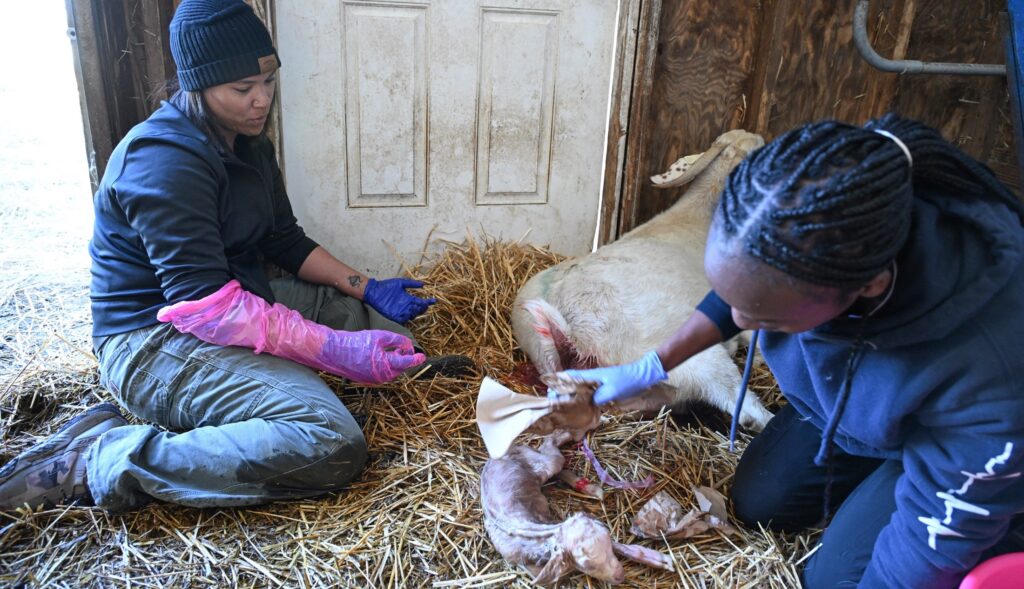
Shamia “Mia” Onley (far right) was being interviewed on camera, with quick glances to the expectant doe, or female goat, who had settled in the corner, when she said, “We’ve got to stop. I have to call Dr. Braxton. She’s pushing hard and she’s not dilated, so I don’t feel good about this.”
The call is made, another student worker is hailed for extra hands, and the supplies and birthing bucket are grabbed in wait for Kimberly Braxton (far left), the UMES veterinarian, assistant professor and pre-vet advisor. Onley is poised to take control in her stead if needed, as time is of the essence.
Braxton arrives, dons gloves and examines their patient. “Good call, Mia, she wasn’t going to be able to get them out.”
Braxton reports the first kid to be delivered is breech with hind legs tucked forward “when normal presentation should be facing forward like Superman.” The two work in calm, practiced unison, Onley assisting as the veterinarian turns and repositions the young goat for birth.
One delivered and two siblings to go, all show malpresentation. The second kid has its head bent backward with hind legs out and front legs forward, and the last in line has one leg bent — all potentially detrimental to the health of the mother and offspring.
Prior to the emergency births, Onley was saying how busy, but successful, this spring’s lambing and kidding season had been.
“They’ve been going really fast. We see one clinical sign of labor and then they’ve arrived,” said the seasoned UMES Extension employee, who worked through earning a 2024 bachelor’s degree in general agriculture with a pre-vet concentration.
That’s the way the process should be ideally, Onley said. A normal birth should involve minimum assistance, resulting in less stress for the animals.
“All that you see here, all the babies, this is our hard work,” said the student, turned student worker, graduate and now employee.
It takes a team.
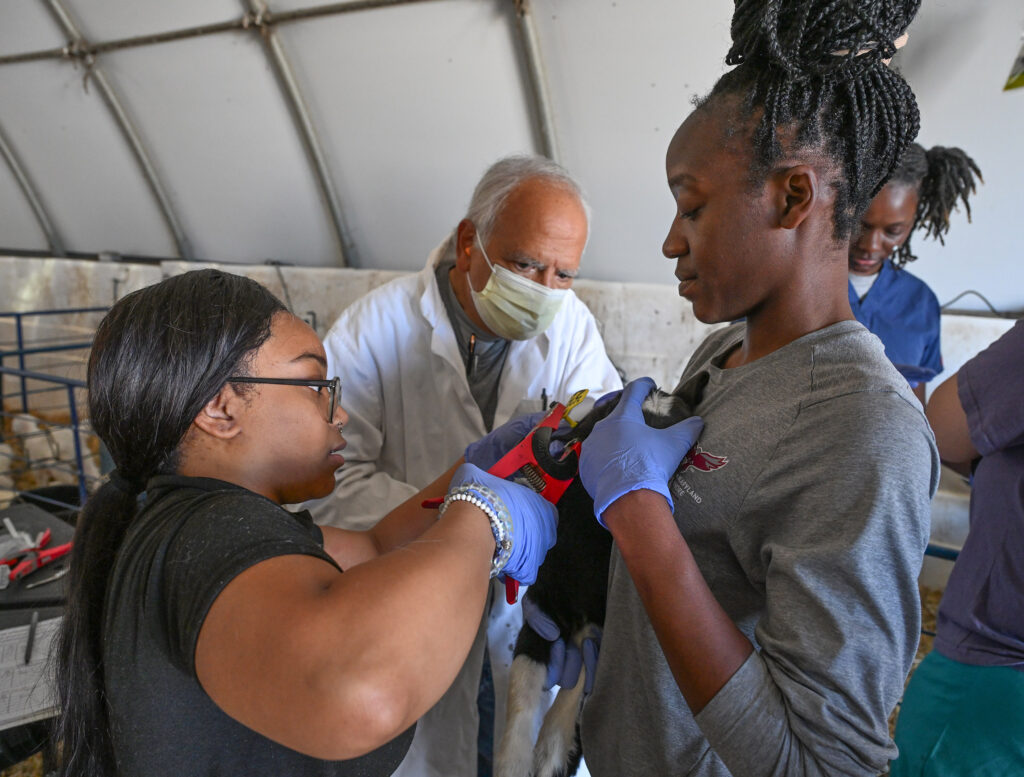
This season, when Braxton’s student group chat, or “bat signal,” as she likens it to, goes out for an impending birth, about 119 pre-vet students are on the receiving end. Those who are free from classes can come to the barn to experience first-hand what it’s like to be a practicing veterinarian, particularly for her 499 Independent class, lambing and kidding.
It’s not for everyone. Onley herself was initially apprehensive when it came to the intensity of birth and the slime, as she describes it.
“I encourage students, especially the freshmen, to do the things they are comfortable with — take baby steps,” Braxton said. “For instance, once Mia held a baby animal, then was able to save one, she fell in love with veterinary medicine.”
For those who don’t find it the right fit, Braxton said, she shows them how they can pivot from the clinical side but still find a career in animal science. Birthing season is also the time of year student volunteers from across school disciplines discover their interest in the profession.
Onley’s passion is fueled by the adrenaline she experiences in those clutch times emergency veterinary medicine presents.
“You learn from each one, and then take the knowledge with you to go about a future situation differently,” she said.
The budding veterinarian plans to continue working, adding to her skills and experiences as she prepares to apply to schools for her doctor of veterinary medicine, including UMES’ future program.
Gail Stephens, agricultural communications, University of Maryland Eastern Shore, School of Agricultural and Natural Sciences, UMES Extension, gcstephens@umes.edu, 410-621-3850.
Photos by Todd Dudek, agricultural communications, University of Maryland Eastern Shore, School of Agricultural and Natural Sciences, UMES Extension, tdudek@umes.edu.
