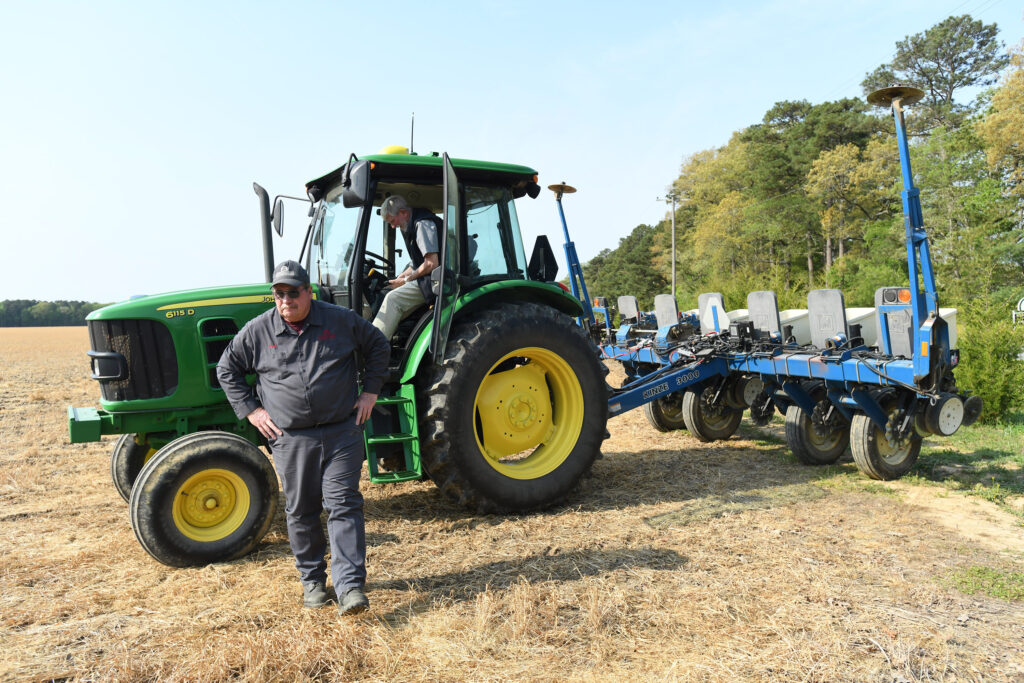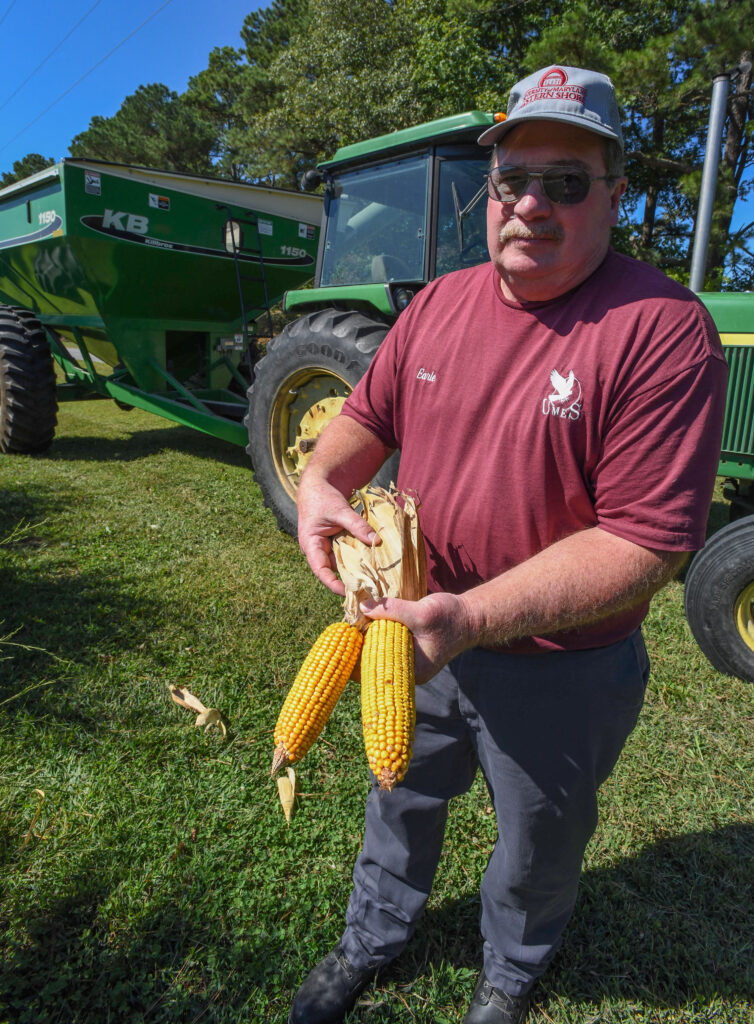
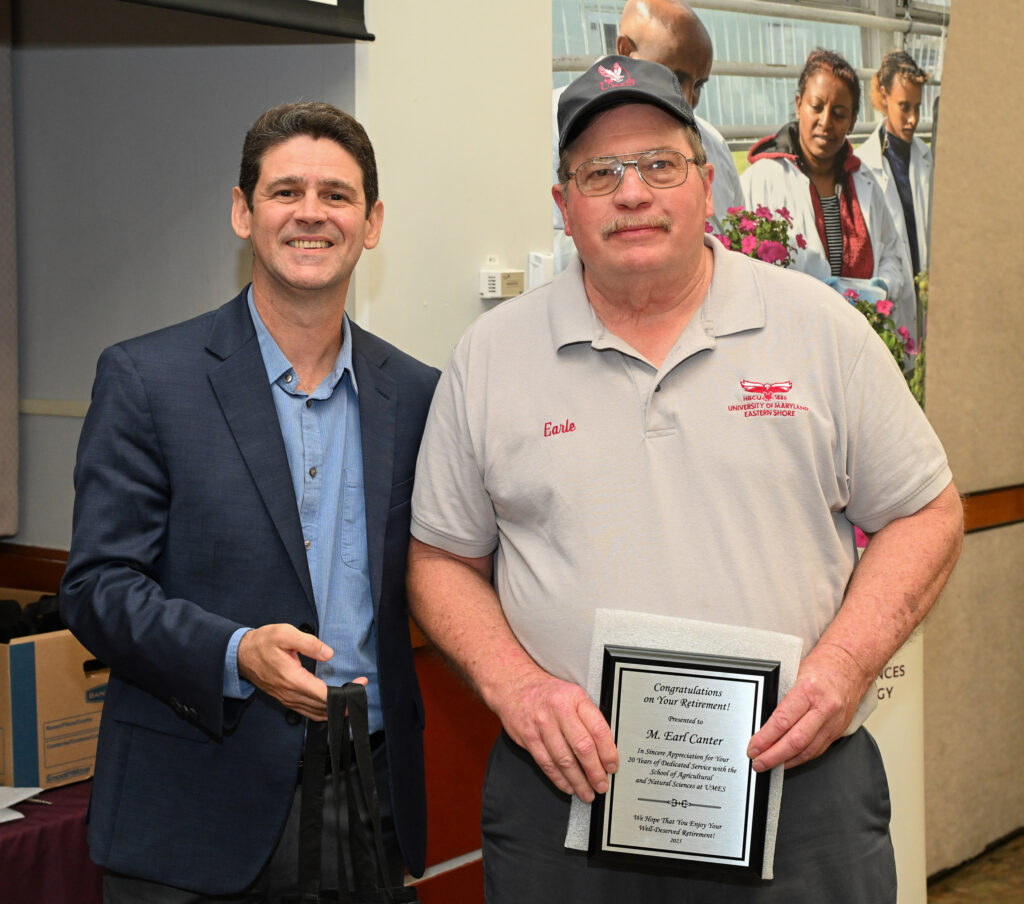
Did you know that the University of Maryland Eastern Shore is comprised of more than 1,530 acres? Of that, nearly 340 acres is tillable, including pasture for about 150 sheep, goats and chickens. Merton “Earle” Canter, the man responsible for the daily operation of the campus farm and the fields at the UMES Research, Extension and Teaching Farm, is retiring this month after 20 years of service.
Canter, UMES’ research farm manager, has seen a lot of changes over the years.
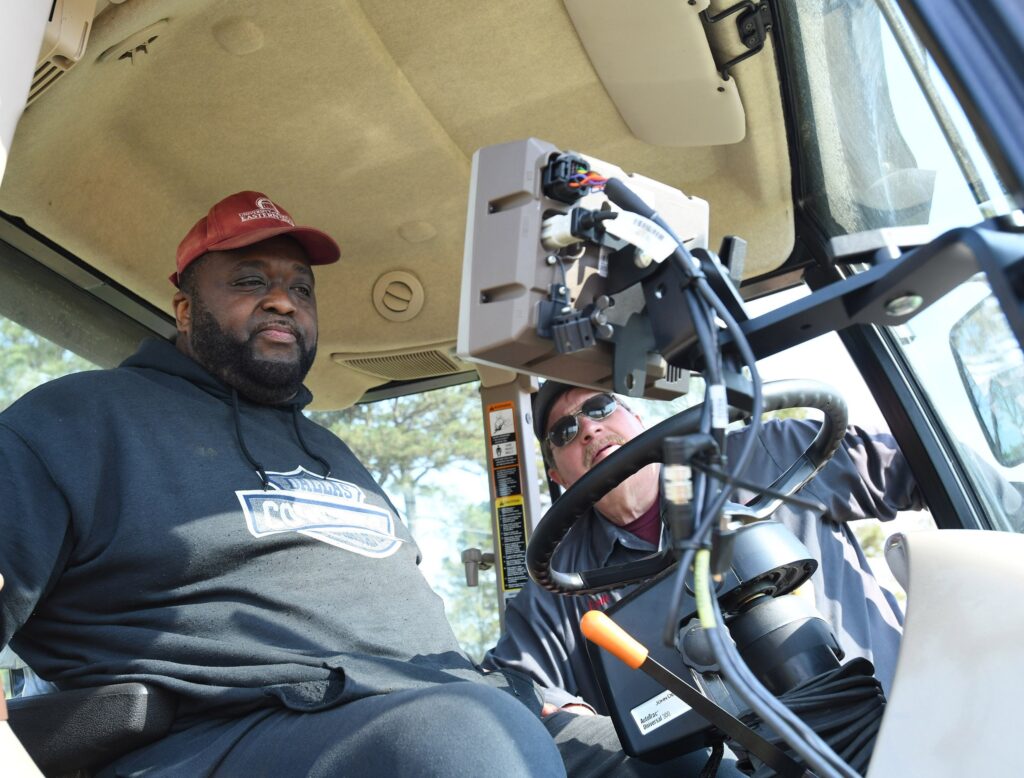
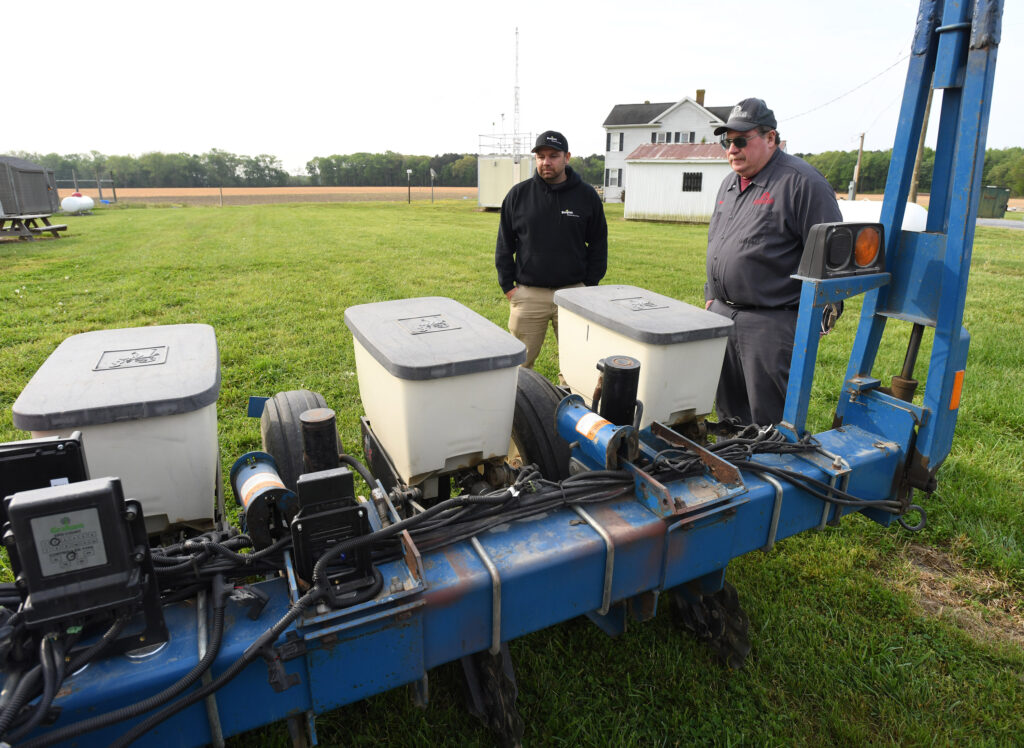
“We have gone from the old ways of farming to utilizing yield monitors and moisture sensors with GPS mapping, plastic layers and drip irrigation to machinery with auto guidance, variable rate nutrient application and exact applications of spray coverage,” he said.
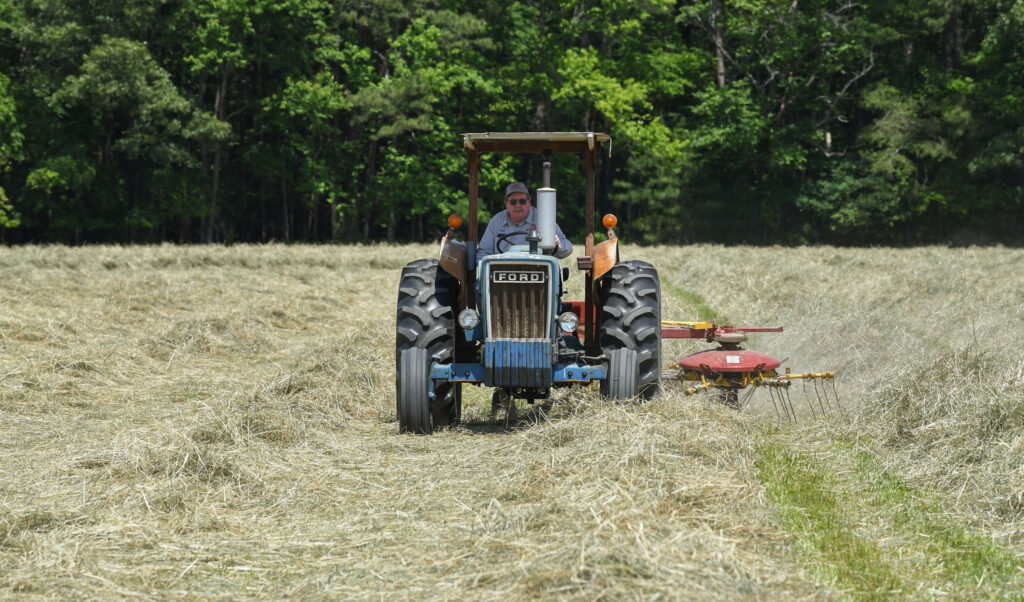
Precision agricultural practices are now used on the university’s farms to grow corn, high oleic soybeans and wheat, which are sold to the area’s poultry industry. Hay and wheat are also grown for feed and bedding for campus livestock.
It’s a feeling of accomplishment, he said, at harvest “when good crops and higher yields are achieved through all the hard work of the agricultural technicians.”
Some of the more unusual crops that have been grown at UMES, he said, are sugar beets, ginger, quinoa, industrial hemp, miscanthus, pigeon peas, callaloo and scotch bonnet peppers.
“The thing I enjoy most about my job is that every day is a little different,” Canter said. “Researchers are always coming up with new ideas and projects that the farm crew needs to implement by figuring out the best way to make things happen.”
Part of the job is also talking to farmers about new practices and products, which may prove useful to UMES’ farming operation.
“The biggest challenge for agricultural producers is to stay sustainable,” Canter said. “With constantly rising costs of equipment and inputs, and low commodity prices of grains, farmers need best management practices to survive another generation.”
Canter would know, as he spent three decades farming before his post at UMES, including seven years working in nutrient management with the Maryland Department of Agriculture. He holds a bachelor’s degree in agricultural and extension education from the University of Maryland, College Park.
Although he will miss “the people and the challenges,” Canter plans on traveling and spending more time with his family, including three adult children and eight grandchildren. Also, “working on the house before I get to old to do anything.”
He is an avid reader of the SANS Digest and Extension Connections and looks for opportunities to expand his knowledge.
“I do enjoy reading the newsletters to see what’s going on throughout campus that I may not have been aware of,” Canter said. “There are so many projects being done at UMES that I would never have known about otherwise.”
Gail Stephens, agricultural communications, University of Maryland Eastern Shore, School of Agricultural and Natural Sciences, UMES Extension, gcstephens@umes.edu, 410-621-3850.
Photos by Todd Dudek, agricultural communications, University of Maryland Eastern Shore, School of Agricultural and Natural Sciences, UMES Extension, tdudek@umes.edu.