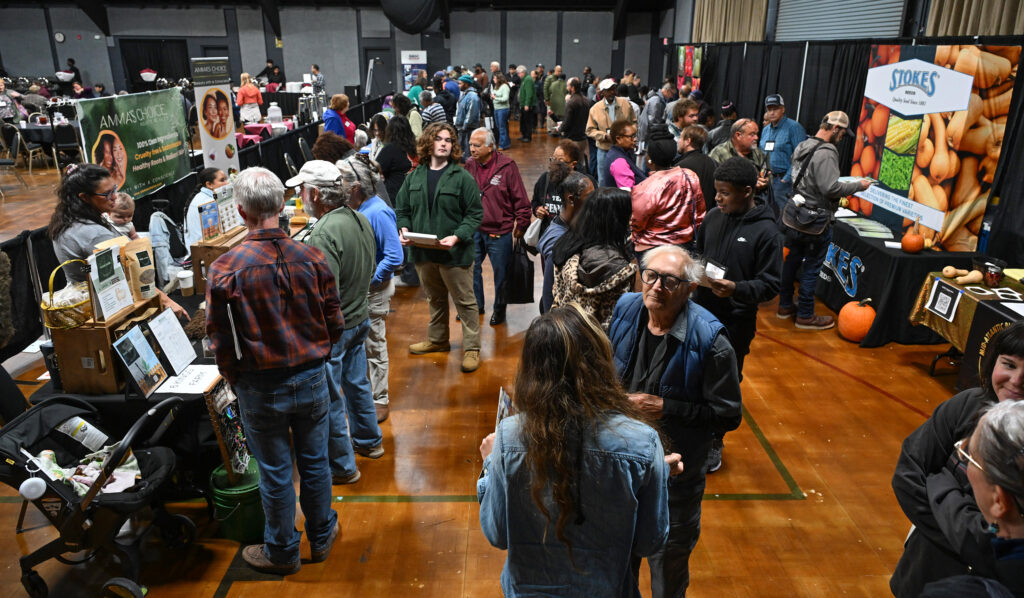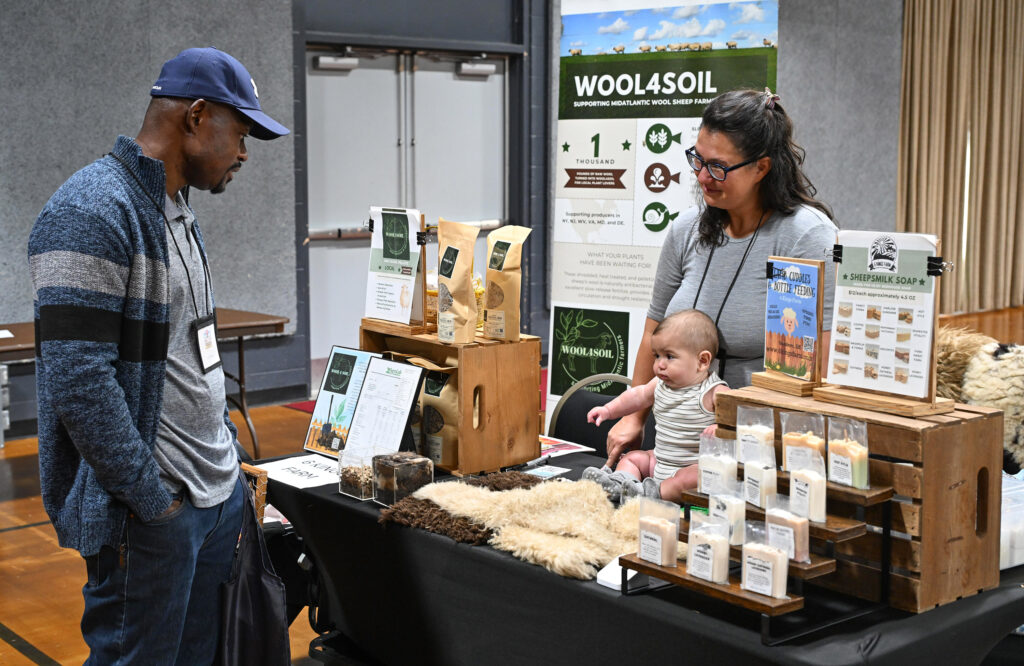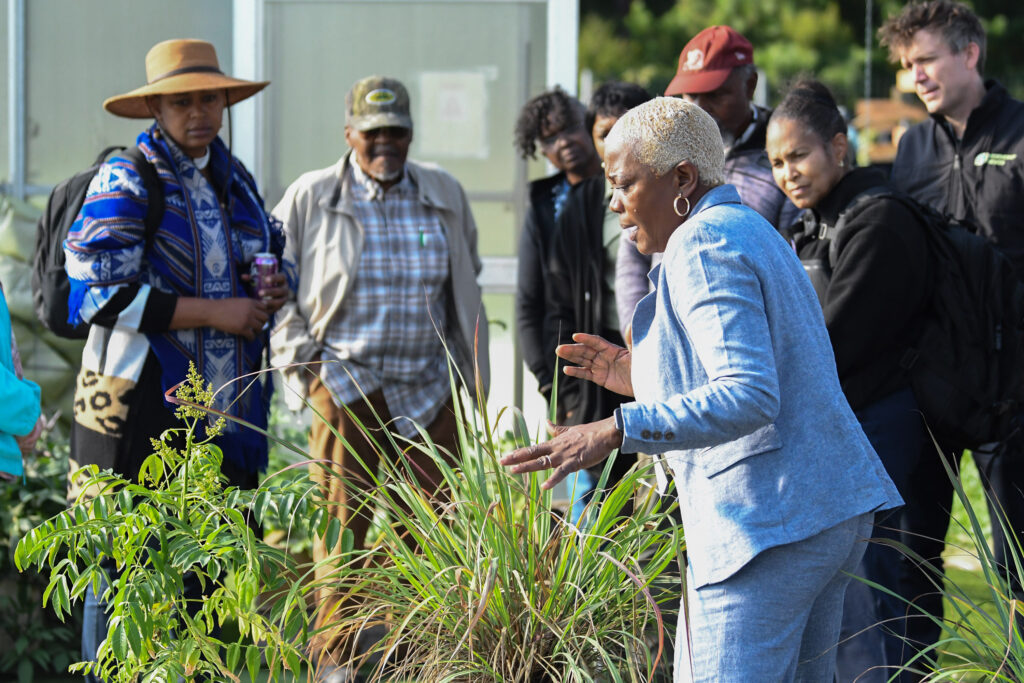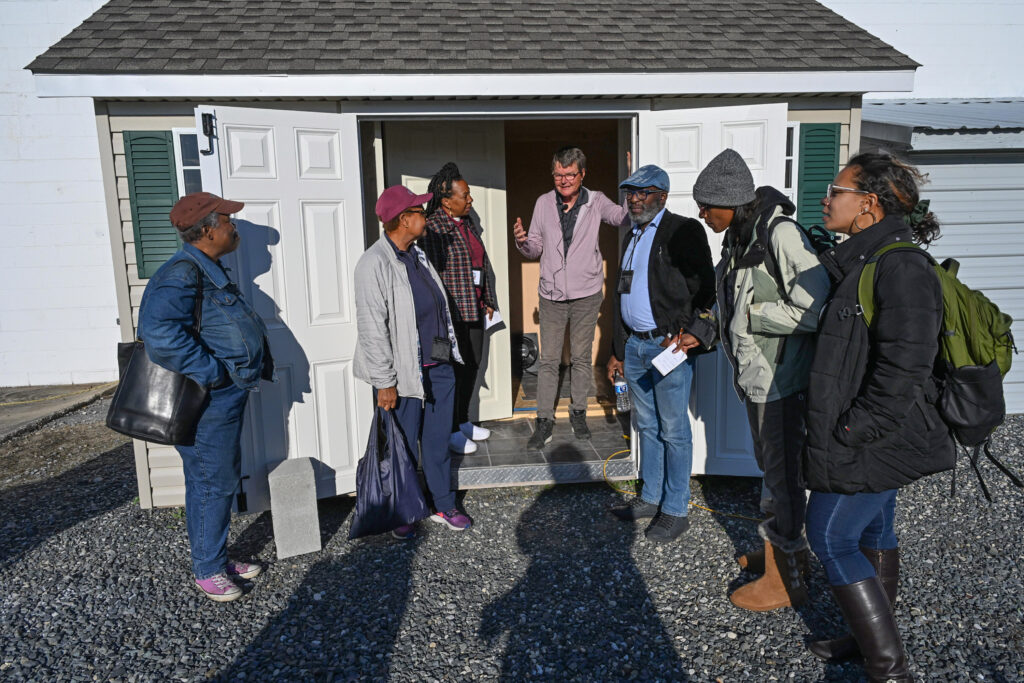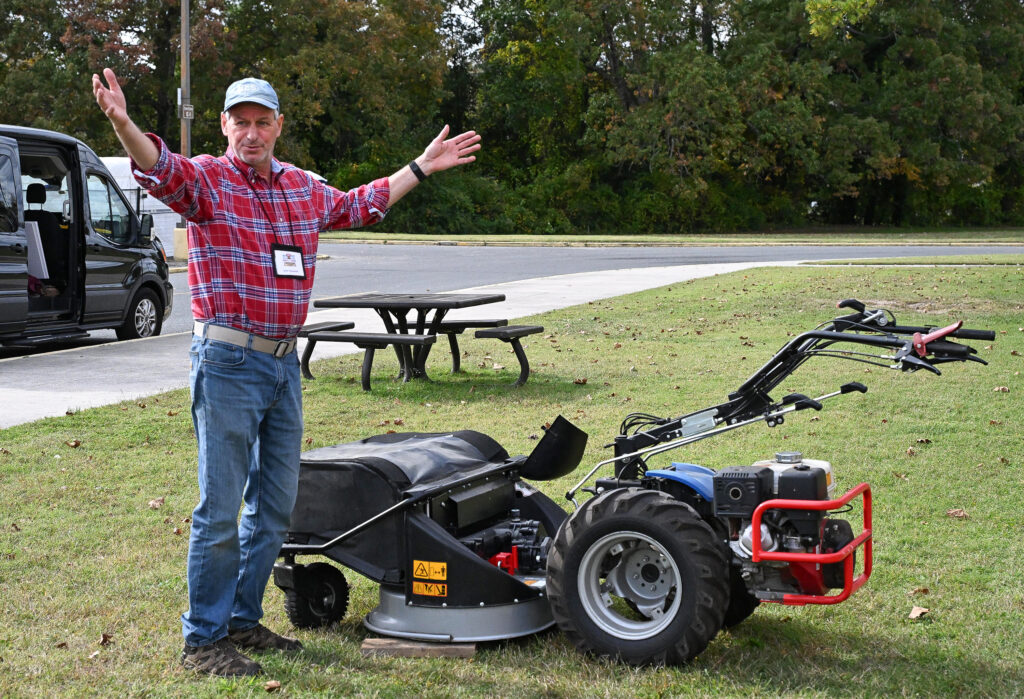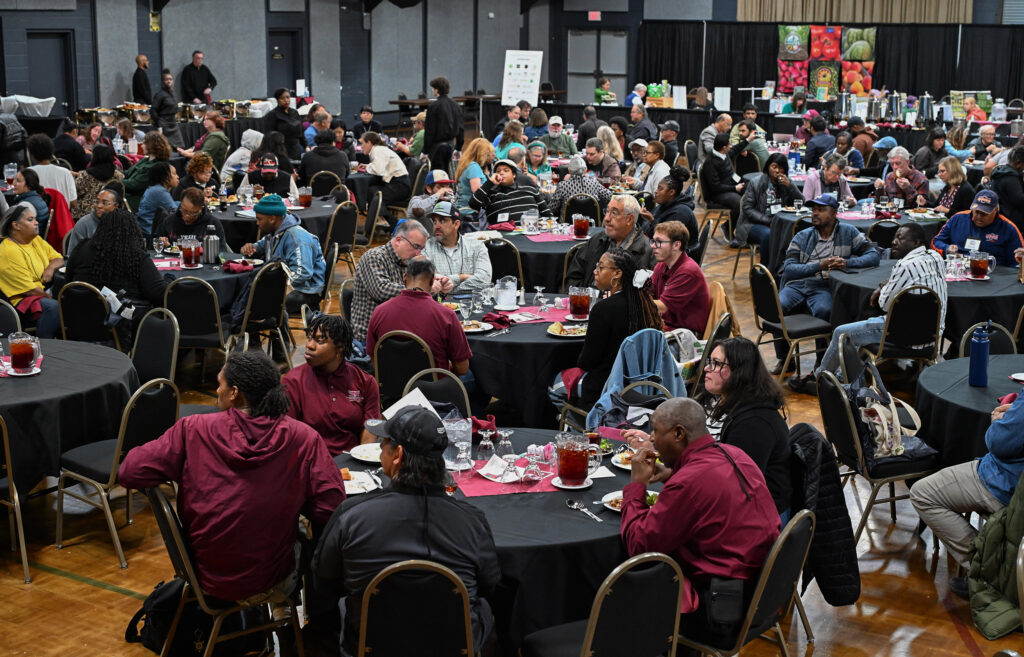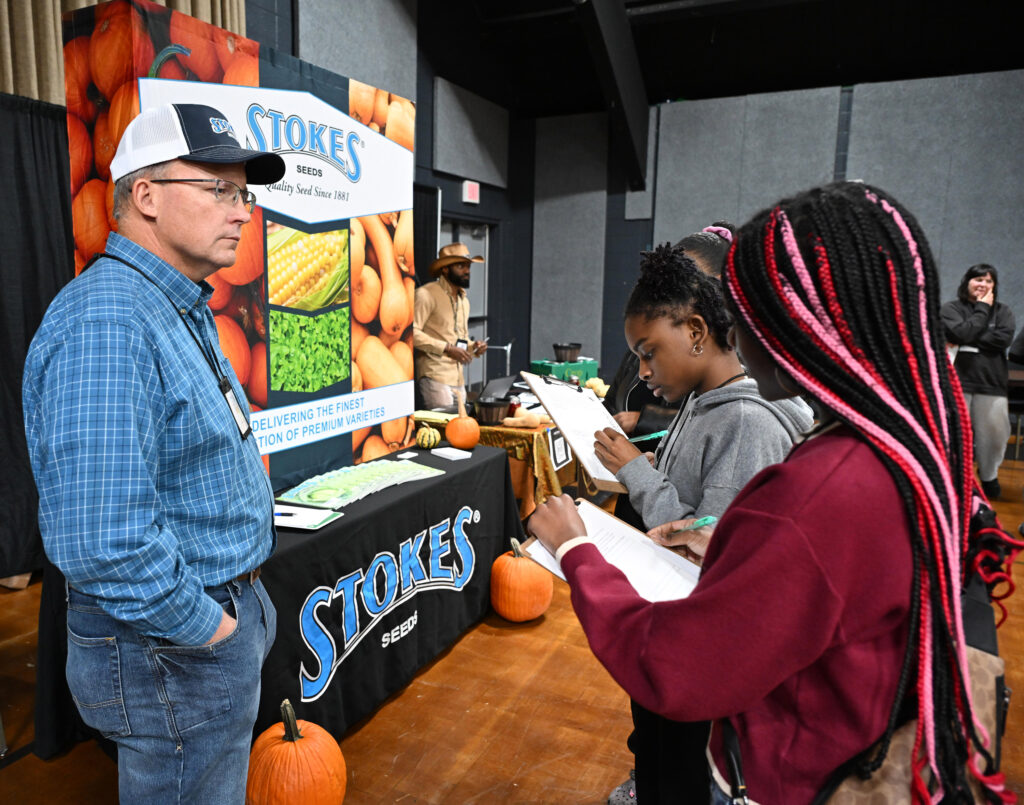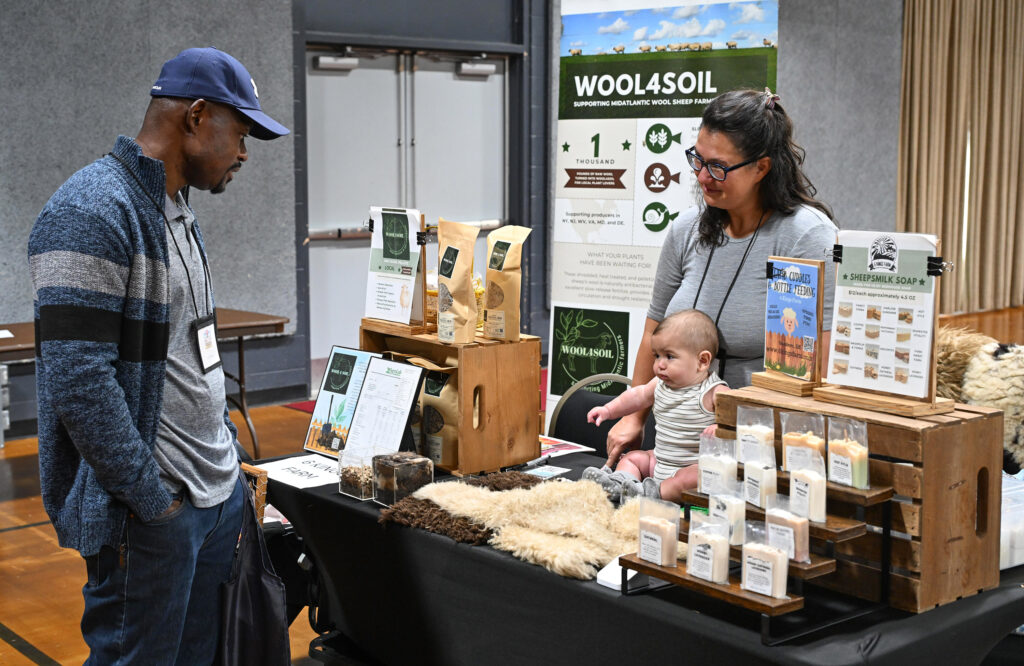

UMES Extension’s 22nd annual Small Farm Conference provided agricultural producers with valuable takeaways no matter the stage and focus of their farming operations,.
“There are tremendous challenges in agriculture in the nation. Our job is to serve farmers by sharing advances in the field to help them be successful in what they do, satisfying the need for people to have safe nutritional food,” said Dr. Moses T. Kairo (at right), dean of UMES’ School of Agricultural and Natural Sciences.
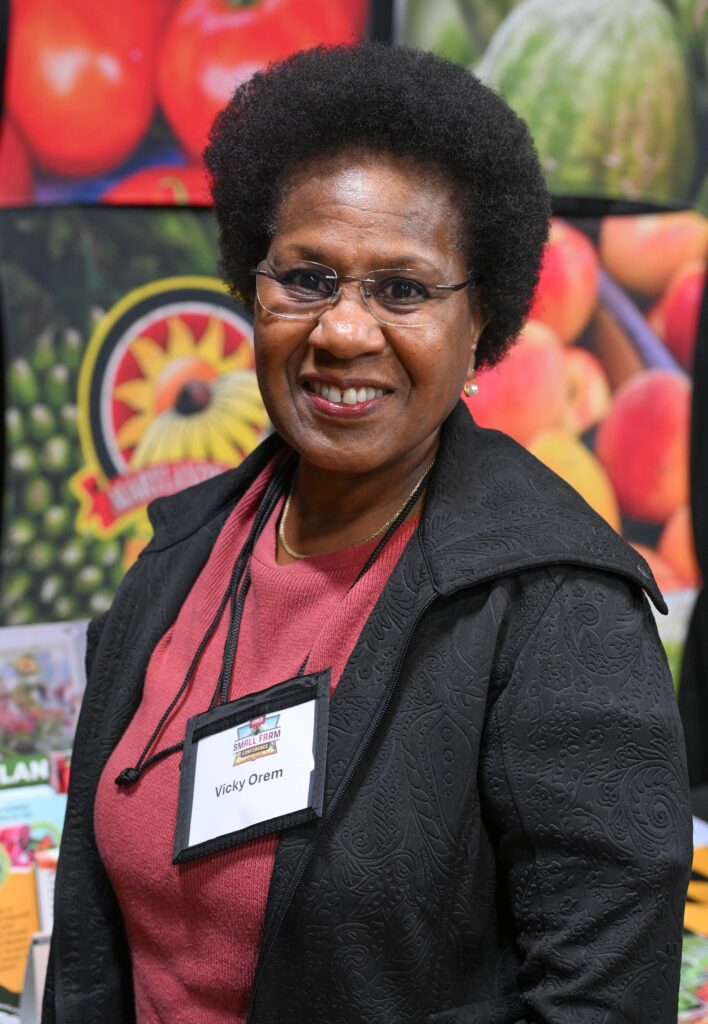
Vicky Orem (at left) has attended the conference each of the five years she has farmed in Prince George’s County growing vegetables and selling them to the Maryland Food Bank.
“I come to learn how to improve my operation, network with other farmers and have fun while I do so,” Orem said. “I want to do this long term and as a second career, I need to earn an income.”
Orem attends to get new ideas and processes to “grow and produce food that is clean and have a sustainable farm.”
Every seat was filled as more than 220 registrants moved through sessions and hands-on workshops during the event Oct. 24-25 at the Wicomico Youth & Civic Center. UMES researchers and partners covered topics such as soilless fruit and vegetable production, grape production for growers and backyard enthusiasts, starting a small chicken flock and learning how to prepare farmer grant proposals.
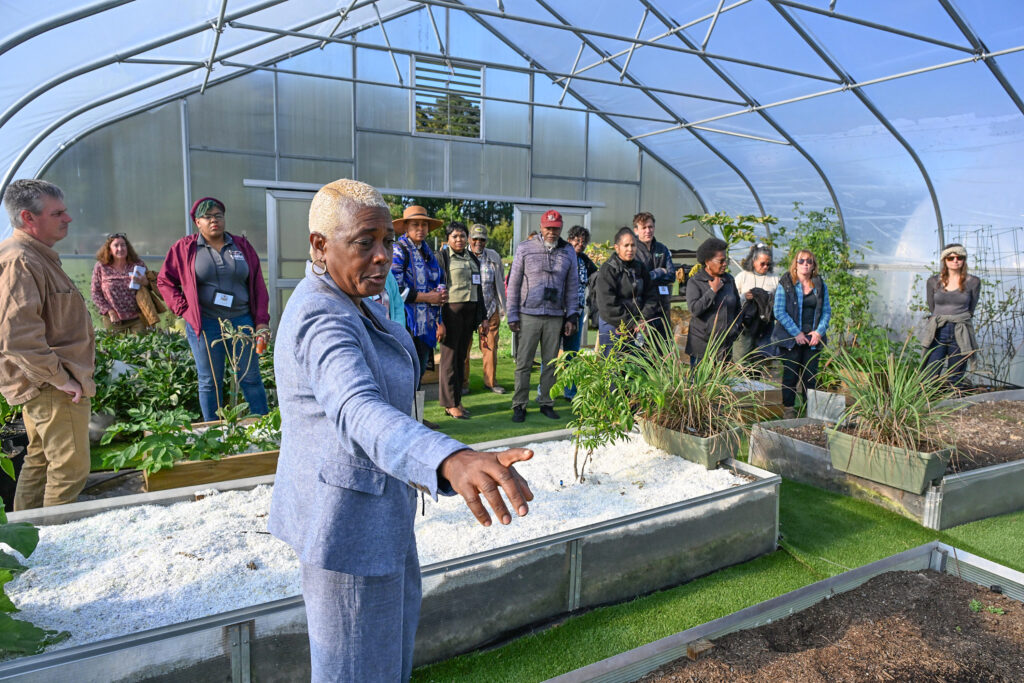
Soilless systems like hydroponics among safer growing options
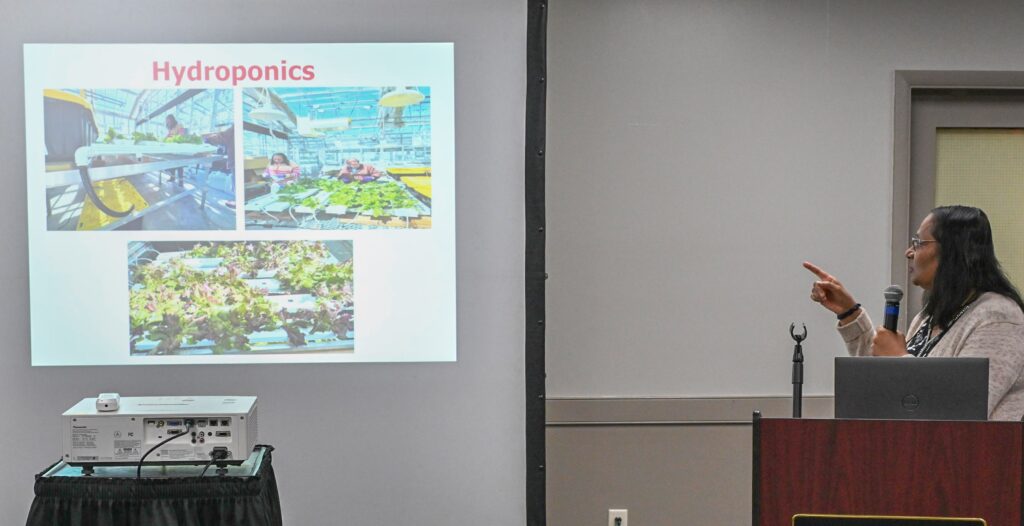
UMES studies determined bacterial populations of leafy greens grown in aquaponic and hydroponic systems compared to those in soil-based systems had fewer bacteria. Additional benefits shown included improved growth and phytonutrient content.
Small-scale farmers learned more about how food contamination can enter the system.
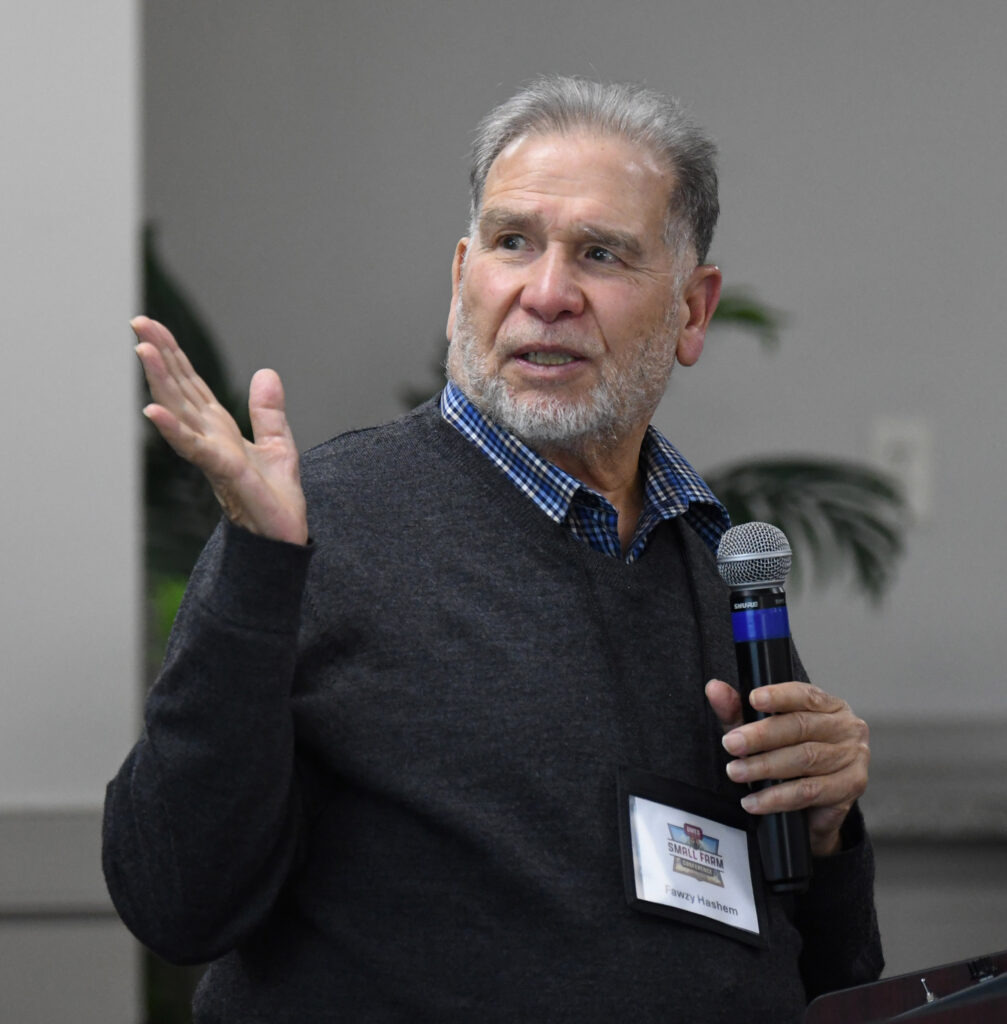
From production site to the consumer, producers have a responsibility to help protect these crops from contamination from harmful microorganisms and to preserve quality and nutrient delivery to end users, according to project collaborators Drs. Fawzy Hashem, Salina Parveen (at right) and members of a multiregional team.
Farmers, Hashem said, have access to supporting information and helpful training through the Maryland Agricultural Extension on following Good Agricultural Practices for crop harvesting, cooling, storing, packaging and transporting.
How to raise chickens
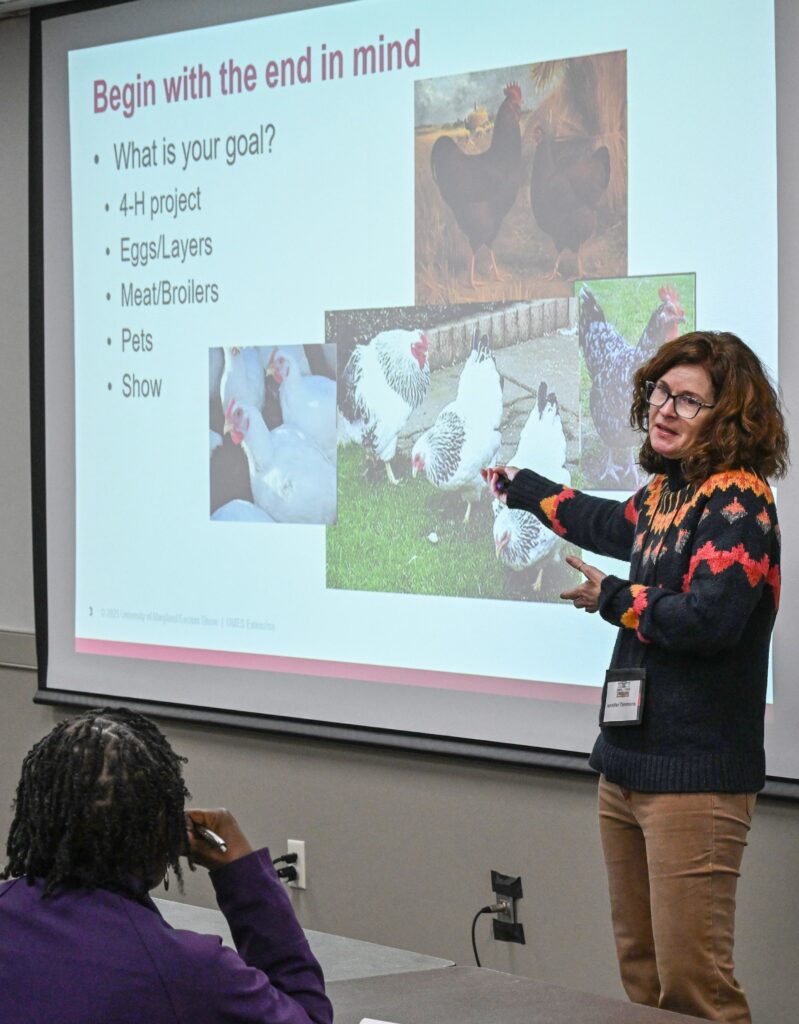
On the animal production side, UMES poultry researcher Dr. Jennifer Timmons (at right) discussed starting a small flock of chickens for egg laying or meat.
Plan six months ahead, she said, and consider zoning, where to purchase eggs or birds, housing, feed, water source, vaccination and disease prevention.
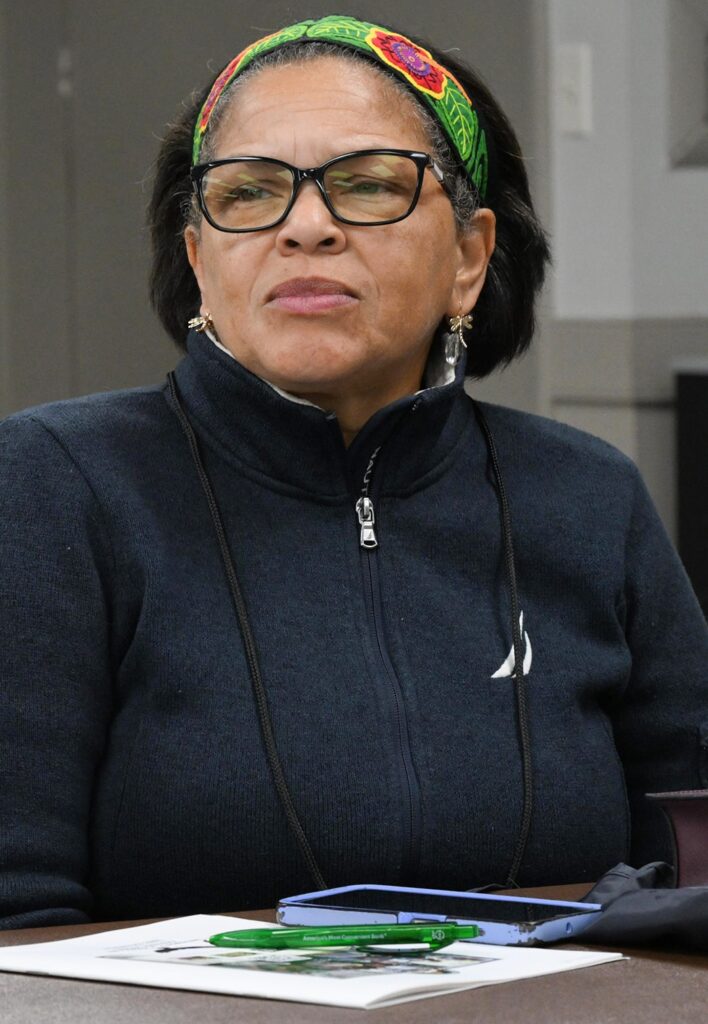
First-time conference attendee Sabina Luck (at left) of New Castle, Delaware, said she was interested in chickens as egg-layers.
“I wanted to see what I was getting myself into,” Luck said.
The beginning farmer said she came away with tips on planning setup before investing, along with FAQs like when hens start laying, what periods of rest are needed for optional egg production and the average lifespan of a backyard chicken.
“It’s good information to know so that you don’t have too many errors you have to correct later,” she said.
Timmons also talked about brooding, chicken health and maintenance, and her pastured-poultry project.
Growing grapes
Grape production is also an important agricultural commodity in Maryland.
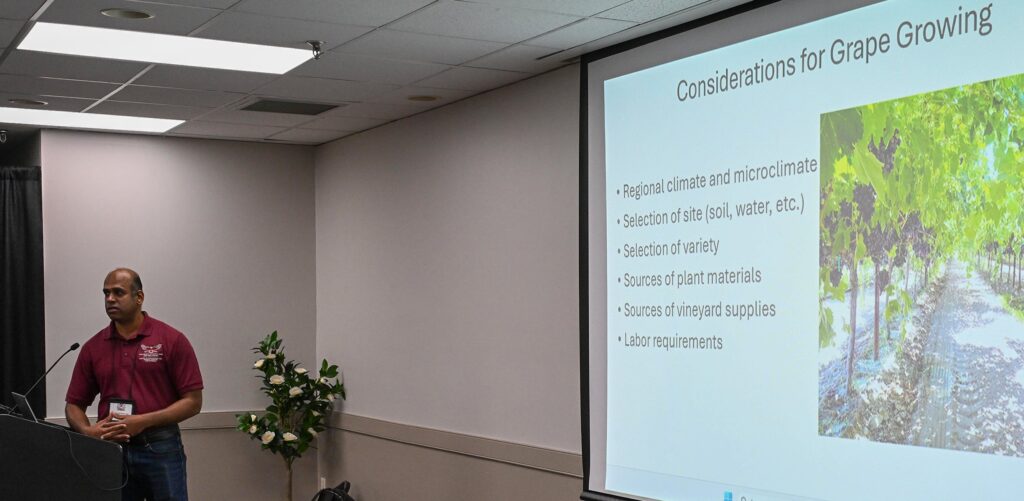
Sadanand Dhekney (at right), UMES professor of plant breeding and biotechnology, along with farmers and fruit breeders, Leftare Delis of L.P. Farms in California and Terrence Frett of Wish Farms in Florida, gave a talk on growing grapes for winemaking or the table. Information was shared on new grape varieties bred for suitable characteristics like heat and disease resistance, and managing a vineyard.

Dawn Mask Penney (at left) attended to add to her overall operational plan for her family’s farm in Calvert County, Maryland.
“I’m getting ideas to change things up when I’m in charge, like alternative crops,” she said. “The biggest thing we need right now is help and sources of income to minimize capital expenses to adapt to new technologies.”
New technologies for farming success
The session by guest farming presenter Andy Mussaw (at right), owner and operator of Fresh Source Farms microgreen business on the Delmarva Peninsula, was a perfect fit for her information gathering.
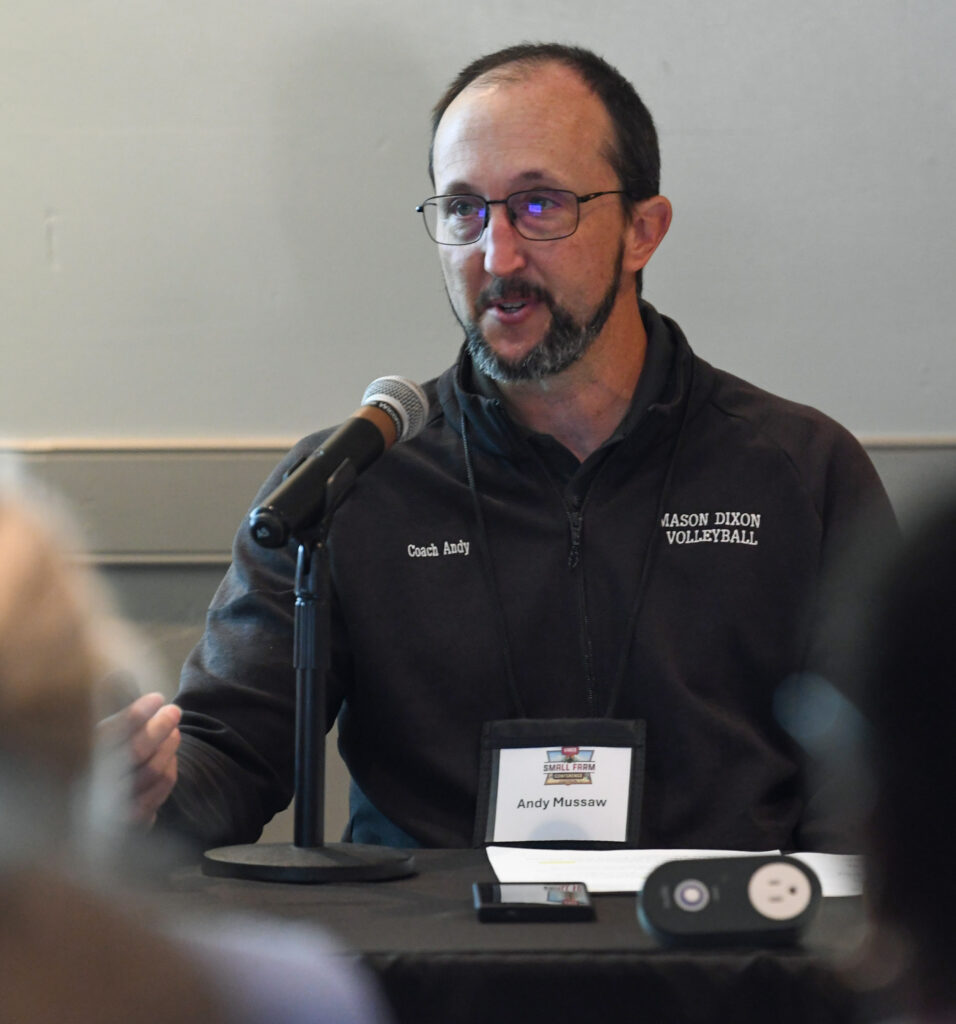
Mussaw said modern technologies and tools can be put in place to save growers personal time and money on labor. With a cellphone loaded with nine apps, he said he monitors and controls automated functions in the greenhouse every day.
“Everything on the farm turns on at 3 a.m. and off at 5 p.m. I’m able to sleep at night and it gives us consistency with plant color and yield,” the innovator said.
Smart plugs, high-level sensors and other technologies allow for automated climate control, precision planting and watering. Business functions like advertising and marketing, managing team schedules, ordering, record keeping for pest control and audits and even filing taxes can also be accomplished online.
“New technologies take the guesswork out,” he said.
“Farming is unpredictable as you all know. Things like weather, equipment problems and small mistakes can lead to big losses,” he told his audience. “Use technology as insurance against chaos.”
Supporting family farms
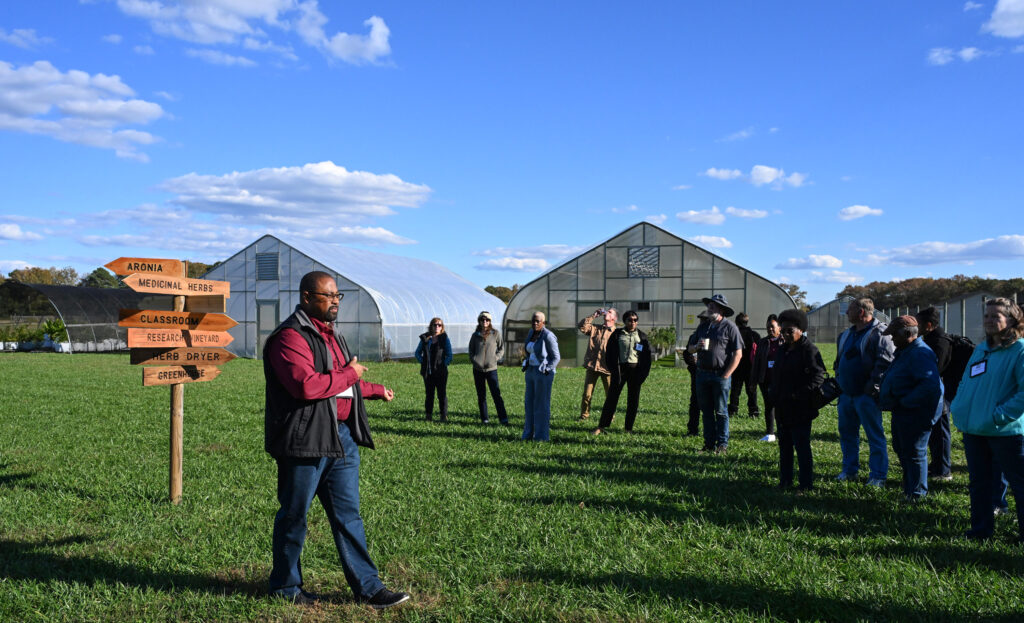
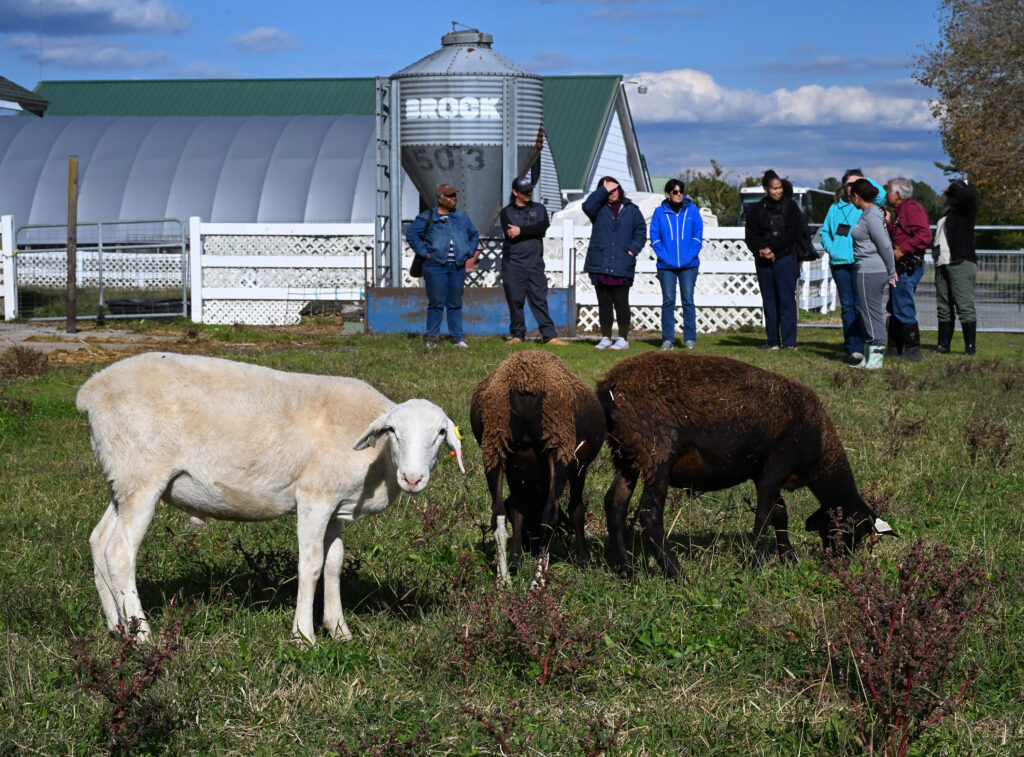
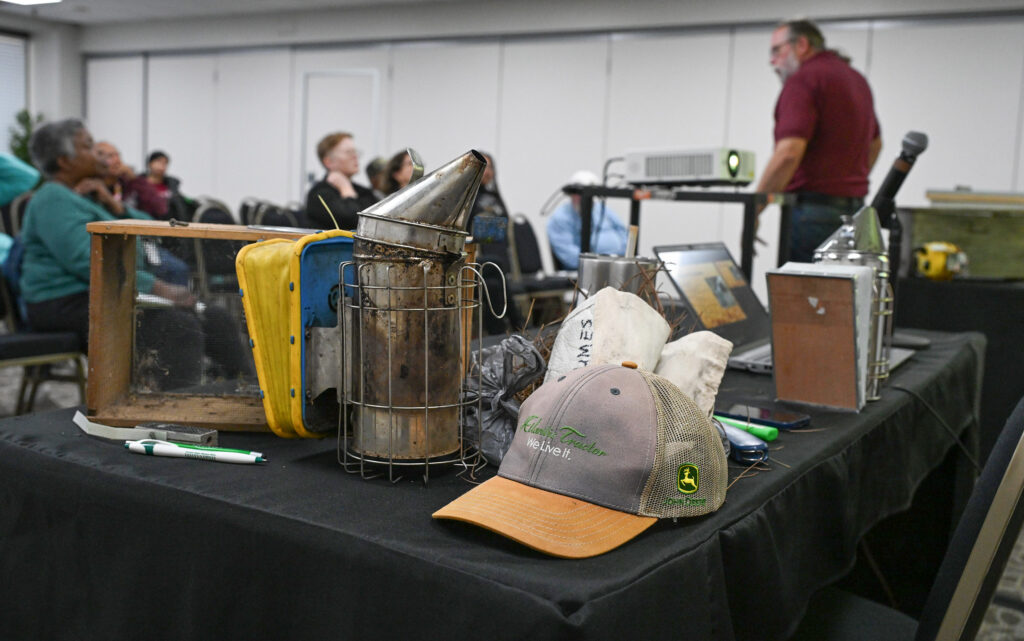
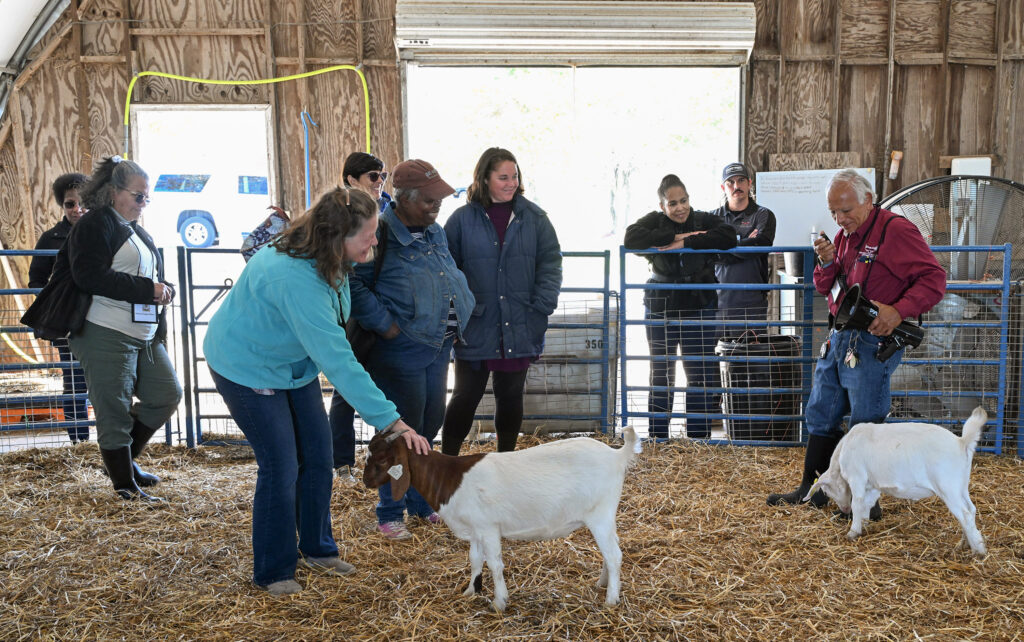
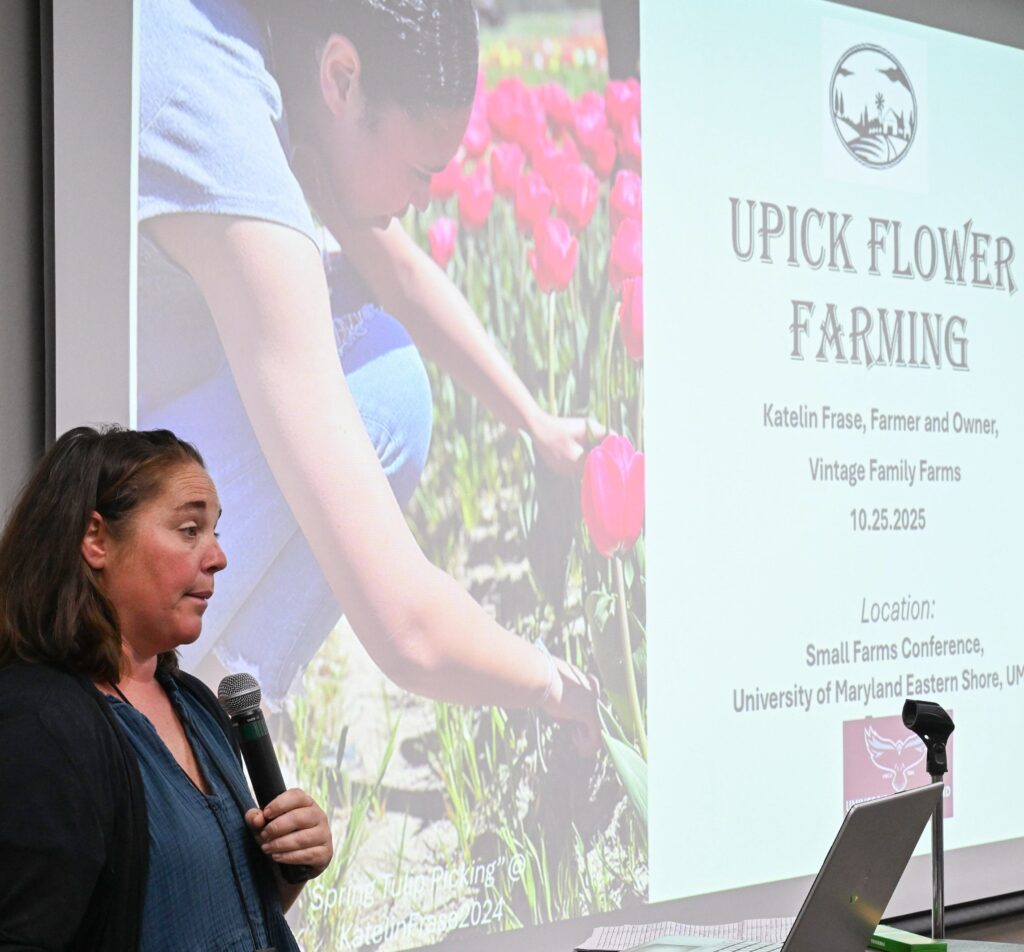
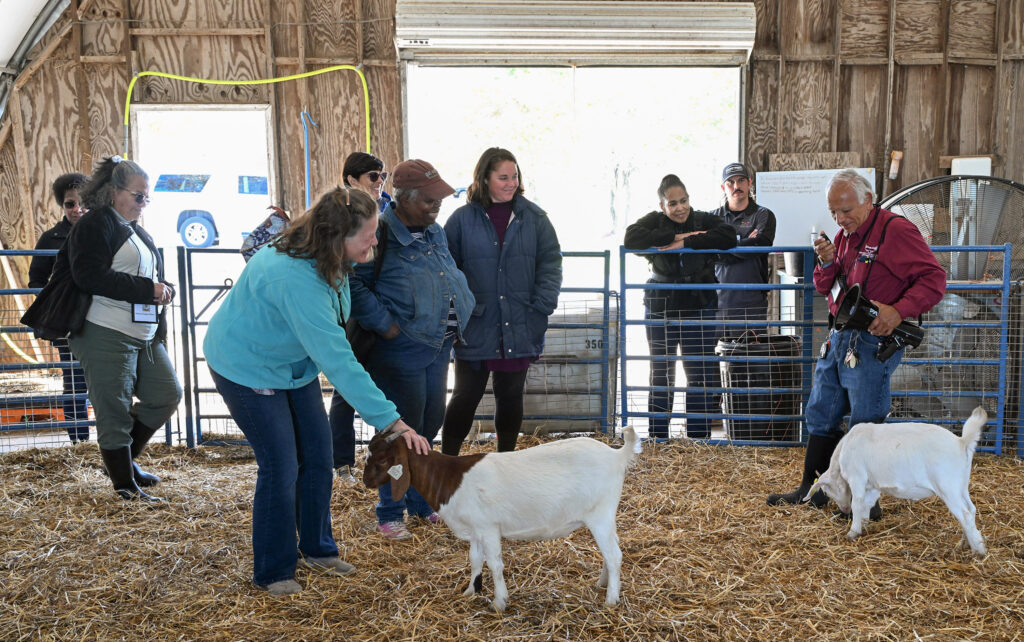
Information on a variety of alternative crops was shared in sessions and workshops on cut-flowers by Vintage Family Farms and seed saving, while tours spotlighted specialty herbs and vegetables at UMES’ Research, Extension and Teaching Farm, and fruit and Korean vegetables at Zacks Farm in Wicomico County. Beekeeping topics and business startup rounded out the offerings.
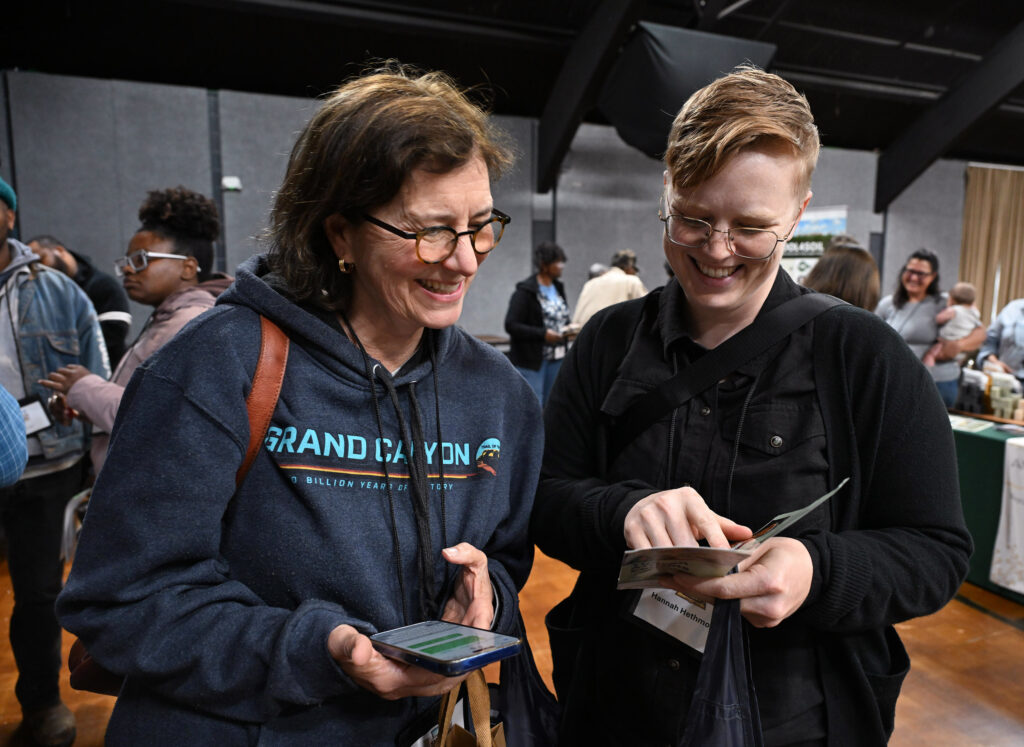
Hannah Hethmon (at left) came to UMES Extension’s Small Farm Conference for the first time to learn more about a vegetable startup on a quarter acre of her mother Lori Buongiovanni’s (far left) Prince George’s County farm.
“I tend to walk away from events like these feeling inspired and motivated,” Hethmon said. “I learn things I didn’t know that I needed to know.”
Gail Stephens, agricultural communications and media associate, University of Maryland Eastern Shore, School of Agricultural and Natural Sciences, UMES Extension, gcstephens@umes.edu., 410-621-3850.
Photo by Todd Dudek, agricultural communications, University of Maryland Eastern Shore, School of Agricultural and Natural Sciences, UMES Extension, tdudek@umes.edu.
Read related article: UMES Extension honors area farmers Nov. 25 at award ceremony during Small Farm Conference