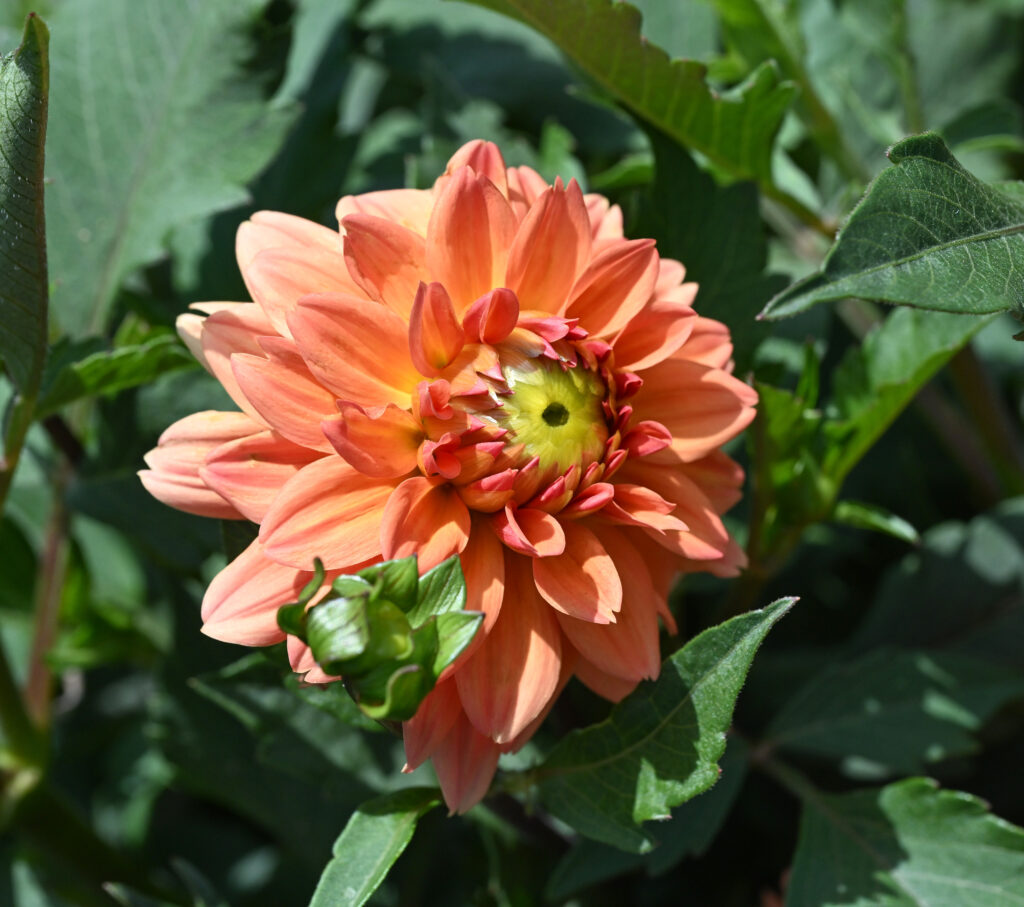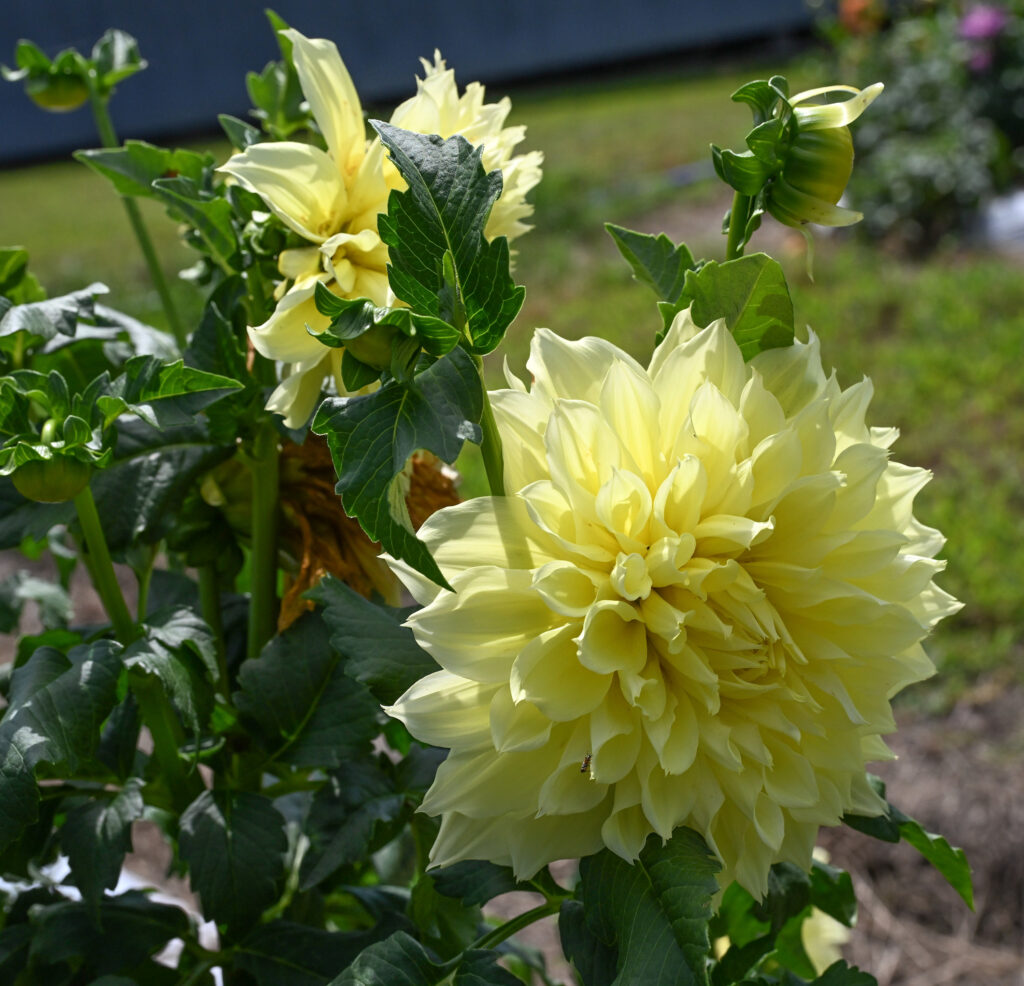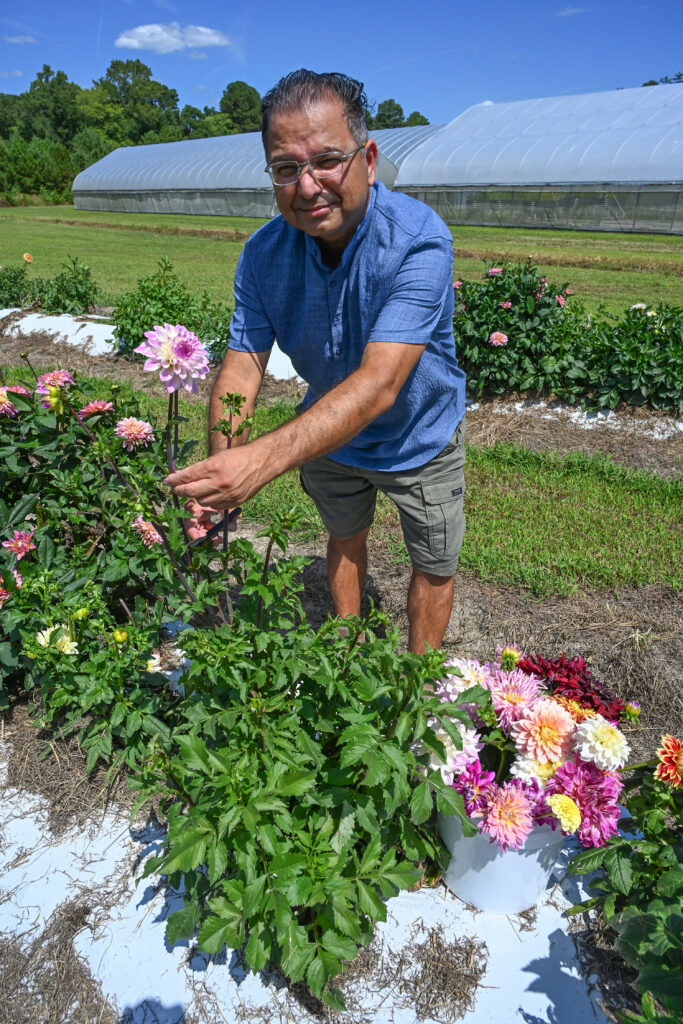
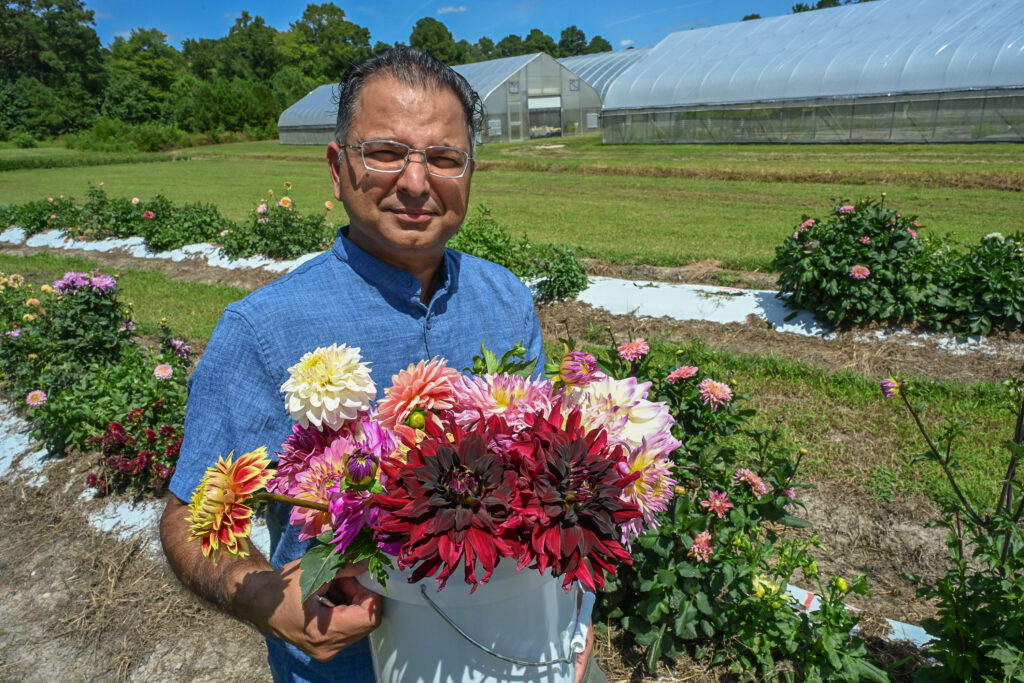
Brilliant rows of flowers are in bloom on the University of Maryland Eastern Shore’s campus farm. The sun shines, illuminating 39 varieties of the perennial dahlias. Each has a personality of its own, from the large, 10-inch head of the Dinnerplate dahlia to the refined blush-colored bloom of the Café au Lait and everything in between.
Dahlias, along with subsequent studies of gladiolus and zinnias, are part of a three-year, grant-funded project focusing on cut flower research and extension activities to support growers across the Mid-Atlantic.
“Small-scale farmers can capitalize on growing these flowers as part of the farm-to-vase movement, marketing them through CSAs or agritourism opportunities, such as on-farm u-picks,” said Dr. Naveen Kumar Dixit (at left), UMES Extension horticulturist and extension specialist. “It’s a new take on the farm-to-table concept.”
The growing trend, he said, takes out the middleman for increased earning potential.
“They have a short shelf life once cut so they can’t be imported from their native countries,” Dixit said. “That’s why cultivating them here can provide opportunities for local growers.”
Dahlias are a value-added plant, Dixit said. One tuber can fetch $15-$35. The more color, specifically pink, the higher the price they command. Relatives of the sunflower, daisy, chrysanthemum and zinnia, they come in every color except blue. There are more than 20,000 cultivated varieties and about 42 species of the perennial plant.

Planting of the tubers at UMES took place the first week of June and will be continuously harvested (cut) until the threat of frost. Since they are perennial, the tubers can be dug after this growing season, separated and stored for the following year. They are not frost tolerant, Dixit said.
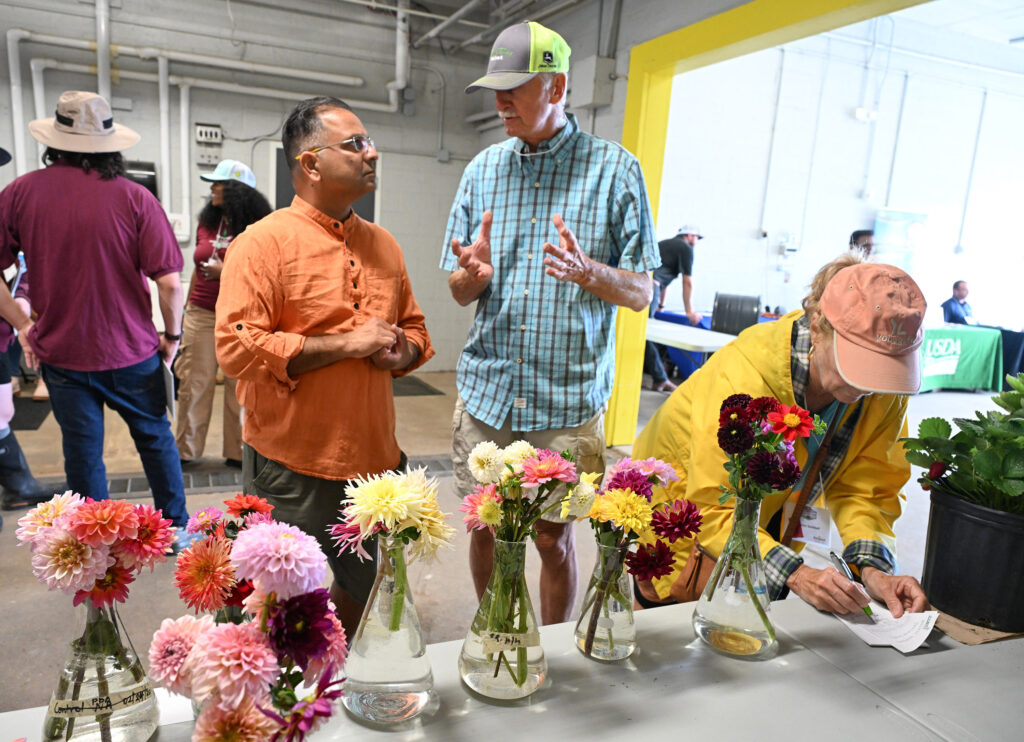
Dixit and a graduate student working with him, Erasmus Aduteye (at right), have displayed the fruits of their labor — or more precisely the blooms of their labor — at events such as UMES’ annual Ag Showcase held Aug. 6 at the UMES Research, Extension and Teaching Farm (photo below).
The cut flower research project is funded through an initial U.S. Department of Agriculture, National Institute of Food and Agriculture Extension Implementation Program grant last year, together with a 2025 Northeast Sustainable Agriculture Research and Education Professional Development Program grant. UMES’ Horticulture Program under Dixit will create research-based recommendations on their findings and provide training resources to support farmers.
Gail Stephens, agricultural communications, University of Maryland Eastern Shore, School of Agricultural and Natural Sciences, UMES Extension, gcstephens@umes.edu, 410-621-3850.
Photos by Todd Dudek, agricultural communications, University of Maryland Eastern Shore, School of Agricultural and Natural Sciences, UMES Extension, tdudek@umes.edu.