

Interest in goat production has been growing worldwide not only because goats are well-suited to semi-extensive and extensive production systems but also due to their remarkable ability to thrive in dry areas. Unlike other ruminants, goats can obtain an adequate diet even when forage is scarce and the terrain is challenging.
Goat production aligns with current agricultural priorities in both developed and developing countries. In developed nations, the focus is on sustainable development, animal welfare and high- quality animal products. In developing countries, the goal is efficient land use to increase production and support food security.
Feeding small ruminants like sheep and goats is critical to livestock management, significantly impacting total production costs. Feed expenses typically account for about 70% of the costs of raising these animals. Understanding the factors influencing feed costs and implementing strategies to manage these expenses can help farmers optimize their operations and improve profitability.
Proper feeding ensures animals receive the energy and nutrients to perform efficiently. However, the metabolic processes in digesting and utilizing these nutrients generate heat as a by-product. Internal heat production is generated within an animal’s body due to metabolic activities. Understanding the relationship between heat production and digestible energy (DE) is crucial for optimizing livestock nutrition and management.
Heat production
Heat production in livestock occurs as a byproduct of metabolic processes. When animals digest and metabolize feed, they generate heat through basal metabolism, the energy required for basic physiological functions such as breathing, circulation and cellular maintenance. Another source of internal heat production is the thermic effect of feeding, which includes the heat produced to digest, absorb and metabolize nutrients. This encompasses the heat increment, which is the increase in heat production following the ingestion of food. Movement and other physical activities also contribute to heat production.
Factors influencing heat production include feed composition, as different nutrients produce varying amounts of heat during metabolism. For example, proteins and carbohydrates generate more heat compared to fats. Animals with higher metabolic rates, such as those in growth or lactation phases, produce more internal heat.
As mentioned earlier, feed cost is a major expense in animal production. Only about 20% of feed energy is retained in the body, with the rest converted to heat. Therefore, measuring heat production is important to increase energy efficiency, especially in free-ranging animals.
Most studies assessing energy requirements have been performed in laboratories using indirect calorimetry to measure heat production. The American Institute for Goat Research at Langston University has developed a simple and reliable method based on heart rate (HR) to estimate heat production in pasture conditions. This method involves recording HR over a 24-hour period and multiplying the average HR by the ratio of heat production to HR determined using indirect calorimetry. Measuring HR in free-ranging animals allows for fine-tuning their energy requirements and evaluating their nutritional status.
Grazing activities
Another crucial factor in energy requirements and utilization in sustainable ruminant production is grazing activity, particularly distance traveled and other behavioral parameters. The best way to measure distance traveled is by using GPS devices. These devices allow for constant real- time monitoring of their location and movements. By tracking animals’ movements, it is possible to gain valuable insights into their behavior and environmental interactions. This information can be used to improve grazing management and animal welfare.
To address the cost of these devices, Langston University has developed inexpensive GPS units that are reliable and can record animal movements with precision.
During a recent visit to Jamaica, heat production, distance traveled and other behavioral parameters (grazing, resting, ruminating) were recorded and recommendations for production optimization were provided to participating goat farmers in St. Thomas, St. Catherine, Clarendon and Portland parishes. Additionally, the Langston Interactive Nutrient Calculator (http://40.65.112.141), which is used to estimate animals’ nutrient requirements and diet composition precisely, is currently being fine-tuned to account for the practices and management style of Caribbean goat farmers.


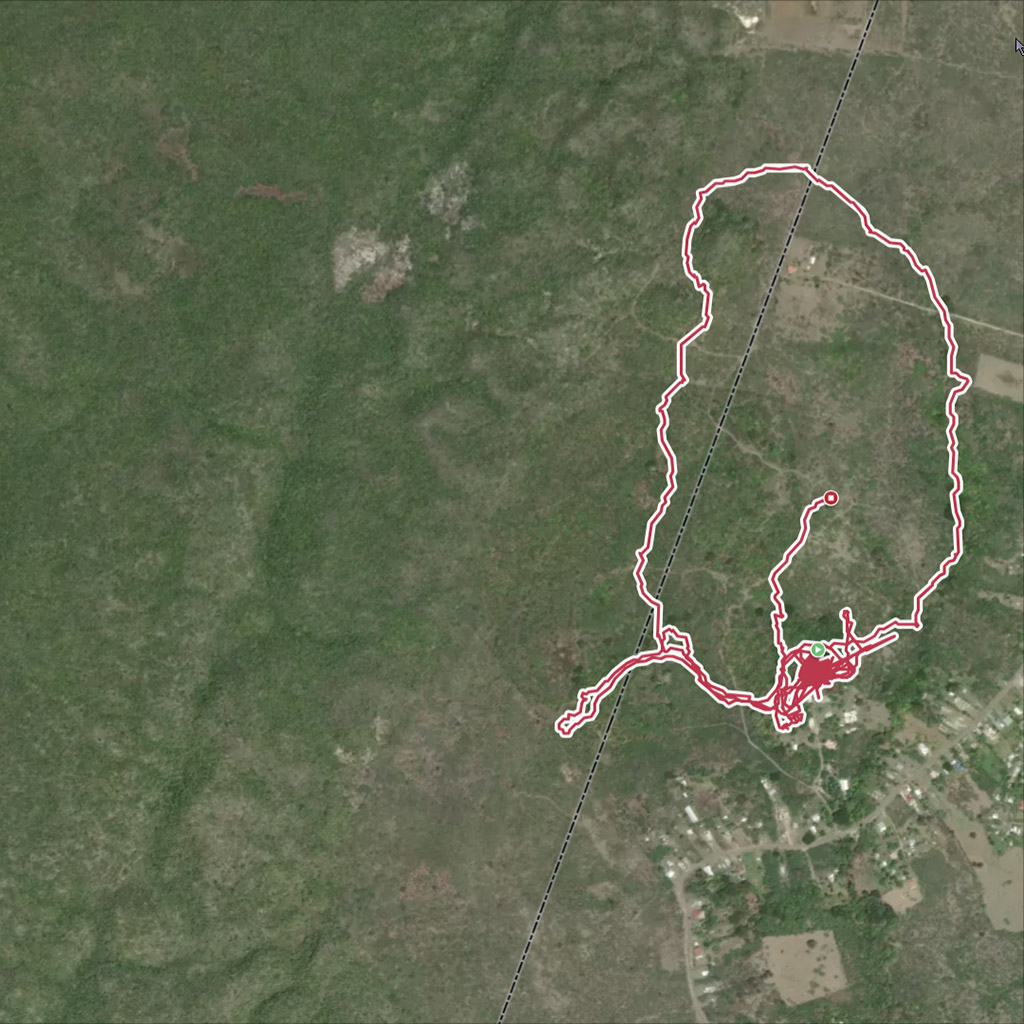
From left: Discussing the results of heat production and behavioral measurements of goats with Mr. Young, a goat farmer from St. Catherine Parish. Livestock Extension Officers from seven Jamaican parishes pose for a photo during LINC training. In red is the average daily route traveled by goats at Mr. Sparks’ goat farm (distance 6.3 km).
