In alignment with the CEGFSD’s second broad goal, “Addressing new and emerging animal and plant pests and diseases that cross borders,” a collaborative research and outreach initiative between Alcorn State University (ASU) in the U.S. and Nangui Abrogoua University (UNA), Côte d’Ivoire, was carried out as part of the 1890 Center of Excellence for Global Food Security and Defense under Dr. Tahir Rashid’s leadership.
Since pests and diseases know no boundaries, this initiative contributed to the development of an integrated pest management (IPM) strategy for fall armyworm (FAW) (Spodoptera frugiperda) in Côte d’Ivoire, with an emphasis on nature-based biological methods.
Three biological control agents, including entomopathogenic nematodes, a predator assassin bug (Rhynocoris albopilosus) and entomopathogenic fungi (Beauveria bassiana and Metarhizium spp.), were evaluated against FAW larvae on maize (corn) plants.
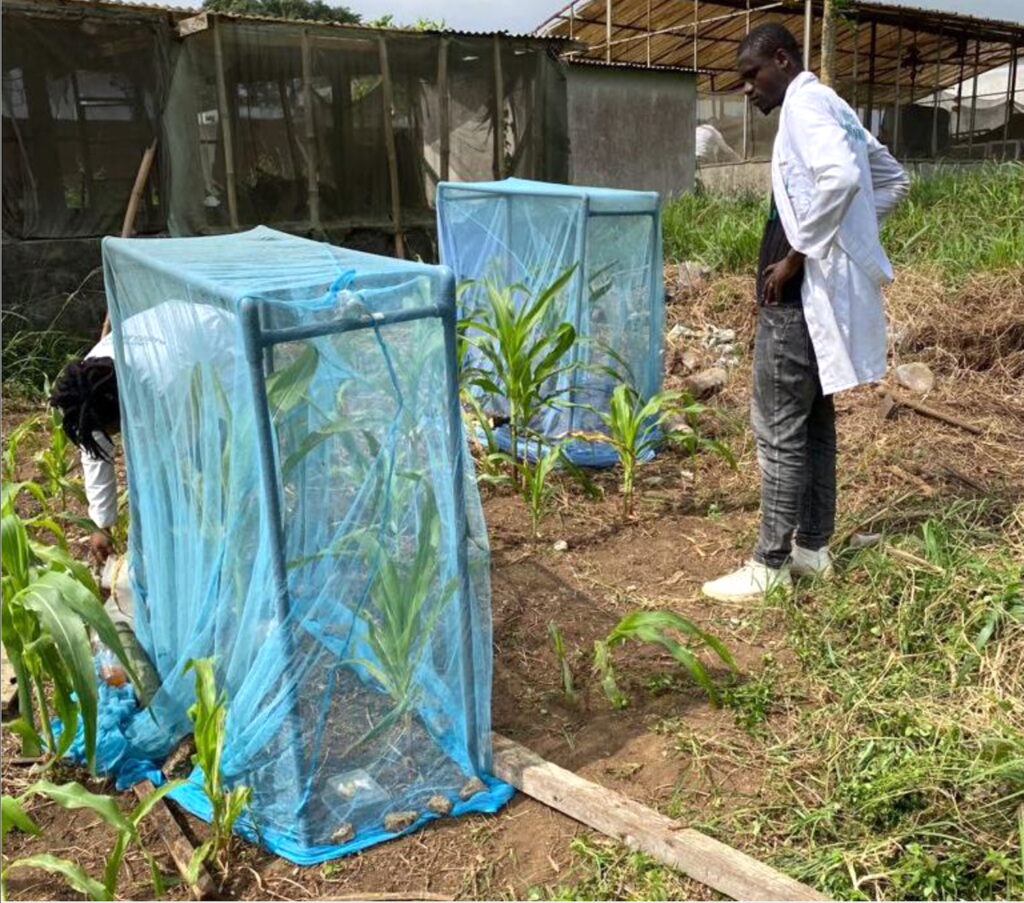
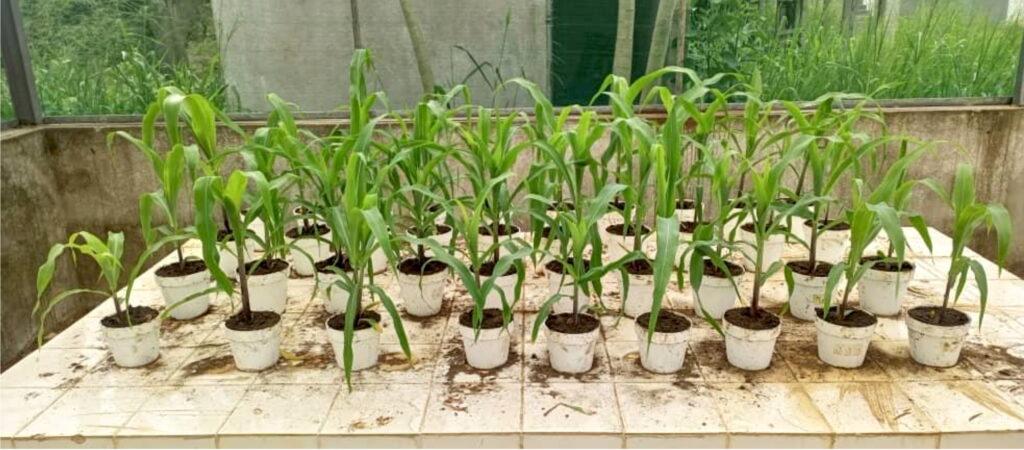
The efficacy bioassays were conducted in the greenhouse and on the caged plants in the field.
Extensive soil samples were taken from commercial maize fields and uncultivated ecosystems to estimate the presence of the entomopathogenic nematodes. A wide distribution of the nematode (Heterorhabditis spp.) in the Côte d’Ivoire’s soils indicated its high potential for parasitism against FAW larvae.
Predation tests revealed that females and fifth-stage individuals of R. albopilosus were most effective against FAW larvae. Several fungal isolates demonstrated high virulence and significantly reduced FAW damage under semi-controlled conditions.
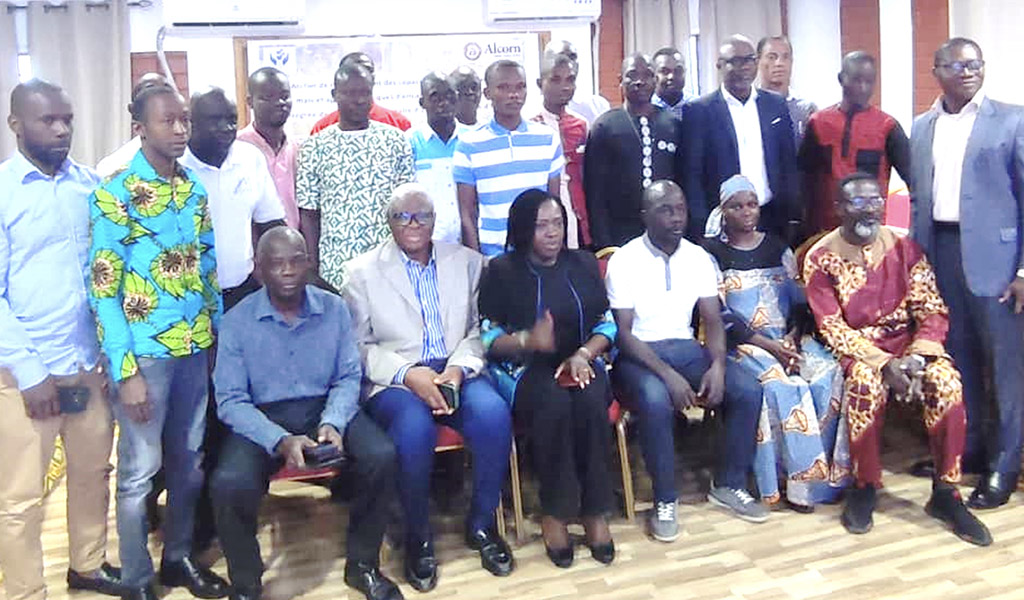
This project also targeted extension agents and maize farmers to incorporate a participatory dimension, aiming to provide practical training to the farmers and extension personnel in optimal control practices, while strengthening local capacities in research and outreach.