

PROJECTS
Project I
A. UMES Strategic Plan Priority and Goal
UMES Strategic Priority III – Workforce and Economic Development
Goal 3.7 – Partner with business and community leaders to better understand and address local and regional economic development needs.
B. Title: Develop a Strategic Plan to Enhance Employer Partner Relationships
C. Description
The Provost Faculty Fellows will develop a Strategic Plan to Enhance Employer Partner Relationships that will:
- Assess current employer partnerships across UMES to determine existing strengths and opportunities.
- Identify new potential partners based on emerging workforce trends, regional economic priorities, and alignment with UMES’s mission and strategic goals.
- Establish criteria for evaluating potential partners to ensure compatibility with UMES’s academic programs and institutional values.
- Develop clear goals and measurable outcomes for different types of partnerships (e.g., internships, research collaborations, recruitment pipelines, curriculum development).
- Recommend mechanisms to measure partnership success and long-term impact on student outcomes, faculty engagement, and employer satisfaction.
- Propose a structure for ongoing oversight and evaluation of employer relationships, including identifying the appropriate UMES office or committee to monitor implementation.
The project will culminate in a comprehensive Employer Partnership Strategic Plan that serves as a roadmap for collaboration and workforce engagement across all UMES schools and departments.
Project II
A. UMES Strategic Plan Priority and Goal
UMES Strategic Priority I – Academic Excellence and Innovation
Goal 1.3 – Recruit, retain, and develop exceptional faculty and staff, and nurture a dynamic environment in which they thrive – Teaching Excellence
B. Title: Implementation of Strategies for Enhancing Faculty Onboarding and Advancing Faculty Well-Being
C. Description
This project aims to strengthen the faculty lifecycle experience—from onboarding to retention and professional growth—by enhancing institutional practices that promote engagement, connection, and well-being.
The Provost Faculty Fellows will review the current onboarding process, gather feedback from recent faculty cohorts, and collaborate with campus stakeholders to identify opportunities for improvement. The revised onboarding framework will include streamlined processes, clear expectations, structured mentorship, and access to essential university resources that promote early success.
Simultaneously, the Fellow will develop a comprehensive faculty well-being plan designed to mitigate burnout, promote collegiality and civility, and strengthen faculty morale. This plan will include strategies and recommendations to enhance work-life balance, foster community among faculty, and integrate wellness resources across the institution.
By combining these two areas of focus, the project seeks to create a cohesive and sustainable approach that supports both the professional and personal dimensions of faculty life at UMES. The Fellows will work closely with the Center for Teaching Excellence and the Vice Provost for Faculty Affairs.
Project III
A. UMES Strategic Plan Priority and Goal
UMES Strategic Priority I – Academic Excellence and Innovation
Goal 1.1 – Attract, retain, and graduate more aspiring students at the undergraduate and graduate levels – Student Success Strategic Plan
B. Title: Enhancing Student Success in UMES’ Graduate Programs
C. Description
The Provost Faculty Fellows will conduct a comprehensive review of graduate student experiences at UMES, identify barriers to progression, and propose targeted interventions. The project will:
- Assess current graduate student support systems (academic advising, mentoring, career services, financial aid, and wellness resources).
- Collect input from graduate students, faculty advisors, and program coordinators about key challenges.
- Benchmark successful models from peer institutions.
- Pilot new strategies or resources to better support graduate student success, such as structured advising checkpoints, professional development workshops, and enhanced communication about degree milestones.
FELLOWS – COHORT II
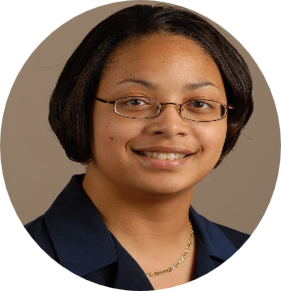
Ms. Corrie Cotton
Agriculture, Food and Resource Sciences
cpcotton@umes.edu
Project: Enhancing Student Success in UMES’ Graduate Programs
Dean Mentor: Dr. Derrek Dunn
Ms. Corrie Cotton is a Research Assistant Professor in the Department of Agriculture, Food and Resources at the University of Maryland Eastern Shore (UMES). She earned both her Bachelor of Landscape Architecture and Master of Landscape Architecture degrees from Pennsylvania State University in 2004. Her current research centers on agronomic and specialty crop production using conventional methods as well as controlled environments such as greenhouses, growth chambers, and a vertical hydroponic container farm. Additionally, she has conducted research in food safety of fresh produce, plant-microbe interactions, and ethnic crop production.
Ms. Cotton teaches several courses including the First Year Experience Seminar, Senior Capstone Experience, and Landscape Design Theory. She has also served as program director/coordinator for three K-12 summer enrichment programs and remains actively involved in academic advising, student recruitment, and retention efforts. Throughout her tenure at UMES, she has received multiple grants supporting her teaching, research, and extension initiatives.
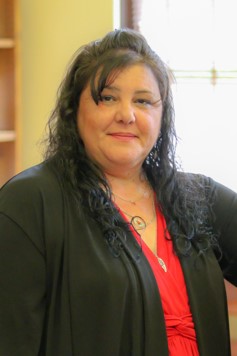
Ms. Kathleen Davis-Bierman
Hospitality and Tourism Management
Lecturer
ksdavis@umes.edu
Project: Implementation of Strategies for Enhancing Faculty Onboarding and Advancing Faculty Well-Being
Dean Mentor: Dr. LaKeisha Harris
Kathleen Davis-Bierman, CHE, DTM, is a higher education leader, educator, and facilitator with extensive experience spanning industry leadership, academic instruction, and system-level service. She currently teaches at the University of Maryland Eastern Shore (UMES), where her work emphasizes leadership development, experiential learning, and preparing students for professional success. Her teaching is informed by industry experience and a strong commitment to inclusive, student-centered leadership practices.
At the system level, Kathleen serves as Chair of the University System of Maryland Women’s Forum (USMWF), collaborating with the Office of the Chancellor to advance leadership development, professional growth, and community-building for women across the University System of Maryland. In this role, she provides strategic leadership, facilitates dialogue among diverse stakeholders, and supports initiatives that strengthen connection and shared learning across institutions.
Kathleen is also an accomplished leader within Toastmasters International, where she has developed strong skills in communication, facilitation, and peer leadership. Through Toastmasters, she has supported member growth, guided group discussions, and fostered environments grounded in encouragement, accountability, and continuous improvement.
Across all of her roles, Kathleen is known for her relational leadership approach. She values peer-to-peer learning, reflective dialogue, and the creation of inclusive spaces where individuals can learn from one another’s experiences. Her leadership is grounded in service, collaboration, and a commitment to empowering others to lead with confidence and purpose.
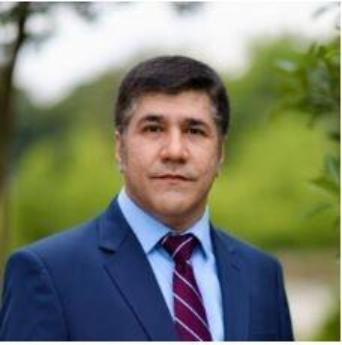
Dr. Ismail Farajpour
Department of the Built Environment
Associate Professor and Chair
ifarajpour@umes.edu
Project: Developing a Strategic Plan to Enhance Employer Partner Relationships
Dean Mentor: Dr. Sean Vasaitis
Ismail Farajpour, Ph.D. is an Associate Professor and Chair of the Department of the Built Environment at the University of Maryland Eastern Shore (UMES). He earned his Ph.D. in Civil Engineering from Clemson University and has extensive experience in engineering education, academic leadership, and program development.
Prior to joining UMES, Dr. Farajpour served on the faculty in the Department of Engineering at South Carolina State University, where he held the role of Associate Professor and served as Academic Program Coordinator for the Civil Engineering program and Faculty Advisor to the ASCE Student Chapter. In these roles, he contributed to curriculum development, student success initiatives, and program advancement.
Dr. Farajpour’s research interests include computational structural analysis, finite element analysis, structural optimization, and uncertainty quantification and model validation. His work emphasizes the application of advanced computational and numerical methods to improve the performance and reliability of structural systems.
In his current role, Dr. Farajpour focuses on advancing academic programs, strengthening industry engagement, supporting faculty and student research, and ensuring continuous improvement and accreditation readiness. He is committed to developing dynamic, industry-relevant programs and fostering a collaborative academic environment that supports student success and workforce preparation.

Dr. Bryan O. Gere
Rehabilitation
Associate Professor
bogere@umes.edu
Project: Developing a Strategic Plan to Enhance Employer Partner Relationships
Dean Mentor: Dr. Moses Kairo
Dr. Bryan O. Gere is an Associate Professor in the Department of Rehabilitation at the University of Maryland Eastern Shore (UMES). He previously served as Graduate Program Director for the Master’s in Rehabilitation program and brings over a decade of academic, clinical, and research experience to the field of rehabilitation and behavioral health. Before returning to his alma mater, Dr. Gere served as a faculty member at Alabama A&M University, where he taught and conducted research in psychology and rehabilitation counseling.
Dr. Gere earned his Ph.D. in Rehabilitation from Southern Illinois University Carbondale, where he was recognized with several distinguished honors, including the Dorothy Dykema Endowed Scholarship, the Lorenz/Baker Award, and the Dissertation Research Award. He also holds an M.S. in Rehabilitation Counseling from UMES, an MBA in Business Administration from the Rivers State University of Science and Technology, Nigeria, and an M.S. in Industrial and Organizational Psychology from the University of Maryland, College Park.
A Licensed Clinical Professional Counselor (LCPC) and Certified Rehabilitation Counselor (CRC), Dr. Gere’s scholarly work and grant-funded projects focus on mental health, intellectual and developmental disabilities, substance use disorders, and vocational rehabilitation outcomes. His teaching and research reflect a commitment to advancing equity, evidence-based practice, and interdisciplinary collaboration in rehabilitation education and practice.

Ms. Madhumi Mitra
Natural Sciences
mmitra@umes.edu
Project: Implementation of Strategies for Enhancing Faculty Onboarding and Advancing Faculty Well-Being
Dean Mentor: Mr. Chris Harrington
Dr. Madhumi Mitra is a tenured Professor of Biology and Environmental Sciences in the Department of Natural Sciences (DNS) at the University of Maryland Eastern Shore (UMES), where she coordinates the Biology and Chemistry Education programs and mentors undergraduate and graduate students. She earned her Ph.D. in Botany from North Carolina State University, an M.S. in Botany from the University of Calcutta, a B.Sc. in Botany (Honors) with minors in Geology and Human Physiology from Presidency College, India, and a Master’s in Medical Cannabis Science and Therapeutics from the University of Maryland, Baltimore. She also holds an Executive Certificate in Artificial Intelligence Strategy from Cornell University, and is currently completing the Leadership Maryland Executive Program (Class of 2025). With over 26 years of academic and research experience, she has secured more than $15 million in competitive grants from federal and state agencies. Her interdisciplinary research integrates artificial intelligence, sustainable agriculture with emergent technologies, bioenergy, seaweeds, and space agriculture.
Dr. Mitra currently serves as the Regional Editor of the International Journal of Ambient Energy (Taylor & Francis) and as a Governor’s appointee to the Maryland Cannabis Public Health Advisory Council. She exemplifies academic leadership and civic engagement across multiple disciplines. Within the American Society of Engineering Education (ASEE), she has held several key leadership roles, including serving as Newsletter Editor, Treasurer, Program Chair, and Division Chair of the Energy Conversion and Conservation and the Nuclear Engineering Division (ECCNED). Her mentees in Biology Education have gone on to become distinguished educators, earning accolades such as Wicomico County Teacher of the Year, Somerset County Teacher of the Year, Maryland State Teacher of the Year, and the Presidential Award for Excellence in Mathematics and Science Teaching (PAEMST). The recipient of numerous awards, ASEE Leadership Service Award, Dr. Mitra has published over 50 peer-reviewed papers. proceedings, and book chapters, and authored and co-edited two books: Practices and Perspectives in Sustainable Bioenergy (Springer, 2020) and Era of Artificial Intelligence (Taylor & Francis, 2023).
A passionate advocate for experiential STEM education, she leads initiatives such as the USDA-funded Indoor Urban Sustainable Agriculture with Emergent Technologies (IUSAET) program and the Summer Enrichment Academy in Sustainable Agriculture and Robotics (SEASAR) to advance teacher training, innovation, and workforce development in sustainable technologies. Beyond academia, she is a certified Qigong and yoga teacher, a choreographer, and a student of Indian classical dance. Dr. Mitra has been a featured speaker at regional, national, and international conferences and events, blending science, leadership, and creativity to inspire holistic approaches to education, wellness, and sustainable innovation.

Dr. Simon Zebelo
Natural Science and Agriculture, Food and Resource Sciences
sazebelo@umes.edu
Project: Enhancing Student Success in UMES’ Graduate Programs
Dean Mentor: Dr. Rondall Allen
Dr. Simon Zebelo is an Entomology and Plant Biology Professor in the Department of Natural Sciences and Agriculture, Food, and Resource Sciences at the University of Maryland Eastern Shore. Dr. Zebelo’s research interests focus on fundamental and applied aspects of insect behavior, chemical ecology, and integrated pest management (IPM). His basic research uses a broad-based multidisciplinary approach (analytical, behavioral, electrophysiological, and molecular techniques) to address fundamental questions in insect olfaction and plant-insect interactions. His applied research aims to develop and evaluate ecologically-based IPM programs for insect pests and deliver these programs to growers. In addition, Dr. Zebelo has transferred this knowledge to the classroom to enrich student learning and generate opportunities for students. Some of his current projects include: 1) Molecular and biochemical basis of microbe-mediated plant-insect interactions, 2) Insect pests of hemp and their impact on the level of cannabinoids, 3) developing and implementing trap crops that can be used in cucurbit production, 4) Enhancing pollinators in solar panel settings, and 5) the contribution of agricultural drainage ditches to the natural enemy ecosystem.
