

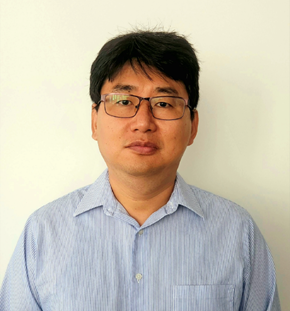
Jaden Jun, Ph.D., M.S.
Assistant Professor, Pharmaceutical Sciences
School of Pharmacy and Health Professions
Email to: jjun@umes.edu
Phone number :(410) 621-2020
Office: Suite 3118, Room 3150
Education
- Ph.D., Chemistry, University of Kansas, in collaboration with the NCI
- M.S., Chemistry – University of Kansas, Lawrence, KS
Bio
Dr. Jaden Jun is an Assistant Professor in the School of Pharmacy and Health Professions at the University of Maryland Eastern Shore (UMES). Before joining UMES, he served as an Assistant Research Professor in the School of Pharmacy at the University of Pittsburgh. His work integrates organic synthesis, structure–activity relationship studies, and chemical biology approaches to develop novel therapeutic candidates. Dr. Jun’s research aims to advance the discovery of new treatments for cancer and other diseases through innovative molecular design. His research focuses on the development of novel small-molecule modulators to interrogate G protein–coupled receptor (GPCR) signaling, with an emphasis on allosteric modulation and chemical biology approaches to control receptor function. Another major research focus is the design and synthesis of small molecules targeting DNA repair enzymes and other therapeutically relevant proteins.
Dr. Jun’s research is built on over 20 years of experience in medicinal chemistry across academia, industry, and government. After earning his B.S. and M.S. in Chemistry in South Korea, he obtained an M.S. in Chemistry from the University of Kansas in 2005 and worked at GlaxoSmithKline on the design and synthesis of HIV inhibitors. He later joined SAIC-Frederick at the National Cancer Institute (NCI), where he focused on drug design, natural product synthesis, process chemistry, and SAR analysis, collaborating with MD Anderson Cancer Center and the NIH. During this time, he earned his Ph.D. in Chemistry from the University of Kansas in 2013 through a collaborative program with the NCI, leading to the discovery of novel inhibitors targeting TDP1 and A549 lung cancer cells. He subsequently completed postdoctoral training at the University of Kansas, where he developed rapid synthetic methodologies for bioactive sulfur-containing heterocycles and covalent probes.
His laboratory primarily emphasizes medicinal synthetic chemistry, integrating computational modeling and molecular pharmacology to develop innovative tools and therapeutic leads that enable spatial and temporal control of signaling pathways relevant to inflammation, pain, bone disease, and neuroimmune disorders.
Areas of Research Interest
• Design and synthesis of small molecules as allosteric modulators for CB2
• CB2-OS probes: Novel small molecules discovery and development for bone disease
• Design and discovery of small-molecules/modulators for p18 HSC ex vivo expansion
Group Webpage Link (will be updated)
