The University of Maryland Eastern Shore remembers civil rights leader and former presidential candidate Rev. Jesse Jackson Sr., who died Feb. 17 at the age of 84.
Jackson, the founder and president of the Rainbow PUSH Coalition, was one of the latter 20th century’s most well-known figures in the Civil Rights movement following the 1968 assassination of Rev. Dr. Martin Luther King Jr.
“Rev. Jackson was a person who was brave enough to broach the idea that black and white working-class people shared something in common,” said Dr. Kathryn Barrett-Gaines, professor of history in UMES’ School of Education, Social Sciences, and the Arts. “He was appealing to people based on class instead of race, which was new at the time. He knew that class united us.”
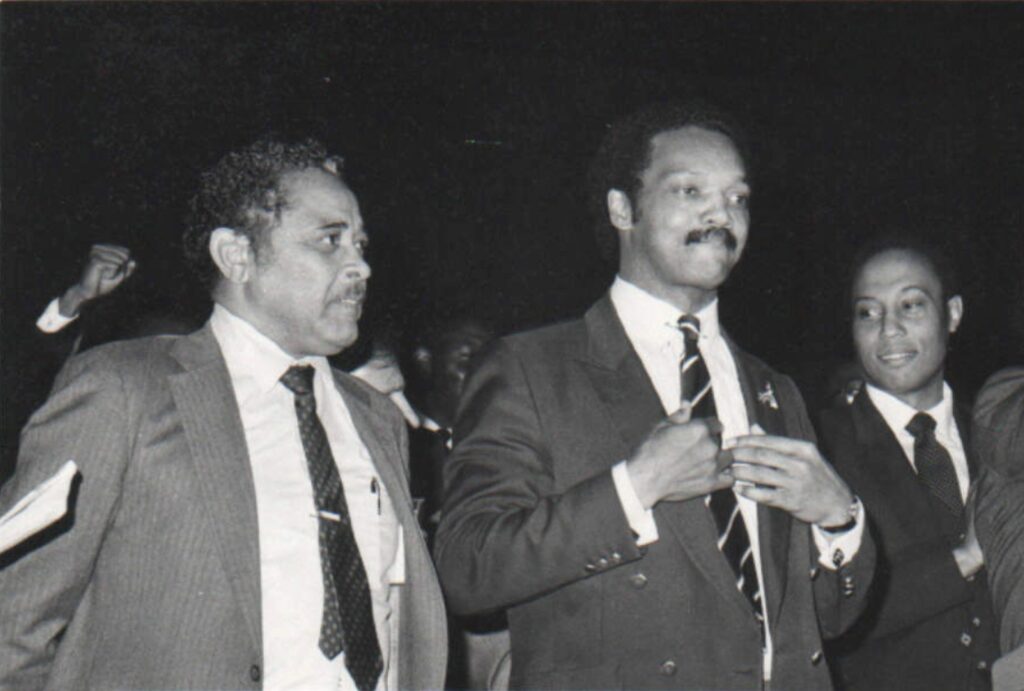
That was the message Jackson emphasized during his runs for President of the United States in both 1984 and 1988, with the former bringing him to the UMES campus for a campaign stop.
One person who was present that day in 1984 when he addressed the campus community at the Ella Fitzgerald Center for the Performing Arts was Sharon Brooks, now the acting director of library services at UMES’ Frederick Douglass Library.
“It was a high-energy moment for the campus, community, and the town of Princess Anne,” Brooks said. “He was one of the trailblazers in civil rights. There were lots of people before him, but because of the increased media exposure, he was in an era where we could actually see and hear more of what was going on.”
Dr. Arlisha Norwood, UMES assistant professor of history, also remembers Jackson’s presidential campaigns.
“His iconic campaign slogan, ‘Keep Hope Alive,’ resonated deeply with communities that had long been excluded from the political process,” Norwood said. “Jackson saw and affirmed the power in everyone, insisting that democracy must reflect the voices of all its people, no matter their background, race, economic status, or age.”
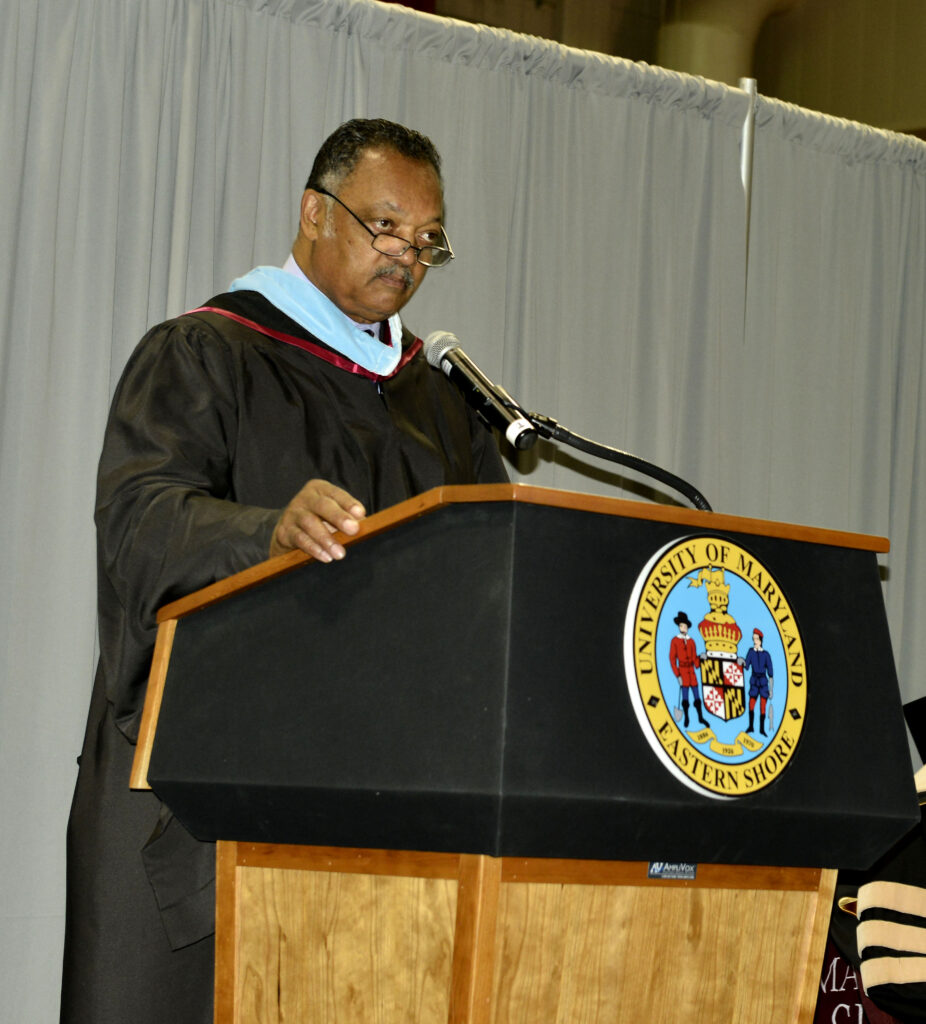
Jackson would make a second visit to Princess Anne in the fall of 2015, when he was the keynote speaker during the campus’ Summer Commencement and Founders’ Day ceremony.
During that event, Jackson was awarded a presidential medallion in recognition of respect for his contributions to the Civil Rights Movement.
Barrett-Gaines said Jackson being a historical trailblazer played a pivotal role in future presidential runs for Barack Obama and Kamala Harris.
“Without people like Jesse Jackson and Shirley Chisholm running for president, there wouldn’t have been a Barack Obama,” she said. “Rev. Jackson was brave enough to run for president as a black man in the 80s during the Reagan Era and committed enough to be a consistent voice for those lacking resources. He’s a real and strong fiber in the fabric of America.”
Added Norwood: “His legacy reminds us that progress is not only about the dream one inherits, but also about the dream one strives to create. It is my hope that our students remember Jackson’s legacy as they nurture and accomplish their own dreams at UMES and beyond.”
