


Agricultural Development Projects:
Assessment of damage due to insect pests in cowpea crop using remote sensing techniques in southeastern US and Guyana ( Latin America)
Project Period: 2021
Country/Region: Guyana / Latin America
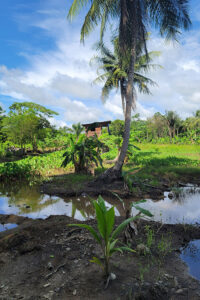
Objectives: 1. Building Partnership for Integration of Technology to Assess Damage due to Insect Pests in Cowpea Crop and Risk Management for Global Food Security in Southeastern US and Guyana (Latin-America). 2. Training will focus on Climate Smart Farming, Water Conservation, Cost-Effective Water Treatment, Increase Efficiency in Water Use and Adaptation to Drought.
Funding: USDA/NIFA
Principal Investigator (PI): Dr. Shobha Sriharan | Department of Agriculture
1890 University Name: Virginia State University
Expected Results: 1. Capacity building programs with partners supported. 2. Efforts initiated for management of pests by using technology to visually examine pest damage to cowpea crop. 3. Participants introduced to remote sensing technology for assessment of damage to plant parts. 4. A web-based platform training used as a development and capacity building tool for key pest monitoring technicians for risk assessment and management in US and Guyana.
Engaging 1890 universities’ students and faculty in addressing critical needs in the area of global food security and defense through international partnerships
Project Period: 2021-2022
Country/Region: DRC; East/Southern Africa
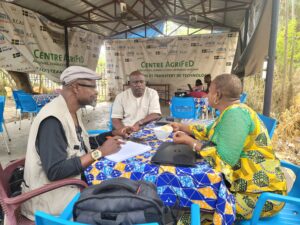
Objectives: 1. Engage students and faculty in global agriculture through curriculum development and student mentorship; 2. Develop and expand new collaborations with Congolese institutions (INERA, UNIKIN) in food safety and security, climate smart agriculture, agribusiness, bioenergy, soil and global health.
Funding: USDA/NIFA
Principal Investigator (PI): Dr. Zachary Senwo | College of Agricultural, Life & Natural Sciences
1890 University Name: Alabama A&M University
Expected Results: 1. New international partnerships by the end of the project period established. 2. Structured mentorships of ag-students in international agriculture developed. 3. Virtual training and webinar held by faculty and students in critical areas of food security and defense developed.
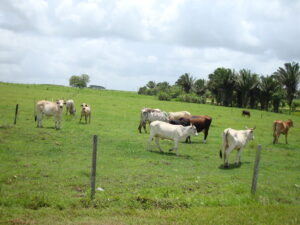
Fibrous plant resources in Jamaica for ruminant livestock production
Project Period: 2021-2022
Country/Region: Jamaica/Caribbean
Objectives: 1. Determine areas of Jamaica, regional climatic, soil, and vegetation conditions, seasons, plant species and stages of growth, etc. to be considered in characterizing the nutritional value of high-fiber plant resources in Jamaica available for use in ruminant livestock production systems. 2. Develop and evaluate plant and soil sampling protocols and identify most appropriate means of analyses. 3. Create preliminary forage and soil geodatabases to be refined in activities of a subsequent project.
Funding: USDA/NIFA
Principal Investigator (PI): Dr. Arthur Goetsch | School of Agriculture and Applied Sciences
1890 University Name: Langston University
Expected Results:
- To identify areas of the country to be considered, plant and soil sampling protocols, most appropriate means of analyses, and preliminary forage and soil geodatabases.
- To gain knowledge of the nutritional value of fibrous plant resources to facilitate formulation of least-cost supplements and diets for higher levels and efficiencies of production by ruminant livestock in Jamaica.
- To generate information to be disseminated about fibrous plant and soil resources should aid in directing future development of ruminant livestock production systems of Jamaica.
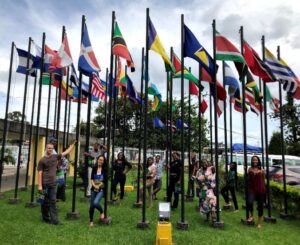
Implementing the first pan-American research and extension virtual symposium for food, agriculture and natural resources
Project Period: 2021
Country/Region: Belize/Latin America
Objectives: 1. Implement the first Pan-American research and extension’s virtual symposium on Food, Agriculture and Natural Resources (FANR); 2. Foster international partnerships that strengthen agricultural development in the Latin American and Caribbean (LAC) countries (Mexico, Costa Rica, Guatemala, Honduras, Belize, Jamaica, Haiti, Virgin Islands); 3. Engage LAC researchers in addressing new and emerging animal and plant pests and diseases; and in agricultural disaster recovery; 4. Foster and strengthen collaborative and integrative multidisciplinary, multi-institutional research and extension activities involving 1890 Institutions and international partners
Funding: USDA/NIFA
Principal Investigator (PI): Dr. Ayesha Sarker | Agricultural and Environmental Research Station
1890 University Name: West Virginia State University
Expected Results:
- To increase thematic expertise across 1890 Universities in specialized research related to global food and nutritional security.
- To increase the number of new projects on global food and nutritional security.
- To enhance ongoing research and extension programs in selected target regions of Mexico, Latin America, and the Caribbean.
News:
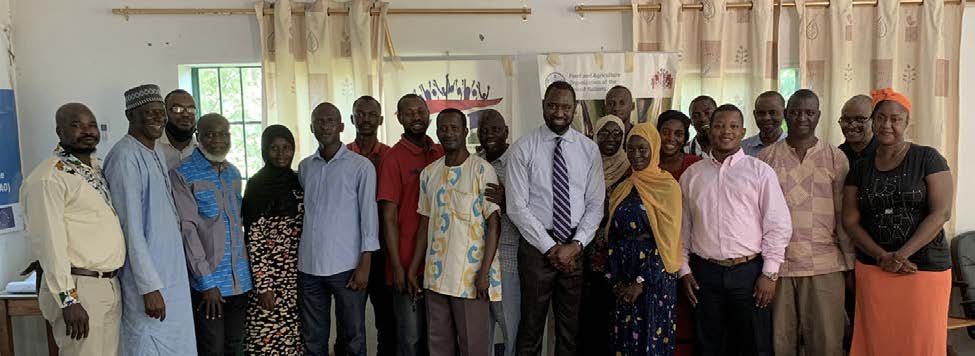
Increasing global food security through improved food safety and defense: A pilot project in the supply food chain in The Gambia
Project Period: 2021-2022
Country/Region: Gambia; West/Central Africa
Objectives: 1. Improve post-harvest (storage and food processing) capabilities and technologies by understanding how to minimize costs, improve efficiencies, differentiate products, and significantly reduce the economic harm posed by middlemen who take advantage of subsistent farmers desperate to sell their products. 2. Development of marketing strategies and fundamental basic financial skills (i.e., enterprise budgeting) and strategies to overcome challenges to achieve profitability is critical to achieving sustainable livelihoods. 3. Complete rapid needs assessment in collaboration with partners in the Gambia. 4. Analyze the assessment data to gain understanding. 5. Develop approach toward full program implementation.
Funding: USDA/NIFA
Principal Investigator (PI): Dr. Lamin Drammeh | Strategic Initiatives, Evaluation and Engagement in 1890 Research & Extension
1890 University Name: South Carolina State University
Expected Results: 1. Relationships with local public partners and institutions established. 2. An application of data to make informed decisions created. 3. Integrated supply chain systems improved. 4. Women smallholder famers supported in the Gambia to store grains and sell surplus production at attractive prices. 5. Increased market access, and better understanding of risk-management tools in the Gambia using Extension programs.
Leveraging the network of 1890 universities to address global food security challenges and explore experiential learning opportunities for students in Kenya and DRC
Project Period: 2021-2022
Country/Region: Kenya; East/Southern Africa
Objectives: 1. Work with the local farmers to identify the most pressing challenges on food security focusing on traditional food crops that enhance resilience; 2. Develop and disseminate technologies to enhance global food supply chains and mitigate global climate change; 3. Investigate the impact of trade barriers on food security in Kenya and DRC in collaboration with Kenyatta University (KU), JKUAT, and Univ. of Kinshasa (UNIKIN); 4. Investigate the adoption of high-yielding maize seeds and strategies to reduce Striga weed, diseases and pests in collaboration with Maseno University (MU) and the National Institute of Agronomic Studies and Research (INERA); 5. Use advanced detection techniques to study genetic diversity and antibiotic resistance in food and water borne pathogens to reduce disease burdens.
Funding: USDA/NIFA
Principal Investigator (PI): Dr. Caleb Nindo | School of Agricultural and Natural Sciences
1890 University Name: University of Maryland Eastern Shore
Expected Results: 1. Production of high-quality food products such as traditional vegetables, fruits, mushrooms and edible insects enhanced. 2. On-line training of stakeholders in collaboration with partners in Kenya and DRC increased. To 3. Review literature of trade patterns and their impact on food security in Kenya and DRC completed. 4. Discussions conducted with international partners on modalities to safely provide international experiential learning opportunities to students and faculty. 5. High-yielding maize and strategies to reduce pests and diseases identified for use by farmers explored. 6. Reduced food and water borne pathogens infection through adequate training of stakeholders.
Promoting resiliency of the agriculture sector in developing economies in the context of the COVID-19 pandemic

Project Period: 2021-2022
Country/Region: Kenya; East/Southern Africa
Objectives: 1. To enhance the global food value chain. 2. To increase the supply of globally educated workforce with the specific emphasis in agriculture and food systems. 3. To increase knowledge of new and emerging animal and plant pests and diseases. 4. Emerging technology will be a cross-cutting theme intersecting the goals, objectives and activities of this project.
Funding: USDA/NIFA
Principal Investigator (PI): Dr. Pamela Moore | School of Agriculture, Fisheries and Human Sciences
1890 University Name: University of Arkansas Pine Bluff
Expected Results: 1. A summary report of questionnaire feedback created. 2. Webinar recordings for instructional purposes documented. 3. A comprehensive report on all needs assessment activities documented. 4. Articles, working papers, based on needs assessment outcomes developed. 5. A transnational working group through which synergies and multiplier effects may be achieved through the engagement of other cluster members and 1890 institutions created.
